



Causes of tooth pain after a root canal (pain in a root-canaled tooth) include the following:
- Inflammation of the tissues surrounding the root, which may persist for some time after the root canal.
- Residual infection in the root area.
- Excessive pressure on the tooth while chewing or problems with bite adjustment.
- The presence of a crack or fracture in the tooth.
- Damage to the soft tissues surrounding the tooth during treatment.
- Incomplete or failed root canal treatment.
- Bruxism (teeth grinding) or excessive pressure on the teeth.
- A cyst or abscess in the root area of the tooth.
- Complications from the dental restoration after the root canal.
- The body’s reaction to materials used in the root canal process (such as filling materials).
Causes of Tooth Pain After a Root Canal
Pain in a root-canaled tooth usually doesn’t have many causes. For this reason, if you visit a dentist with pain in your root-canaled tooth, the dentist can usually identify the cause immediately after examining your dental x-rays.
However, let’s take a look at the main factors that cause pain in a root-canaled tooth.
1. Initial Inflammation After the Root Canal
First and foremost, it’s important to know that a root-canaled tooth may be inflamed and painful for up to about 10 days after the root treatment procedure. So, if you experience pain in the treated tooth during this period, don’t worry. This should not cause fear of root canal treatment. Take your antibiotic medications for the full course of treatment, and if the pain persists after this period, consult a root canal specialist to find the cause of your pain.
2. Remaining Infected Pulp in One or More Root Canals
While the goal of a root canal is to remove the inflamed nerve tissue from the root and fill the canal to prevent further infection, leaving even a small part of the root (nerve) in the gum can lead to problems and pain in the root-canaled tooth. (Partial Necrosis Consequence of the Infection Spreading from an Adjacent Apical Periodontitis: A Case Report)
In fact, this is one of the most common reasons for pain in a tooth that has previously undergone a root canal. This issue, which usually occurs due to bacteria leaking into the canal through a faulty filling or crown and leading to an infection in the root-canaled tooth, will cause pain and inflammation.
3. Lack of Dentist’s Expertise in Performing the Procedure
Contrary to what many people think—that a root canal is a simple procedure that any dentist can perform—it is a complex and highly sensitive process that requires significant skill and experience from the dentist.

If the dentist is not sufficiently skilled in performing a root canal, they may make the following mistakes, leading to problems and pain after the procedure:
- Incomplete cleaning of the root canal: If the root canal is not completely cleared of infected pulp and bacteria, it can lead to an infection in the root-canaled tooth or pain after the root canal.
- Improper filling of the root canal: If the root canal is not filled correctly, it can allow bacteria to penetrate the canal and cause an infection.
- Damage to surrounding structures: An unskilled dentist might damage surrounding structures like nerves, blood vessels, or sinuses during the root canal, and this can be the cause of pain after the procedure.
To avoid the damage an inexperienced dentist can cause to your tooth root, you can see a root canal specialist. A skilled professional whose specialty is in the field of root canal treatment. To receive a free dental consultation and connect with the experienced specialists at Dr. Bonyanian’s Dental Clinic, you can use the form below.
4. Cracked or Fractured Tooth Root
If your root-canaled tooth experiences sudden, sharp, and very severe pain, you likely have a fractured tooth root. This condition, another common cause of pain after a root canal and root treatment, may occur due to trauma to the root canals during the procedure. Therefore, if you experience severe tooth pain after a root canal, be sure to see a root canal specialist.
5. Gum Disease
Gum or periodontal diseases can also be a cause of pain in a root-canaled tooth. This inflammation can damage the bone around the tooth root, weakening it and increasing the likelihood of a fracture. This is why dentists usually advise those with gum disease to complete their treatment course. By doing so, both the hard and soft tissues of their mouth will heal.

6. Unknown Causes
In some rare cases (less than 3% of the time), the dentist may not be able to find any specific reason for the pain a person feels in their root-canaled tooth! However, in some of these cases, the cause of pain after a root canal might be psychological, and the pain may resolve completely after a short time. If we want to examine the cause of pain in a root-canaled tooth over different time frames, we can divide it into three periods: immediately after the root canal and the first few days, a few months after, and a few years after.

How Many Days Is Tooth Pain Normal After a Root Canal?
Tooth pain for three to a maximum of 5 days after root canal therapy is completely normal, as the tissues around the root are still inflamed and need time to heal during this period. This pain should be mild to moderate and should be manageable with painkillers prescribed by the dentist and by following post-root canal care instructions. However, if the pain becomes severe or lasts for more than a week, you should return to your dentist for further evaluation.
Cause of Pain in a Root-Canaled Tooth: Immediately After to a Few Days
Feeling pain in a root-canaled tooth for a few days is completely normal, as this pain is the body’s natural reaction to the inflammation that occurs during the procedure. To alleviate this inflammation, you must take the painkillers prescribed by your dentist on time and avoid irritating the area with your hand or tongue. Of course, in special circumstances such as rapid treatment of toothache during pregnancy, greater care must be taken, and only medications that are safe for the mother and fetus should be used.
Pain in a Root-Canaled Tooth After One Week
Pain in a root-canaled tooth after one week is usually normal and occurs due to inflammation of the tissue around the root and the healing process after treatment. This pain is mild to moderate and can be controlled with painkillers. However, if the pain is severe, prolonged, or accompanied by swelling and fever, it may be a sign of infection or a problem with the root canal treatment, and in such cases, you should see a dentist immediately.

Cause of Tooth Pain a Few Months After a Root Canal
If the dental restoration was not done correctly, bacteria might penetrate the root canals, causing inflammation and pain. Additionally, if the infection spreads to the tip of the root, it may cause more severe pain after a few weeks. Therefore, if you still experience pain, tingling, or a throbbing sensation several weeks or months after the root canal, you must see your dentist. The dentist can accurately diagnose the cause of pain several months after a root canal by taking radiographs and performing a clinical examination, and then prescribe the appropriate treatment.
Read More: Is Root Canal Treatment Harmful?
The Pain Might Be Coming from an Adjacent Tooth
Pain felt several months after a root canal doesn’t always mean there’s a problem with the treated tooth itself. In fact, a tooth that has had a root canal and its nerve removed should no longer be a source of pain!
Sometimes, deep decay, cracks, or infection in adjacent teeth can cause referred pain. This pain can radiate to the ear, jaw, or even the head, leading the person to believe the problem is with the previously treated tooth.
For example, if the first molar (tooth #6) experiences pressure from teeth grinding, bite problems, or temperature sensitivity, the pain may be referred to surrounding areas.
In such a situation, if this tooth has not been previously root-canaled and requires treatment, its multi-canal nature makes the procedure more complex, which can increase the price of a root canal for tooth #6 compared to other teeth.
Cause of Pain in a Root-Canaled Tooth After Several Years
Over time, due to chewing hard foods or trauma to the tooth, the likelihood of a root-canaled tooth fracturing increases. This tooth fracture can be the cause of pain in a root-canaled tooth after several years. Therefore, you should seek treatment for a broken tooth. Additionally, the root of the root-canaled tooth may also be cracked. This crack or cracks can be a perfect place for bacteria to penetrate and cause an infection, resulting in pain. Finally, even though the root canals are thoroughly cleaned and filled, there is still a possibility of bacteria re-entering through tiny cracks in the filling or the root. This re-infection causes inflammation and pain.
Of course, sometimes decay or fracture in adjacent teeth can cause referred pain to the root-canaled tooth. Generally, if a tooth you had a root canal on months or years ago starts to hurt, it is likely related to one of the following factors:
- The tooth is cracked.
- The root canal has failed.
- Proper oral hygiene has not been maintained.
- Placing a crown on the root-canaled tooth has been delayed.
- An inadequate seal was placed.
If any of these factors are present, the best course of action is to visit a dentist, get an examination, have an OPG x-ray taken, and begin the treatment process.

Cause of Pain in a Root-Canaled Tooth When Chewing After Several Years
Pain in a root-canaled tooth when chewing, several years after the procedure, can have multiple causes. One of the most common causes is recurrent decay or fracture of the crown or old restoration, which irritates the remaining nerve tissue or the tissue around the root. Of course, reinfection in the root canal, gum inflammation, or excessive pressure while chewing can also cause pain. If the pain persists, it is essential to see a dentist for timely examination and treatment.
Infection in a Root-Canaled Tooth After Several Years Due to a Dental Cyst
When a root-canaled tooth becomes painful or infected after several years, it’s possible that a cyst has formed around that tooth. Cysts form as a reaction to residual infections in the treated area. So, if the root canal was not performed correctly or if an infection remains in the tooth root, a cyst may form in the surrounding tissues over time.
You might wonder, if this is the case, why doesn’t the cyst form after a few days or months? Why does it take several years for it to develop?
The answer is that cyst formation after a root canal can be delayed for several reasons. First, dental cysts are usually caused by chronic infection or residual nerve tissue, which triggers an inflammatory response around the tooth root over time. In the initial stages after a root canal, the body’s immune system may be able to fight off the remaining infections and bacteria, which is why there might be no signs of infection or a cyst in the first few months. Also, cysts typically form gradually due to the growth and accumulation of fluid in the tissues around the root, and this process can be time-consuming. Finally, you should know that various factors such as the individual’s immune system status, the treatment techniques used, and complications from previous treatments affect the speed of cyst formation. For this reason, it may take years for a cyst to grow large enough to cause pain or noticeable symptoms.
Treating Dental Cysts with a Dental Laser
If the dentist’s diagnosis for the cause of your root canal pain is a dental cyst, you can have it treated with a laser by visiting a reputable and well-equipped dental clinic like the Dr. Bonyanian Dental Center.
Treating a dental cyst with a laser is a multi-step process that involves using laser beams to destroy the cyst tissue and clean the infected area. This method reduces pain, bleeding, and inflammation, and facilitates faster healing.

Home Remedies for Pain in a Root-Canaled Tooth
This section is for symptom relief only and is not a substitute for professional diagnosis and treatment.
The best solution for treating pain in a root-canaled tooth is to see a dentist so that a specialist can diagnose the cause of the pain after an examination and take the necessary treatment steps. However, if your root-canaled tooth hurts at night or when you cannot visit a dentist, it is best to use home remedies for the pain. Remedies such as a cold compress, rinsing your mouth with salt water, or taking painkillers and pills.
Using a Cold Compress
Nazi Bonyanian:
To reduce tooth pain after a root canal, apply a cold pack to your face over the painful area for 15 minutes. Be careful not to place ice directly on your skin. For this, either use cold “ice bags” or wrap the ice in a cloth or towel. This can relieve your post-root canal pain.
Read More: Symptoms of a Tooth Needing a Root Canal
Rinsing with Salt Water
Another home remedy for a painful root-canaled tooth is rinsing your mouth with a dilute salt water solution. This solution will improve your tooth’s condition by soothing the inflammation in your mouth until you can see a dentist. To use this trick, mix 2 teaspoons of salt with half a glass of water and gargle with the resulting solution.

Placing Garlic on the Tooth
Garlic has antibacterial and anti-inflammatory properties and can help reduce potential infections and inflammation in the tooth area. Garlic also contains natural compounds that help soothe pain and inflammation. So, if your root-canaled tooth is painful, you can place a raw clove of garlic on the affected tooth. Then, you should close your mouth so that the garlic is crushed against your tooth and remains there for a while. Of course, remember that this method is mostly for temporary relief of mild pain and is never a substitute for professional dental treatment.
Using Clove Oil
Using clove oil is a common method for reducing pain in a root-canaled tooth. This is because clove oil contains eugenol, which has anesthetic and anti-inflammatory properties. This compound can help soothe pain and inflammation in the tooth area. To use it, a few drops of clove oil are typically placed on a cotton ball or clean cloth and gently applied to the affected tooth.
Read More: Lifespan of a Root-Canaled Tooth
Treating Pain in a Root-Canaled Tooth at Home
| No. | Home Remedy | Method |
|---|---|---|
| 1 | Cold Compress | Wrap an ice pack in a towel and place it on your cheek over the painful tooth for 10–15 minutes to reduce inflammation and pain. |
| 2 | Salt Water Rinse | Dissolve one teaspoon of salt in a glass of warm water and rinse your mouth 2–3 times a day to reduce bacteria and inflammation. |
| 3 | Over-the-Counter Painkillers | Use painkillers like ibuprofen or acetaminophen as directed by your doctor to reduce pain. |
| 4 | Warm Tea Bag | Slightly cool a soaked tea bag and place it on the tooth or gum to soothe inflammation. |
| 5 | Clove Oil | Put a few drops of clove oil on a cotton ball and place it on the painful tooth; it has anti-inflammatory and pain-relieving properties. |
| 6 | Garlic | Crush a clove of garlic and place it on the tooth with a little salt; garlic has antibacterial and anti-inflammatory properties. |
| 7 | Drinking Cold Water | Sipping small amounts of cold water can reduce tooth sensitivity and provide some pain relief. |
| 8 | Avoid Hard and Sticky Foods | Eat soft foods and avoid chewing with the treated tooth to reduce pressure on it. |
| 9 | Peppermint Leaves | Chew a few fresh peppermint leaves or place them on the tooth for a cooling and pain-relieving sensation. |
| 10 | Rest and Avoid Stress | Getting enough sleep and reducing stress can lessen the body’s reaction to pain and speed up the healing process. |
Pills for Tooth Pain After a Root Canal
Medication use must be individualized and supervised by a qualified clinician; do not self-medicate.
Using over-the-counter painkillers like acetaminophen, ibuprofen, and gelofen will help treat your root canal pain. If you are looking for pills for tooth pain after a root canal, you can find more complete information about these types of painkillers by reading the article the best painkiller for toothache.
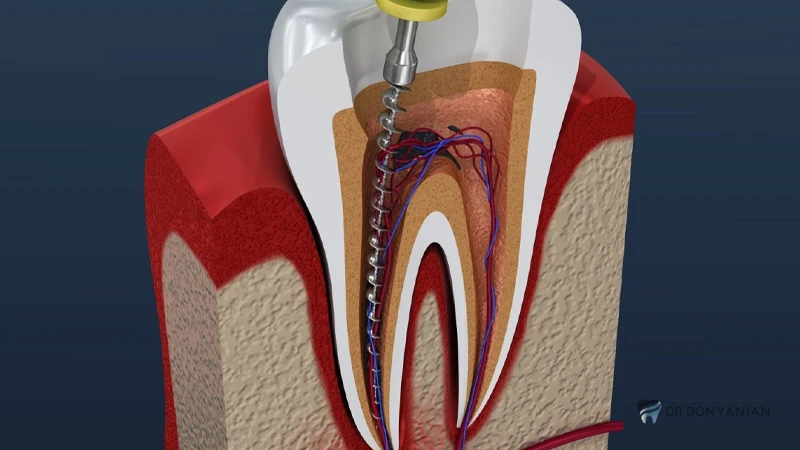
Using Lasers to Relieve Pain in a Root-Canaled Tooth
If you come across the term “using a laser to relieve pain in a root-canaled tooth,” you should know that the author likely means one of two things:
- Using a laser to perform the root canal treatment.
- Using laser therapy with the goal of relieving pain in the root-canaled tooth.
In the first case, the dentist uses low-level laser beams to treat the injection site for the anesthetic without causing pain or burning. This way, the person feels no pain or burning during the injection, and the anesthetic effect will be deeper. At the end of the root canal procedure with a laser, pain, complications, and the risk of infection are significantly reduced, and the recovery period is considerably shorter.
In the second case, however, the dentist uses the laser to reduce inflammation, accelerate tissue repair, and increase blood flow to the treated area. This method is better known as laser therapy. By affecting the nerves and reducing their sensitivity, it can relieve pain and speed up the healing process. This method also helps reduce swelling and eliminate any remaining bacteria on the tooth surface. Consequently, it reduces the likelihood of infection.
Relieving Pain in a Root-Canaled Tooth at Dr. Bonyanian’s Dental Clinic
We understand how annoying and uncomfortable pain after a root canal can be. For this reason, at Dr. Bonyanian’s Dental Clinic, we offer a wide range of services to relieve your pain and help you recover quickly. Our services for relieving pain in a root-canaled tooth include examination and diagnosis of the cause by root canal specialists, retreatment if necessary, or dental surgery.
By choosing Dr. Bonyanian’s Dental Clinic, which can be considered the best dental clinic in Tehran, you will benefit from the expertise of a brilliant and experienced team for the treatment of your tooth or teeth. In addition, we use the latest methods and advanced equipment at our clinic to help you have a quick and painless recovery. You can also view before and after photos of root canals performed by our specialists in the root canal therapy gallery. The calm and sterile environment of the clinic, proximity to public transportation lines, and the ability to pay for all costs, including the cost of a root canal, in installments are also advantages you will enjoy by choosing our center.
So, if you are experiencing pain in a root-canaled tooth, call Dr. Bonyanian’s Dental Clinic today at 00982188539720 or visit our clinic, located at Unit 7, No. 22, West 6th Street, Ahmad Qasir (Bokharest) Street, Arjantin Square, Tehran, to benefit from our root canal treatment services and book a free consultation.
Final Summary on the Cause of Pain in a Root-Canaled Tooth After Several Years
A root canal might be considered a painful procedure. However, the pain should typically resolve completely within a maximum of 7 days. Therefore, if the pain persists after this period, visit a dentist as soon as possible to find the cause of the pain in your root-canaled tooth.

Dr. Nazi Bonyanian
Dental Surgeon (DDS) — Medical Council Number: 138662
Graduate of Isfahan University of Medical Sciences with over 15 years of experience in implants, laminates, and oral and dental surgery.
Address: No. 22, Unit 7, West Alley 6, Bokharest Street, Argentina Sq., Tehran, Iran
Phone: +98-21-88539720 | WhatsApp: +98-912-514-2202
Email: info@drbonyanian.com
Working Hours: Sat–Wed 09:00–20:00 | Thu 09:00–14:00 | Friday Closed
⚠️ اطلاعات این صفحه صرفاً برای آگاهی است و جایگزین معاینه و تشخیص تخصصی نمیباشد.
