



The difference between laminate and composite will be examined from 12 different perspectives in this article:
- The difference between laminate and composite in terms of strength
- The difference between laminate and composite in terms of longevity
- The difference between composite and laminate in terms of color stability
- The difference between laminate and composite in terms of scope of application
- The difference between composite and laminate in terms of reversibility
- The difference between dental laminate and composite in terms of treatment stages and duration
- The difference between dental laminate and composite in terms of thickness
- The difference between composite and laminate in terms of the need for annual polishing
- The difference between composite and laminate in terms of the need for original tooth preparation
- The difference between composite and laminate in terms of aesthetics and natural appearance
- The difference between laminate and composite in terms of price
- The difference between composite veneer and laminate in terms of maintenance needs
Dental laminates and dental composites are two popular methods for enhancing the appearance of teeth, used to conceal dental imperfections and achieve a beautiful smile. However, their unique characteristics distinguish them from one another. That’s why one of the common questions from patients at the Dr. Bonyanian Dental Clinic is, “What is the difference between laminate and composite, and which one is better?”
In this article, we will delve into a detailed examination of these two methods and answer your questions on the topic. For a better understanding, we recommend you first review our pages on “What is a Dental Laminate?” and “What is a Dental Composite?” and then read this article to better grasp the differences between the two procedures.
You can read the explanations for each of these two methods on their respective pages and then refer back to this article to explore the differences between laminate and composite.
Laminate or Composite? Which is Better?
Dental composite and laminate are two advanced cosmetic dentistry procedures used to achieve white, well-aligned teeth. However, these two methods differ in several aspects. From some perspectives, which we will discuss below, laminate is superior to cosmetic dental composite, while from other perspectives, composite is the better option.

For this reason, we cannot definitively say which method is better, as it depends on your expectations from the cosmetic dentistry process and the initial treatment plan proposed by your dentist.
However, in general, when comparing dental laminate and composite, it’s good to know that if you are looking for minor corrections to tooth alignment or enhancing one or two teeth, dental composite is, in some ways, a better choice.
But if you are seeking extensive cosmetic treatments, a “Hollywood smile” makeover, and higher longevity, laminate is undoubtedly the priority.
It’s worth noting that the term “Hollywood smile makeover” is a general term referring to a set of cosmetic dentistry procedures aimed at creating a beautiful, uniform, and radiant smile, similar to those of Hollywood stars.
The Impact of Laminate and Composite on Tooth Health
When it comes to smile enhancement and smile design, many people turn to laminates or composite veneers. But a major concern is whether these methods harm the health of the teeth.
To answer this question, we must first look at the nature of these two methods and how they work.
✅ Tooth Preparation | A Key Factor in Maintaining Tooth Health
In the ceramic laminate method, a superficial shaving of the tooth enamel is usually necessary to create space for bonding the ceramic laminate. This preparation is done very minimally and conservatively, but it is irreversible.
Therefore, if the preparation is excessive or performed by an inexperienced dentist, it may make the tooth sensitive to heat and cold, or in rare cases, even lead to the need for a root canal.
In contrast, composite veneers are often applied with no preparation or a minimal amount of tooth shaving. For this reason, many consider it a less invasive and safer option in terms of preserving the natural tooth structure.
✅ Risk of Decay and Gum Inflammation
If laminates or composites are not installed correctly or the edges do not align well with the gum line, food particles and microbial plaque can accumulate in these spaces.
This can lead to gum inflammation, bleeding, bad breath, and even tooth decay beneath the restorations. Therefore, the quality of the treatment, the use of high-quality materials, and diligent long-term oral hygiene are of great importance.
✅ Allergic Reactions or Sensitivity
In rare cases, some patients may show sensitivity to the materials used in composites or the adhesives for laminates. Although this is not very common, checking the patient’s history of allergies before treatment can prevent potential problems.
✅ Mental Health and Psychological Impact
Beyond the physical aspects, the positive impact of these treatments on self-confidence and mental health should not be overlooked. Having white, well-aligned teeth encourages many people to smile, speak, and interact more with others, improving their social quality of life.
Of course, these benefits are achieved only when the treatment is performed correctly and with consideration for oral health.

Examining the Differences Between Laminate and Composite
The difference between laminate and composite can be assessed based on 11 fundamental factors. These factors include:
- Strength
- Longevity
- Color Stability
- Scope of Application
- Reversibility
- Treatment Stages and Duration
- Thickness
- Need for Annual Polishing
- Need for Original Tooth Preparation
- Aesthetics and Natural Look
- Price
Next in our review of composite and laminate differences, we will provide a detailed explanation of each of these aspects. So, stay with us to the end of this article to make a fully informed decision for achieving beautiful, uniform teeth.

1. The Difference Between Dental Laminate and Composite in Terms of Strength
In this section, we examine the difference between dental laminate and composite in terms of strength. The strength of dental composite is significantly lower than that of ceramic dental laminate. This is because ceramic laminate is usually made of porcelain and has very high strength. Since ceramic is a hard and resistant material with high mechanical strength and pressure tolerance, ceramic laminates generally have greater resistance to fracture and scratches compared to dental composites.
On the other hand, dental composite is made from resin materials. Although composite has less strength than laminate, modern composites are stronger than their predecessors. However, the strength of dental composite is not as good as laminate, and in some cases, it may chip or break with the slightest impact or when chewing hard objects.
Reading the article on types of ceramic dental laminates will familiarize you with the different varieties of this product.
2. The Difference Between Laminate and Composite in Terms of Longevity
One of the main differences between dental laminate and composite is their lifespan and longevity. The longevity of dental composite is between 2 to 5 years, whereas the lifespan of a dental laminate averages between 10 to 15 years.
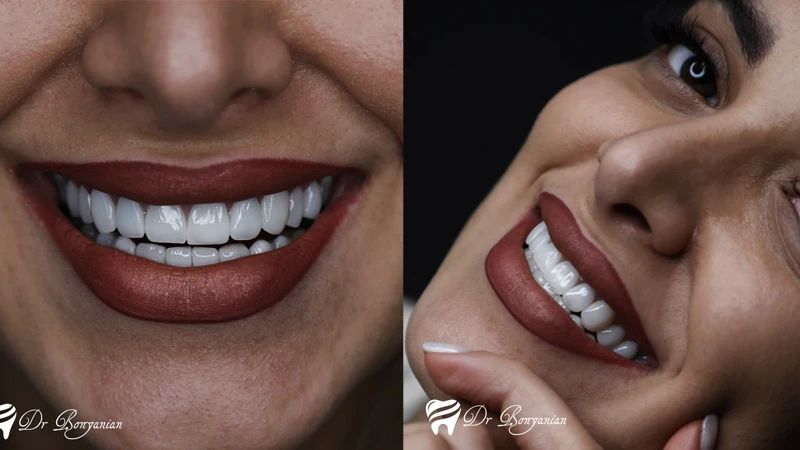
So, if you intend to undergo a more durable procedure, choose dental laminate. But if you simply want a quick method with lower longevity, dental composite would be a more suitable choice.
3. The Difference Between Dental Laminate and Composite in Terms of Color and Color Change
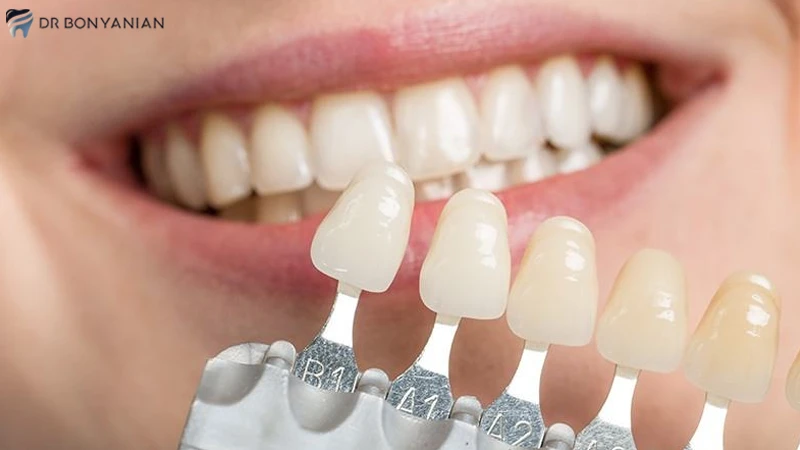
When comparing the color aspect of composite versus laminate, it’s good to know that the materials used in both methods cover a wide spectrum of white shades, but the color stability differs between them. Dental composite will change color over time, and depending on your diet, it may lose its initial appearance after just 6 months. In contrast, dental laminate has a more stable color compared to composite.
In any case, maintaining good oral hygiene and brushing after consuming staining foods and drinks (like coffee or saffron-containing foods) will help preserve the color and extend the lifespan of both laminates and composites.
4. Comparing Composite and Laminate in Terms of Scope of Application
Dental laminate can be used for a wide range of dental imperfections. However, dental composite is mostly used for minor dental issues. We have discussed the types of dental composites and their applications in a separate article.
5. The Difference Between Composite and Laminate in Terms of Reversibility
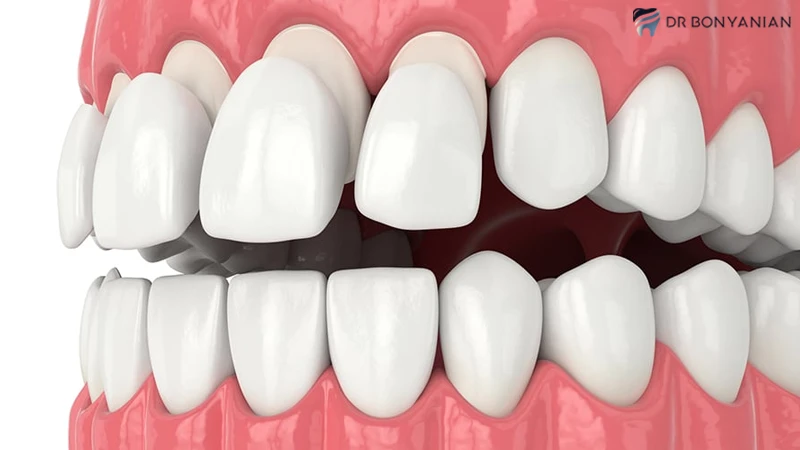
When considering the reversibility of dental composite versus laminate, you should know that one of the biggest advantages of composite over laminate is its reversibility. Placing composite veneers does not require altering the natural shape of the teeth.
This means if you regret getting composites, the veneers can be easily removed. In contrast, once you get laminates, you must use them for life because the teeth are prepared (shaved down) before installation. This could arguably be considered one of the downsides of dental laminates.
6. The Difference Between Composite and Laminate in Terms of Treatment Duration
Usually, the dental composite procedure is completed in a single session. In this session, the dentist first prepares your teeth, and after cleaning them, applies the composite material layer by layer. Finally, a blue light is used to harden and polish the resin.
However, since the dental laminate procedure involves several different processes (cleaning, tooth preparation, impression taking, fabrication of the laminate, and installation), the stages of getting a laminate take longer than a composite. Therefore, those with time constraints should definitely consider this difference when choosing between them.
7. The Difference Between Composite and Laminate in Terms of Added Thickness to the Tooth
The thickness of a composite is significantly greater than that of a laminate. This is because:
- During composite installation, the tooth is not prepared, and the composite material is placed on and around the tooth.
- Composite materials are applied layer by layer on the tooth. For this reason, the thickness of a composite-treated tooth will be greater than a single layer of laminate.
8. The Difference Between Laminate and Composite in Terms of Needing Annual Polishing
Over time, composites can become discolored due to the consumption of staining foods and drinks, the aging of the composite material, and smoking. Therefore, you need to visit the dentist once a year for annual polishing of your dental composites. However, dental laminates do not require polishing and will maintain their appearance for years with proper and consistent care.
9. The Difference Between Dental Laminate and Composite in Terms of Needing Tooth Preparation
The difference between laminate and composite regarding tooth preparation is a significant one. For laminates (depending on the type), between 1 to 5 microns of tooth enamel is removed. In contrast, for composites, this preparation either doesn’t happen or is limited to 1 to 2 microns.
The reason for tooth preparation for laminates is to create a strong bond between the tooth and the laminate veneer. This ensures the laminate veneer fits perfectly on the tooth.
10. The Difference Between Composite and Laminate in Terms of Aesthetics and Natural Look
Before discussing this topic, it’s good to know that dental laminates are more commonly used for the front teeth of the jaw, while composites can be placed on all teeth in the jaw. The reason for this is the more natural beauty of dental laminates. Since laminates have a white, glossy, and beautiful appearance, they give your teeth a natural look.
Ultimately, the final result of your dental laminate procedure brings you a beautiful appearance with white, harmonious teeth that blend well with your other teeth. It is due to this natural aesthetic appeal that many actors and famous people worldwide choose dental laminates (and not dental composites).

11. The Difference in Price Between Composite and Laminate
Regarding the difference in the cost of dental composite versus laminate, we must say that the most significant advantage of composite over laminate is its cost. On average, the price of dental laminates is twice that of composites. Since most cosmetic dentistry treatments are not covered by insurance, the individual must pay the cost out of pocket, which is a very important factor for people. Therefore, be sure to consider the price difference between laminate and composite when making your decision.
Photos of Laminate and Composite at Dr. Bonyanian’s Dental Clinic

For more examples, you can visit our before and after dental laminate photo gallery.
Now that you have a good understanding of the difference between laminate and composite, we will proceed with a more detailed examination of the features of each method and their comparison. For ease of understanding, the following table provides a complete comparison of these two methods. You can view this table below.
Comparison Table: Laminate vs. Composite
| Comparison Basis | Dental Composite | Ceramic Dental Laminate |
|---|---|---|
| Strength | Fragile and low strength | High strength |
| Longevity | 2 to 5 years | 10 to 15 years |
| Color Change Over Time | Very high | Very low |
| Scope of Application | Minor dental issues | A wide range of dental imperfections |
| Reversibility | Yes | No |
| Treatment Duration | One day | Between 7 to 20 days |
| Added Thickness to Tooth | High | Low |
| Need for Annual Polishing | Yes | No |
| Need for Tooth Preparation | None or very minimal | Very minimal, from 0.5 to 3 microns |
| Aesthetics and Natural Look | Moderate | High |
| Price | Low – Moderate | Moderate – High |
Composite or Laminate? Which is More Suitable for Me?
As we have discussed each of the differences between dental laminate and composite above, we have learned that these two methods have their own unique characteristics. However, the choice between these two methods will be made in consultation with your dentist and ultimately based on your own decision.
To choose whether composite or laminate is better for you, compare these two processes in terms of their pros and cons. Then, determine your budget and, after getting the opinion of the dentist you plan to see, proceed with choosing one of these two methods.
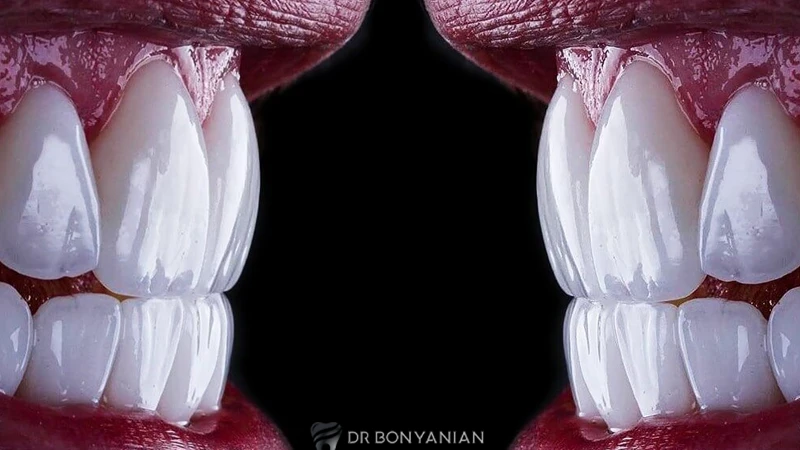
Composite veneers are done in just one session, saving time. This procedure is performed without damaging the tooth enamel or requiring extraction.
Also, the price of dental composites is about half that of laminates. It’s worth noting that if a laminate cracks or breaks, it must be completely replaced, which is not the case with composite veneers.
Despite all the advantages we mentioned for composites, they are not comparable to laminates!
Laminate is a very strong material that lasts 10 to 20 years. Ceramic laminate is more beautiful and natural-looking than composite veneer. Also, laminate is very similar to the tooth itself, so it compensates for minor enamel preparation.
Laminate is more resistant to discoloration, and you probably won’t need to change your diet or avoid eating colored foods. However, you are the one who decides which treatment is right for you.
How Do I Choose the Best Option?
If you live in Tehran, we recommend you speak with the best cosmetic dentist in Tehran you know to help you make the right decision. Dr. Bonyanian’s Dental Clinic, with its skilled and experienced specialists, is ready to provide you with dental services. You can request a free dental consultation through the form below.
Differences in Repair and Maintenance of Laminate and Composite
One of the important factors individuals should consider before choosing between laminate and composite is the repairability of these two methods. Although both methods are used to improve the appearance of teeth, the repair process differs significantly in case of damage or problems.
For example, composite veneers are typically made of composite resin, the same material used for dental fillings. One of the biggest advantages of composite is its easy repairability. If all or part of a composite veneer chips, fractures, or discolors, the dentist can easily repair the affected area without having to redo the entire restoration.
This type of repair usually:
- Is completed in one session
- Does not require anesthesia (in most cases)
- Costs less than replacing a laminate
- Is done without damaging the original tooth structure
Unlike composites, dental laminates are made of ceramic or porcelain. Therefore, if a laminate fractures or cracks, localized repair is often not possible, and it must be completely replaced.
The process of replacing a laminate includes:
- Removing the fractured veneer
- Taking a new impression
- Fabricating a new laminate in the laboratory
- Installation in a subsequent session
This process takes several sessions and is more costly than repairing a composite. Also, due to tooth preparation, repeated replacement of laminates over the tooth’s lifetime is limited.

What is a Composite Laminate?
The term “composite laminate” refers to the same thing as dental composite. Since a composite material is used with an application similar to that of a dental laminate, this method is also called composite laminate.
When are Composite or Laminate Needed?
Composite or laminate are highly effective in the following cases:
- Repairing crooked or misshapen teeth
- Repairing fractured teeth
- Correcting tooth stains when whitening is not effective.
- Worn down and short teeth
- Teeth with large gaps between them
When are Laminate or Composite Not Good Options?
In some situations, an individual’s teeth are not suitable for dental veneers. These conditions include:
- Teeth with decay or gum disease: These issues must be treated before fabricating and placing dental veneers.
- Weakened teeth: If a significant amount of tooth structure is lost or the teeth have numerous large fillings, they are not suitable for veneers. Other methods are available.
- Severely displaced or misaligned teeth: Orthodontic treatment is needed to correct this issue.
- Unconscious clenching or grinding of teeth (bruxism): In this case, veneers can easily break or get damaged. You should first seek treatment for bruxism or use a night guard.

In What Cases are Dental Laminates Recommended?
When you face dental problems regarding the shape and color of your teeth, dental laminate can be a good choice. This method is usually suitable for fixing the following issues:
- Very dark and discolored teeth
- Fractured teeth
- Moderate to mild misalignments
- Closing gaps between teeth
- Congenitally stained teeth
- Minor dental anomalies
- Teeth inclined towards the tongue
- Increasing tooth crown length
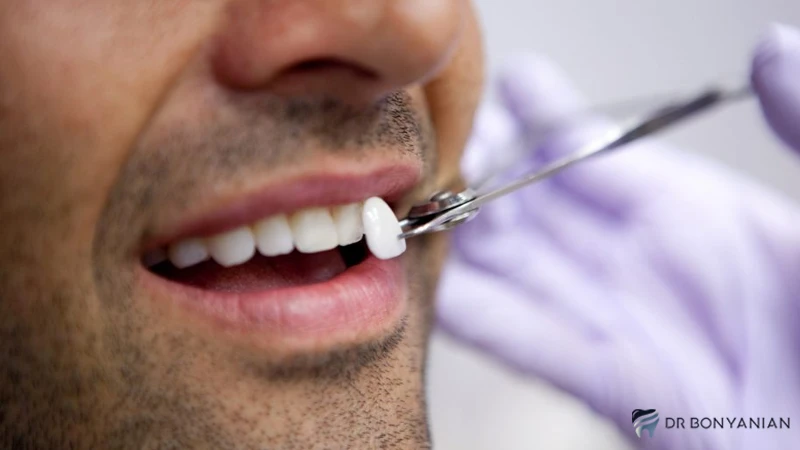
Apart from the choice between composite or laminate, you should pay special attention to finding a suitable dental clinic. Dr. Bonyanian’s Dental Clinic, as the best dental clinic in North Tehran, helps you achieve a high-quality and attractive laminate.
It is worth mentioning that the dentists working in this clinic have the highest level of expertise and experience among other dental clinics in Tehran.
In What Cases are Dental Composites Recommended?
The dentist will determine whether you can use this cosmetic method by examining the condition of your teeth. Usually, composite veneers are suitable for most people and can effectively address the issues mentioned below:
- Misaligned teeth
- Yellowed teeth
- Teeth that are too long, short, or small
- Chipped and fractured teeth
- Overlapping teeth
- Protruding upper jaw
- Gaps between teeth
Difference in Care Needs for Composite and Laminate
Caring for composites and laminates is very important because proper maintenance will significantly help extend their lifespan. The difference in how to care for composites and laminates is also notable, so to care for your teeth, follow these tips:
- Brush and floss regularly to prevent oral health problems.
- Do not use abrasive toothpastes.
- Following a suitable diet will increase the longevity of dental composite or laminate for years to come.
- After the treatment is completed, you may experience sensitivity to cold and heat. Some of this sensitivity is completely normal and usually disappears after one or two weeks. However, if this sensitivity persists, inform your dentist.
- Laminates are very strong and can withstand most normal pressures. However, do not use those teeth to crack nuts like pistachios, hazelnuts, almonds, etc.
- If you grind your teeth, be sure to inform your dentist. The dentist will make a night guard for you to minimize the pressure from teeth grinding during sleep.
- Veneers may wear down and break. While composite restorations are very easy to repair in most cases, laminates must be replaced.
Difference Between Laminate, Composite, and Bleaching
In the table below, we have compared the differences between laminate, composite, and bleaching—three popular smile makeover methods—in terms of material, longevity, cost, and application.
| Features | Dental Laminate | Dental Composite | Teeth Bleaching (Whitening) |
|---|---|---|---|
| Main Goal | Complete aesthetic and shape correction | Aesthetics with minimal shape change | Whitening the natural tooth color |
| Material | Ceramic (Porcelain) | Composite Resin | Whitening agents (Hydrogen/Carbamide Peroxide) |
| Amount of Tooth Preparation | Requires enamel preparation | No or minimal preparation | No preparation |
| Longevity (Approximate) | 10 to 15 years | 4 to 8 years | 6 months to 2 years (depends on care) |
| Repairability | Not repairable (requires full replacement) | Repairable in-office | Requires repeat whitening sessions |
| Effect on Tooth Shape | Corrects shape, color, and position | Mostly color, some shape | Only affects natural tooth color |
| Treatment Duration | 2 to 3 sessions | 1 session | 1 to 2 sessions |
| Cost (Relative) | High | Moderate | Low |
| Suitable For? | Individuals with irregular, misshapen, or dark teeth | Individuals with relatively healthy teeth | Individuals with healthy but yellow or dark teeth |
Laminate or Composite Services at Dr. Bonyanian’s Dental Clinic
Dr. Bonyanian’s Dental Clinic, with its experienced and specialized staff and the use of the latest equipment and materials, helps you achieve a beautiful and brilliant smile.
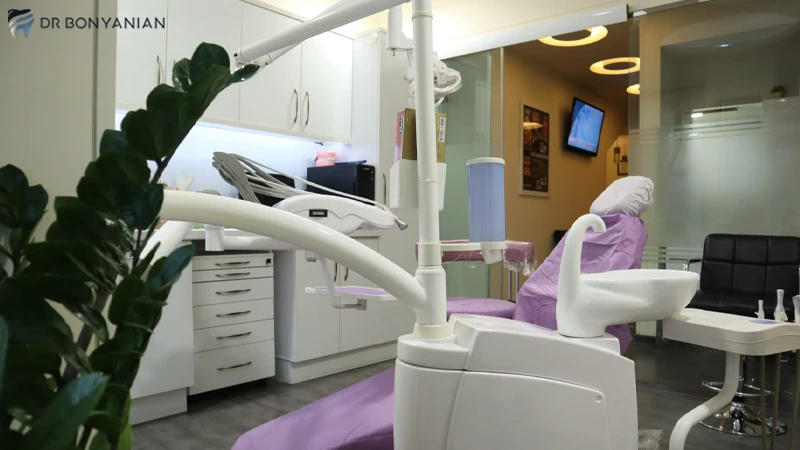
By now, you have surely understood the differences between dental laminates and composites. It is worth mentioning that we know a smile is one of the most important factors in a person’s beauty and self-confidence. That is why at Dr. Bonyanian’s Dental Clinic, by utilizing the best laminate and composite specialists, we make every effort to bring you a beautiful and natural smile.
After examining the condition of your teeth and smile design methods, we choose the best way to achieve a beautiful smile and, depending on whether composite or laminate is better for you, we will perform one of these two methods.
Using the latest techniques and materials and providing the best results for you is the greatest advertisement and honor for the specialists at our clinic.
Boost your self-confidence with a beautiful smile and enjoy life.
You can call 00982188539720 for more information or visit Dr. Bonyanian’s Dental Clinic at Unit 7, No. 22, 6th West Street, Ahmad Qasir (Bokharest) Street, Arjantin Square, Tehran.
Difference Between Composite and Implant
Composite and implant are two completely different procedures in dentistry, each with its own specific application, goal, and process.
Composite is a cosmetic procedure where a tooth-colored resin material is placed on the surface of a healthy tooth to cover stains, correct shape, close gaps, or repair chips, without needing to extract or replace the tooth.
In contrast, a dental implant is a treatment for replacing a lost tooth, where a titanium post is surgically placed into the jawbone as an artificial root, and then a crown is placed on top of it.
So, in simple terms: composite is for beautifying existing teeth, while an implant is for replacing completely lost teeth.
Final Thoughts on the Difference Between Laminate and Composite
In conclusion to our explanation of the difference between dental composite and laminate, we learned that these two have many differences and vary in all their main features such as lifespan, treatment duration, aesthetics, reversibility, and cost.
Also, in examining the difference between laminate and composite, we found that laminate is a practical method for treating issues such as worn enamel, wear and tear, genetic defects, uneven teeth, and so on. These are issues that cannot be fixed with composite, making laminate the only suitable option.
However, the higher cost of dental laminate compared to composite, as well as the fact that composite does not require tooth preparation, encourages many people to opt for dental composite.
Scientific References for this Article:

Dr. Nazi Bonyanian
Dental Surgeon (DDS) — Medical Council Number: 138662
Graduate of Isfahan University of Medical Sciences with over 15 years of experience in implants, laminates, and oral and dental surgery.
Address: No. 22, Unit 7, West Alley 6, Bokharest Street, Argentina Sq., Tehran, Iran
Phone: +98-21-88539720 | WhatsApp: +98-912-514-2202
Email: info@drbonyanian.com
Working Hours: Sat–Wed 09:00–20:00 | Thu 09:00–14:00 | Friday Closed
⚠️ اطلاعات این صفحه صرفاً برای آگاهی است و جایگزین معاینه و تشخیص تخصصی نمیباشد.
