


Dental Implants in Tehran
by
Dr. Nazanin (Nazi) Bonianian, DDS
— Dental Surgeon & Implant Dentist (Medical Council No. 138662)
Dental implants are an advanced method for replacing the root and crown of a lost tooth. In this treatment, a
titanium implant post (fixture) is placed inside the jawbone and acts like a natural tooth root; after
osseointegration, a custom abutment and crown are mounted to restore natural function and appearance.
Our English-speaking implant dentists in Tehran assess candidacy, plan with CBCT, and guide you from surgery to long-term
implant maintenance, focusing on realistic expectations and patient safety.
Request Appointment
• Call 02188539720
• WhatsApp
What is a Dental Implant?
Dental Implants are a well-established treatment in implant dentistry aimed at replacing one or several missing teeth. In this treatment, a titanium post is placed inside the jawbone and acts as the tooth root. After the post fuses with bone (osseointegration), an artificial tooth unit (crown) is mounted via an abutment, allowing the restoration to look and function like a real tooth.
When case selection, hygiene, and follow-up are appropriate, success rates are high; yet every case requires a clinical exam and imaging. Implants help preserve facial support, restore chewing, and reduce the risk of jawbone resorption in the edentulous area.
Video Explanation by Dr. Bonianian Regarding Dental Implants
Components of a Dental Implant
- Implant Post (Fixture): titanium screw placed inside the jawbone to act as a root.
- Abutment: connector between implant and crown; shapes the gum for proper emergence profile.
- Crown: custom-made prosthetic tooth placed on the abutment (similar to a regular dental crown).
Why Dental Implants?
- Natural look and feel; stable chewing and clear speech
- Help prevent jawbone resorption in the missing-tooth area
- Protect adjacent teeth (no preparation like some bridges)
- Long-term durability with proper maintenance and regular check-ups
- Day-to-day care similar to natural teeth (brushing and flossing)

Comparison of Dental Implant Advantages and Disadvantages
| Advantages of Dental Implants | Disadvantages of Dental Implants |
|---|---|
| Completely natural appearance, similar to a natural tooth | Relatively high initial cost |
| Functions like a real tooth in chewing and speaking | Requires surgery and a healing period |
| High durability and longevity (with proper care) | Longer treatment duration (esp. if grafting is needed) |
| Helps prevent jawbone resorption at the missing-tooth site | Small possibility of infection or implant failure |
| Does not damage adjacent teeth (unlike some bridges) | Requires adequate bone density and general health |
| Increased self-confidence and smile aesthetics | Usage limitations for some patients (e.g., uncontrolled diabetes, heavy smokers) |
Eligible Candidates for Dental Implant Procedure
- Adults (generally over 18) with fully developed jaws
- Sufficient bone density (or feasibility of grafting)
- Healthy gums and good oral hygiene
- No uncontrolled systemic conditions that compromise healing
- Non-smokers, or willingness to quit for the healing period
Final eligibility is confirmed by our implant specialist in Tehran after clinical examination and CBCT implant planning.
Quick Self-Assessment Checklist
Use this simple checklist to see if scheduling an implant assessment makes sense for you right now:
- I have one or more missing teeth that I want to replace.
- My gum health is acceptable (no active, untreated infection).
- I’m willing to maintain daily oral hygiene and attend follow-ups.
- If I smoke, I’m ready to stop for the recommended healing period.
- I can commit to several appointments over 3–6 months (or longer, if grafting is needed).
- If I grind my teeth, I’m open to using a night guard if advised.
If most items apply to you, book a free assessment with our implant dentist in Tehran.
What Happens If We Don’t Get Implants?
Delaying tooth replacement may increase risks over time:
- Changes in facial structure and loss of self-confidence
- Jawbone resorption (bone shrinking) in the edentulous area
- Gum pressure during chewing leading to discomfort
- Difficulty chewing that may affect digestion
- Shifting of adjacent teeth and bite misalignment
- Recurrent gum problems or infections if hygiene is compromised
Types of Dental Implants
Single-tooth Implant
Replaces one missing tooth with a fixture, abutment, and crown — precise match for anterior (front tooth implant) or posterior sites.
Multiple-tooth Implants
Two or more implants can support multiple crowns or a short bridge, restoring wider gaps with stable function and aesthetics.
Endosteal vs. Subperiosteal
Endosteal dental implants are most common and are placed inside bone. Subperiosteal dental implants rest on top of bone under the gum and are used selectively when grafting isn’t feasible. Your implant dentist in Tehran will recommend the most suitable option.
Looking for full-arch (All-on-X) solutions? Please see our dedicated page.
Implant Systems We Use
We work with reputable, evidence-based implant systems from leading manufacturers. The choice of system depends on your bone anatomy, aesthetic zone, occlusion, and the surgeon’s experience with the platform. During your consultation, we’ll explain which system is recommended for your case and why.
- Proven track records and peer-reviewed research
- Precision-matched components (fixture, abutment, instruments)
- Global availability of parts for future maintenance
- Traceability (lot numbers recorded in your clinical file)
Brand selection is individualized. If you have a preferred brand or prior implant system, please let us know at your visit.
Step-by-Step Dental Implant Procedure
Consultation & CBCT Planning
Medical/dental history, periodontal evaluation, and a CBCT scan for dental implants to assess bone volume, nerves/sinuses, and ideal implant position.
Surgery Day
Atraumatic extraction (when needed) and precise implant placement under local anesthesia. Where indicated, we may use guided implant surgery and, in selected cases, flapless implant surgery.
Healing & Osseointegration
Typical bone healing and implant integration take 3–6 months, depending on site and stability. Good hygiene and follow-up are essential for success.
Abutment & Crown Placement
After integration, we attach the abutment and deliver a custom crown — adjusted for bite, phonetics, and aesthetics.
Interested in immediate (same-day) implants? Candidacy is case-dependent. See our Immediate Dental Implants page for details.
Technology & Clinical Protocols
We combine digital planning with rigorous surgical and sterilization protocols to support predictable outcomes and patient comfort:
- CBCT implant planning: 3D assessment of bone volume, nerve/sinus proximity, and restorative space.
- Digital surgical guides: prosthetically driven positioning; when indicated, minimally invasive (flapless) approaches.
- Primary stability targets: insertion torque and ISQ monitoring guide timing for loading and abutment connection.
- Antibiotic stewardship: evidence-based prescriptions tailored to medical history—no unnecessary overuse.
- Sterile field discipline: instrument sterilization logs; single-use disposables where appropriate.
- Traceability: implant/abutment lot numbers recorded in your file for future reference.
Same-Day Dental Implants
In same-day approaches, the implant post is placed on the day of extraction. However, osseointegration still follows the standard biological timeline (commonly 3–6 months). Some marketing terms like “surgery-free” or “bloodless” are misleading; placing an implant is a surgical procedure—discomfort and minimal bleeding are typical but manageable.

Disadvantages of Dental Implants
- Long treatment duration (spanning several months)
- Higher initial cost compared to some options
- Need for a surgical procedure
- Restrictions for certain individuals (due to conditions or habits)
- Small possibility of implant failure or complications
Potential Complications of Dental Implants
- Pain and swelling (usually temporary)
- Infection
- Nerve injury (rare; location-dependent)
- Implant fracture (uncommon)
- Gum problems (peri-implant mucositis)
- Sinus issues for upper posterior sites
How Common is Implant Infection?
Risk increases when sterilization is suboptimal, hygiene is poor, or there are active oral infections (e.g., untreated gum disease or abscess). Systemic factors such as uncontrolled diabetes and heavy smoking also elevate risk. Adhering to aftercare and follow-ups notably reduces complications.
Do Implants Cause Cancer?
No credible scientific evidence links dental implants to cancer. Current research has not established a carcinogenic effect for implant materials when used appropriately.
What is Peri-Implant Disease (Peri-implantitis)?
Peri-implant disease involves inflammation of the tissues around an implant. When bone loss is present, it’s called peri-implantitis. Without treatment, it may progress and compromise the implant. Consistent hygiene and professional maintenance reduce risk.
Healing & Aftercare
- First 24 hours: rest, cold compress cycles, avoid vigorous rinsing or straws
- Oral hygiene: begin gentle rinses after 24 hours; brush other teeth normally and be careful near the site
- Diet: soft, cool foods initially; then progress as comfort allows
- Medications: take antibiotics/analgesics as prescribed
- Red flags: increasing swelling, persistent bleeding, fever, or mobility — contact us promptly
Find extended guidance on our implant aftercare page.
Increasing the Longevity of Dental Implants
With diligent daily hygiene (toothbrushing, interdental brushes, floss/water flosser) and regular professional check-ups (typically every 6 months), many implants last for decades. Avoid using teeth to open packages; minimize smoking and excessive alcohol. For bruxism, a night guard for dental implants can protect your restoration.
Warranty & Follow-up Policy
Long-term success is a team effort. We provide structured follow-ups and manufacturer-backed component warranties where applicable:
- Recall schedule: typical checks at 1–2 weeks (soft tissues), 3 months, 6 months, and annually thereafter.
- Maintenance requirement: adherence to hygiene protocols and attending recalls are conditions for any warranty.
- Covers & limits: implant components are warrantied by their manufacturers; coverage varies by system and clinical factors.
- Documentation: we record component lot numbers and provide receipts/notes for your records.
Full terms are explained during your consultation; we’ll provide a written summary tailored to your case.
See our transparent guide on
Dental Implant Cost & Payment Options.
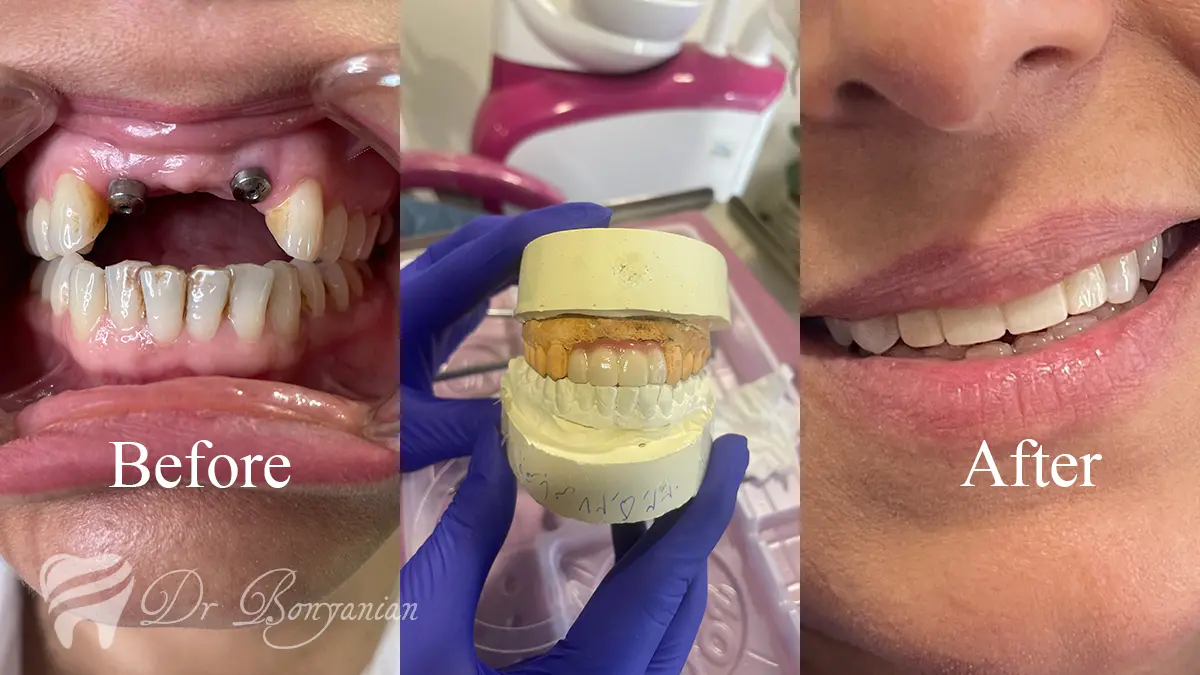
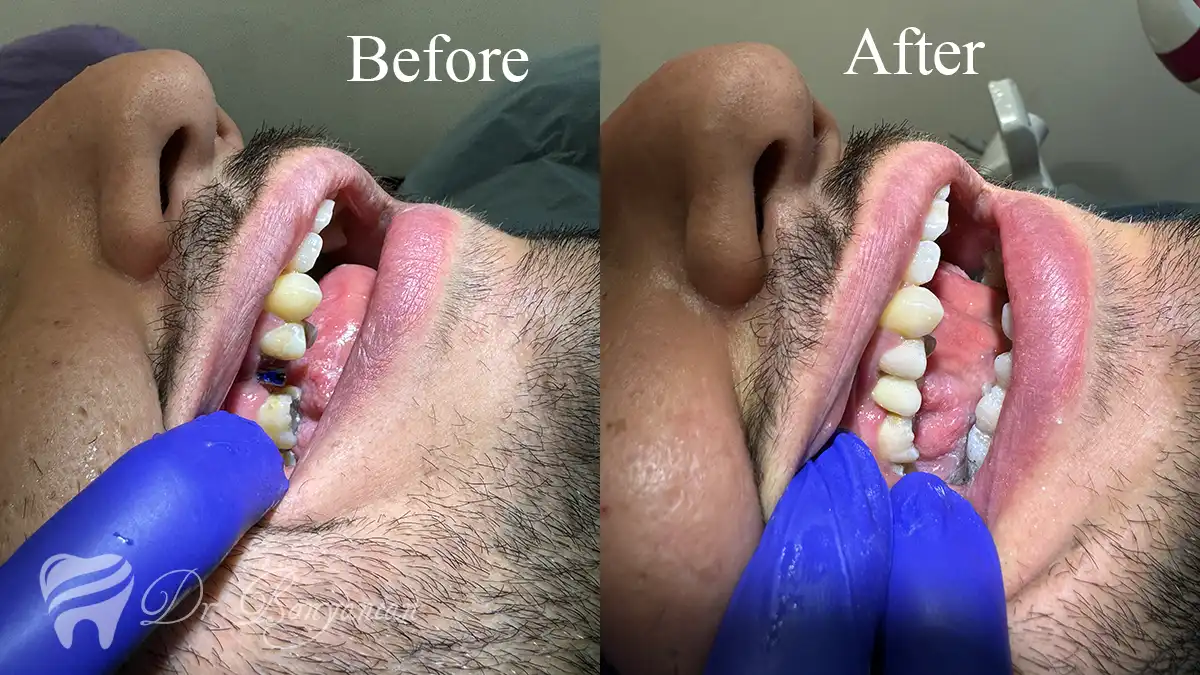
Before & After (Real Cases)

For Expats: English-Speaking Care & Travel-Friendly Planning
Our team is fluent in English and experienced in coordinating care for international patients seeking dental implants in Iran. We keep communication simple and documentation organized:
- Direct contact: phone and WhatsApp for quick questions and scheduling.
- Documentation: aftercare instructions in English; receipts and notes for insurance claims when applicable.
- Imaging & records: digital X-rays/CBCT (DICOM) can be shared securely on request.
- Travel planning: we help cluster appointments around your itinerary, with remote check-ins where suitable.
Visit or Contact Our Implant Clinic in Tehran
Address: Unit 7, No. 22, West 6th St., Ahmad Qasir (Bokharest) St., Arjantin Sq., Tehran
Phone: +98 21 8853 9720 •
WhatsApp: +98 912 514 2202
Downloads & Resources
- Implant Aftercare (PDF)
- Medical History Form (PDF)
Bring printed forms to your appointment or email them in advance if preferred.
Answering Your Questions – FAQs
Who should not get dental implants?
Individuals with uncontrolled systemic diseases (e.g., poorly controlled diabetes), heavy smokers unwilling to quit during healing, active oral infections, insufficient bone when grafting is not feasible, or those undergoing certain cancer therapies. Final eligibility requires a clinical exam and CBCT.
What is the best dental implant brand in the world?
There isn’t a single “best” brand for all cases. Several reputable systems (e.g., Straumann, Nobel Biocare, Zimmer Biomet, Dentsply Sirona) have strong clinical evidence. The dentist’s experience with the chosen system and your specific clinical needs usually matter most.
How long is the implant recovery period?
Initial soft-tissue recovery is about 1–2 weeks. Osseointegration typically takes 3–6 months (sometimes longer), depending on site stability and adjunctive procedures like grafting. Complete timelines vary by case.
Can we use fixtures and abutments from different brands?
Generally not recommended. Mixing brands may create compatibility issues that risk the fit, stability, and long-term success of the implant.
Is the implant crown considered part of the implant package?
No. The implant fixture (and sometimes the abutment) comes in sterile packaging. The final crown is custom-made separately by a dental laboratory.
Is orthodontic treatment possible on an implanted tooth?
No. Implants are fused to bone and cannot be moved orthodontically. If alignment is needed, orthodontic planning should precede implant placement; existing implants are worked around.

About Your Implant Dentist in Tehran
I’m Dr. Nazanin (Nazi) Bonianian, a Dental Surgeon (DDS, Isfahan University of Medical Sciences, 2010;
Medical Council No. 138662). With 15+ years of focused experience in
cosmetic dentistry, oral surgery, and dental implants, I strive to deliver precise, up-to-date, and safe care.
After graduating in 2010 and joining the Iranian Medical Council in 2011, I completed specialized courses in
cosmetic dentistry, implant surgery, and endodontics, earning international certificates.
By combining advanced technologies (e.g., CBCT planning, guided surgery) with evidence-based protocols,
I focus on realistic expectations, predictable outcomes, and clear communication—especially for English-speaking patients.
- Clinic: Dr. Bonianian Dental Practice
- Address: Unit 7, No. 22, West 6th St., Ahmad Qasir (Bokharest) St., Arjantin Sq., Tehran
- Hours: Sat–Wed 09:00–20:00 • Thu 09:00–14:00
- Phone: +98 21 8853 9720 • Mobile/WhatsApp: +98 912 514 2202
- Initial consultation: Free (by appointment)
My goal is to create a calm, satisfying, and worry-free experience. Oral health and a confident smile can meaningfully improve quality of life—and we’re here to support you at every step.
Dental Implants at Dr. Bonianian Dental Clinic in Tehran
Our dental implant clinic in Tehran combines experienced implant dentists with digital planning and modern techniques. From single-tooth to multi-tooth solutions, we tailor care to your needs and support you through every step.
Final Summary
Dental implants are among today’s most reliable solutions for replacing missing teeth. They restore aesthetics and function while supporting jawbone health. The most important first step is a thorough consultation with experienced specialists—so your plan is individualized, expectations are clear, and long-term maintenance is built in.
Request Dental Appointment
Call 02188539720 or submit the consultation form to schedule with our implant dentist in Tehran. Our English-speaking team will coordinate appointments and follow-ups.

Dr. Nazi Bonyanian
Dental Surgeon (DDS) — Medical Council Number: 138662
Graduate of Isfahan University of Medical Sciences with over 15 years of experience in implants, laminates, and oral and dental surgery.
Address: No. 22, Unit 7, West Alley 6, Bokharest Street, Argentina Sq., Tehran, Iran
Phone: +98-21-88539720 | WhatsApp: +98-912-514-2202
Email: info@drbonyanian.com
Working Hours: Sat–Wed 09:00–20:00 | Thu 09:00–14:00 | Friday Closed
⚠️ اطلاعات این صفحه صرفاً برای آگاهی است و جایگزین معاینه و تشخیص تخصصی نمیباشد.