



Treating a toothache with these “pain killers”:
- Clove (oil or powder)
- Fresh crushed garlic
- Warm salt water
- Cold compress (ice)
- Benzocaine gel or lozenges (numbing gel)
- Peppermint tea or a cold peppermint tea bag
- Diluted apple cider vinegar
- Raw onion
- Coconut oil (oil pulling)
- Over-the-counter pain relievers (like ibuprofen or acetaminophen)
A toothache is one of the most common health problems worldwide, stemming from causes ranging from a simple cavity to complex gum diseases or even neurological issues.
Many people neglect their oral health until the pain becomes severe. However, understanding the exact causes of toothaches and knowing the methods for treatment and prevention is a crucial step in maintaining oral health and improving quality of life.
In this article from Dr. Bonyanian’s dental website, we will take a scientific and practical look at this topic. So, stay with us until the end to learn more.
What Is a Toothache?
Any sensation of pain in the teeth, gums, jaw, and other areas of the mouth that sometimes leads to pain in the throat, ears, and head is classified as dental pain.
A toothache is often one of the last signs of a problem with the tooth’s root (nerve), although it can sometimes be referred pain from other parts of the body.
This sometimes excruciating pain often appears at night, robbing a person of their sleep. The pain is categorized from mild to unbearable, depending on its cause.
- Mild Toothache: This type of pain is usually slightly annoying, but most people prefer to endure or ignore it.
- Moderate Toothache: Moderate dental pain can be bothersome and may cause difficulties in performing daily activities. In some cases, individuals may need to use painkillers to reduce the pain.
- Severe Toothache: This type of toothache is often debilitating, making daily activities impossible. The individual will almost certainly require painkillers to control the pain.
- Unbearable Toothache: Unbearable tooth pain is usually caused by a sudden issue such as an impact, accident, or dental trauma. This pain can lead to a loss of consciousness or even fainting.

Toothache Symptoms
Depending on its cause, a toothache can manifest with various symptoms. However, the presence of the following signs generally indicates a toothache:
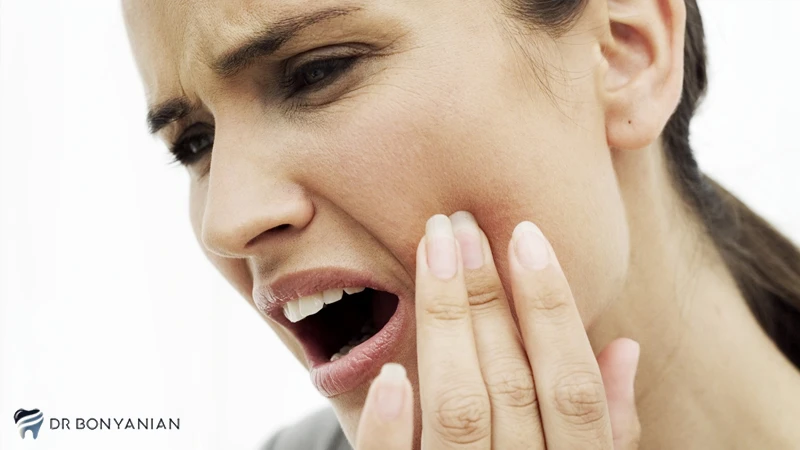
- Throbbing pain inside the tooth
- A pulsing sensation
- Swelling of the face or inside the tooth and gum area
- Fever
- Sharp pain when touching the tooth or biting down on food
- Extreme sensitivity to cold, heat, sourness, and sweetness
- Intermittent and periodic pain in the jaw, throat, and ear
- Constant nighttime pain, severe enough to wake the person from sleep
Diagnosing the Cause of a Toothache
If we were to diagnose the cause of your toothache remotely just based on symptoms, we would need to review over 50 different reasons in a separate article! For now, it’s enough to know that your toothache can have many different causes.
However, the most likely reasons for a toothache include the following:
Tooth Decay
According to a reputable article titled “Diagnosis and treatment of abnormal dental pain,” the most common cause of toothache is tooth decay, which results from acids produced by bacteria in the mouth.
Bacteria feed on the sugar and starch in food and produce acids that can erode tooth enamel. Eventually, cavities of varying sizes form on the teeth, and if left untreated, they can reach the tooth’s nerve, causing severe pain.

Tooth Infection
The second most common cause of toothache is an infection in the tooth or gums. An infection can cause pain, swelling, redness, and the formation of a dental abscess. This infection can also spread to other teeth and even other parts of the body.
Toothaches caused by infection usually appear after sunset. This type of toothache is highly variable and may not even respond to low-dose painkillers like acetaminophen.
Broken or Damaged Tooth
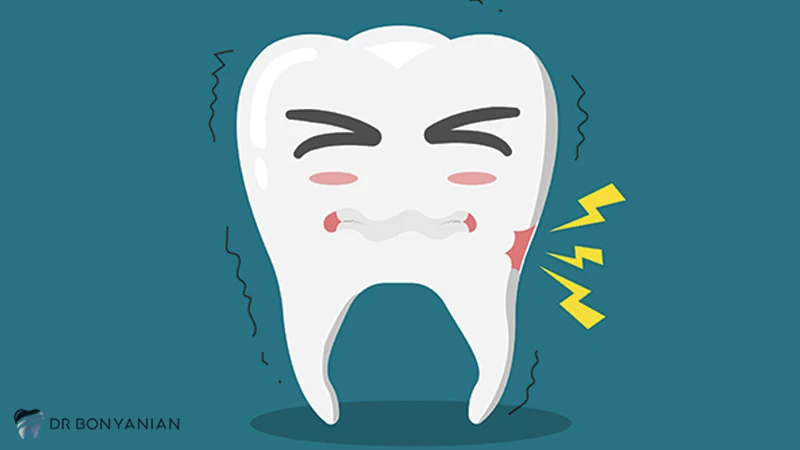
Teeth can crack or break due to trauma, chewing hard foods, or teeth grinding (bruxism). This damage can range from minor to severe and, in addition to causing intense pain and sensitivity, may even lead to tooth loss.
Tooth Eruption Problems
A common cause of toothache in childhood is the eruption of baby teeth, and in adulthood, the eruption of wisdom teeth. In general, tooth growth is accompanied by severe pain. But imagine if there isn’t enough space for the new tooth to grow, or if the tooth puts pressure on its neighbors to complete its growth process!
Recent Dental Procedures
In many cases, the reason for a toothache is a recent dental procedure such as a root canal or a tooth extraction.
These dental procedures typically cause mild to severe pain for a few days due to pressure on the tooth or irritation of the tooth and gums.
Other Common Causes of Toothache
- TMJ (temporomandibular joint) pain
- Sinusitis
- Headache
- Nerve damage
- Loss of previous dental fillings

| Also Read: Strengthen Tooth Enamel with 12 Practical Solutions |
Toothache Treatment
First and foremost, it’s best to know that the most effective way to treat a toothache is to visit a specialist dentist. Your dentist can diagnose the cause of your toothache after a thorough examination of your teeth, prescribing an OPG X-ray, and even reviewing your medical history. In many cases, a correct diagnosis of the cause of the toothache will advance a major part of your treatment process.
However, if you are unable to visit a dentist, or if the pain strikes at night when the dental office and clinic are closed, it’s a good idea to know a few strategies to manage your toothache.
These strategies will help you relieve your pain for a few hours so you can visit a dental specialist at the next available opportunity.

Treating an Infected Toothache
An infectious toothache is caused by a bacterial infection inside or around the tooth. This pain is usually severe, worsens at night, and may be accompanied by gum swelling, fever, and pus discharge.
Dentists usually prescribe antibiotics to treat the tooth infection and reduce the pain, as only these drugs can help eliminate the infection-causing bacteria. However, if the infection is severe, they may prescribe an injection instead of an oral capsule.
An infected tooth is often accompanied by a dental abscess. Therefore, the dentist will likely drain the abscess. This means they will open the pus-filled sac using special dental instruments and drain the pus. Draining this abscess greatly helps in reducing your tooth pain.
From that point on, procedures like root canal therapy, restoration, and crowning of that tooth should be performed.
Of course, if none of these solutions are applicable or if the infection is spreading to adjacent teeth, the dentist may have to extract your tooth or teeth.

Treating Wisdom Tooth Pain | Treating Pain After Wisdom Tooth Extraction
You probably know what a wisdom tooth is. Wisdom teeth are the third set of molars at the back of your mouth. Sometime between the ages of 17 and 25, these teeth move up through your jawbone to break through your gum line and become part of your chewing mechanism.
Sometimes a wisdom tooth is unable to break through the gum and remains behind the gum for a long time. For this reason, it puts pressure on the gum and other teeth from behind, causing a toothache.
It is estimated that 70% of people have at least one impacted wisdom tooth. This is why many times when you visit the dentist with toothache symptoms, you discover an impacted wisdom tooth in your mouth.
The dentist can help the wisdom tooth grow by guiding it in the right direction or, if there is not enough space for the new tooth to grow, they can remove it from your mouth.
During your treatment process, or if the time between your initial examination and wisdom tooth surgery is long, you can use the following home remedies to reduce the pain of your impacted wisdom tooth:
- Using over-the-counter painkillers like Gelofen and Brufen
- Using a cold compress
- Applying a dental numbing gel to the painful area
- Placing clove oil on the tooth
- Rinsing your mouth with salt water
- Using peppermint oil

Toothache Treatment at Dr. Bonyanian’s Dental Clinic
Tooth pain is one of the most annoying problems that can disrupt your daily life. If you are looking for a permanent and reliable solution to get rid of your toothache, Dr. Bonyanian’s Dental Clinic, with its experienced and specialized staff, will help you in this matter.
The specialists at this clinic, with years of experience and specialized knowledge in dentistry, offer a wide range of treatment services to solve your dental problems. These services include root canals, fillings, implants, wisdom tooth surgery, and dental orthodontics.
At Dr. Bonyanian’s clinic, the latest equipment and technologies are used to provide you with treatment services. Also, a calm environment has been created for patients to feel relaxed during treatment.
If you are looking for a painless and stress-free treatment experience, choose Dr. Bonyanian’s Dental Clinic. Contact us for an appointment and a free consultation.
Methods for Instant Toothache Relief | Quick-Fix for Toothache!
If your toothache is unbearable, go to the hospital immediately. An emergency physician can help treat your tooth pain quickly by administering injectable painkillers like Ketorolac.
This painkiller is not available over-the-counter and can only be accessed after a doctor’s prescription. So, if your toothache is unbearable, get yourself to the nearest hospital or 24-hour clinic immediately.
Also, if you are in a situation where going to the hospital is not possible, apply a little clove plant or its extract on your painful tooth using a sterile piece of cotton.
Quick Toothache Relief at Night
Dr. Bonyanian suggests that those looking for quick toothache relief at night should follow these steps:
First, take an over-the-counter painkiller like diclofenac or Novafen. Then, gently gargle with some salt water and elevate your head with a few pillows, keeping it higher than the rest of your body. Elevating your head while sleeping can help prevent pressure from blood flow to the head and mouth. This improves circulation and reduces your pain and swelling.

Treating Toothache with Dental Scaling
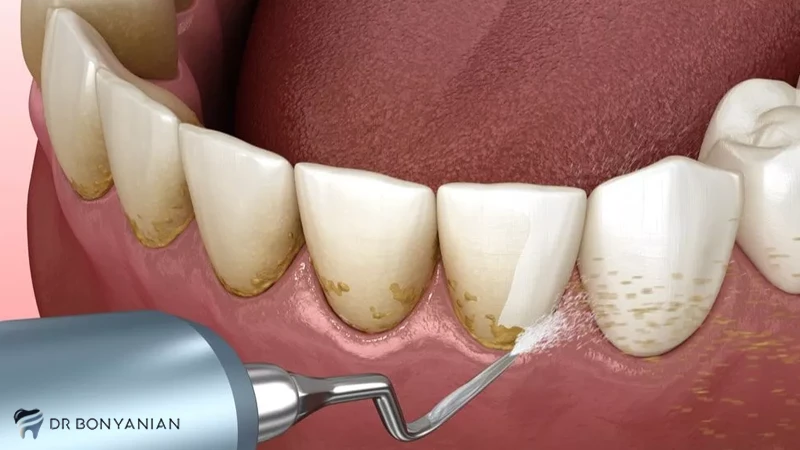
Sometimes, scaling can help reduce or eliminate tooth pain. In this process, plaque and tartar are removed to prevent deep damage to the tooth. Treating a toothache with scaling should be done in the early stages of plaque formation or tooth pain; otherwise, it will not be very effective in treating the toothache.
After scaling, using a mouthwash or fluoride therapy is often recommended to prevent the re-formation of plaque on the teeth.
What is Dentol Drop and How Does It Affect Toothache?
Dentol drop is a herbal product used to relieve tooth pain and other oral problems. The active ingredient in Dentol is carvacrol, which is derived from medicinal plants like savory.
This active ingredient (carvacrol) has antibacterial, anti-inflammatory, and anesthetic properties. As a result, using Dentol drop numbs your tooth and relieves your pain.
To use Dentol, you need to pierce the tube’s cap with a needle. Place some of the Dentol drop on a cotton ball or swab and insert it into the cavity caused by decay (or on the inflamed and painful tooth).
Then, wait for one minute for the pain to completely subside and your tooth to become numb.

Home Remedies for Toothache
This section is for symptom relief only and is not a substitute for professional diagnosis and treatment.
Although visiting a dentist is the best solution for definitive toothache treatment, several home remedies can provide temporary relief and reduce the unbearable nature of the pain until you can see a dentist.
Below, we will explore 22 home remedies for toothache.
1. Clove Oil, the Toothache Killer!

Clove is a traditional remedy for numbing nerves. One of the main chemical compounds in this spice is eugenol, a natural anesthetic. That’s why many traditional medicine experts have dubbed clove the “toothache killer”!
However, be aware that using clove when there is inflammation and infection in the tooth can be somewhat painful. For this reason, we suggest you either use whole cloves or soak a cotton ball in clove oil and place it on your tooth.
Then, bite down gently on the cotton ball to release the oil. Keep the cotton on the painful area for half an hour (or until the pain subsides).
2. Ginger Cayenne Paste (Red Pepper and Ginger)

Mix equal parts of these two spicy ingredients with enough water to form a paste. Roll a small cotton ball in the paste until it is well-coated, then place it on your tooth, keeping it away from your gums and tongue.
Keep the cotton on the tooth until the pain subsides (or as long as you can tolerate it). You can also try these spices separately, as both are powerful pain relievers that prevent pain signals from reaching the brain.
3. Gargle with Some Salt Water
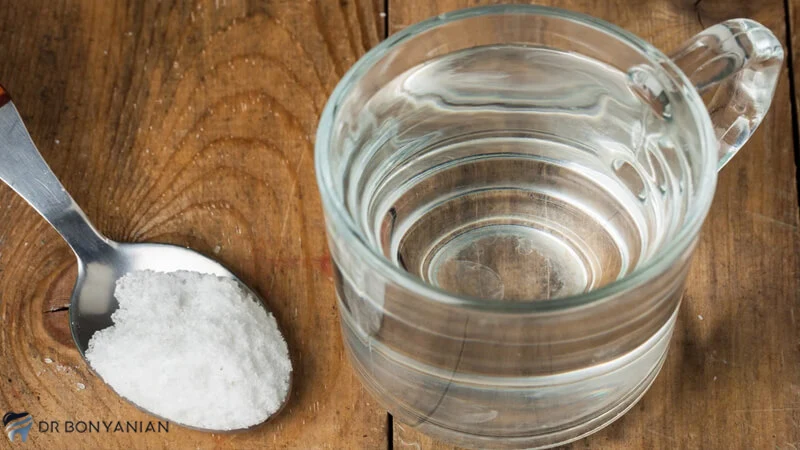
You can make a pain-relieving mouthwash by dissolving a teaspoon of salt in a cup of boiling water. This mixture helps wash away irritating debris and reduces swelling.
Gently swish the salt water in your mouth for about 30 seconds, then spit it out. Salt water cleans the area around the tooth and draws out fluids that cause swelling. Repeat this treatment every 2 hours to see its miraculous results.
4. Peppermint Tea Bag

Peppermint tea has a pleasant flavor and numbing properties. Steep one teaspoon of dried peppermint leaves in a cup of boiling water for 20 minutes. After the tea has cooled, gargle with it and then spit it out or swallow. You can also place a soaked peppermint tea bag on the tooth.
Peppermint tea can also be used as a mouthwash once it has cooled.
5. Rinse with Hydrogen Peroxide
To help kill bacteria and relieve some discomfort, you can gargle with a 3% hydrogen peroxide solution. This can provide temporary relief from your toothache or eliminate an unpleasant taste in your mouth.
The hydrogen peroxide solution is for rinsing only. Be sure to spit it out and rinse your mouth several times with plain water afterward.
6. Use a Cold Compress
Another very popular solution for treating a toothache is using a cold compress. This helps numb the nerves in your teeth and reduces inflammation and facial swelling, especially if you massage the painful area with the cold compress.
You can buy a cold pack (or an ice bag) from a pharmacy or put some ice cubes in a plastic bag for this treatment.
7. Rub Your Tooth with Myrrh

You can rinse your painful tooth with a myrrh tincture. The astringent effects of this gum not only help reduce inflammation but also eliminate a large portion of the bacteria in your mouth!
To benefit from this gum, boil one teaspoon of myrrh powder in two cups of water for 30 minutes. Strain it and let it cool. Then, dissolve one teaspoon of the solution in half a cup of water and gargle with it five to six times a day.
8. Use Vinegar and Brown Paper
Another way to treat severe toothache is to soak a small piece of brown paper (from a grocery bag) in vinegar, sprinkle black pepper on one side, and hold it against your cheek. The warming sensation on your cheek may distract you from your toothache.
9. Acupressure

Try acupressure to stop your toothache quickly. With your thumb, press the point on the back of your other hand where the base of your thumb and index finger meet. Apply pressure for about two minutes. This helps release endorphins, the brain’s feel-good hormones. (There are restrictions if you are pregnant.)
Acupressure is a natural pain-relieving treatment that has been used for over 2000 years. While acupressure is more commonly used for other parts of the body, it has been shown to treat mild to moderate toothaches. If your toothache is severe or persistent and the pain worsens with acupressure, you should see a dentist immediately.
You can perform acupressure at home. Find a quiet space in your home away from any disturbances. Remember to breathe deeply and relax your muscles as much as possible. Apply deep, firm pressure to each point for at least one minute before moving to the next. You can repeat these exercises several times a day until the pain subsides.
10. Garlic
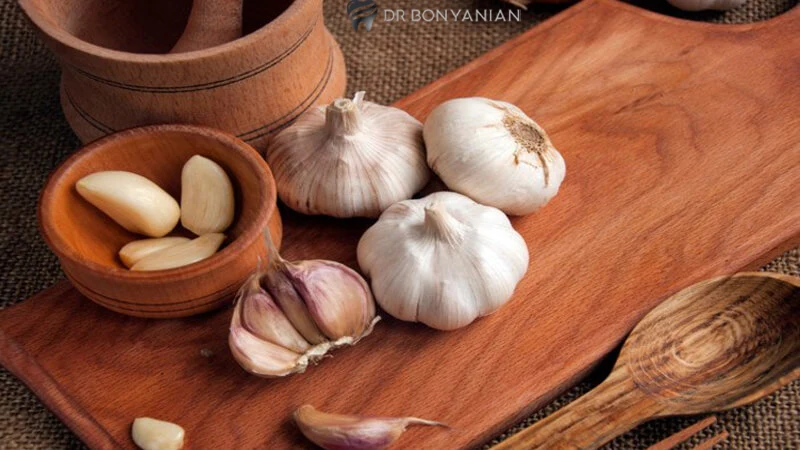
For years, garlic has been recognized as a beneficial medicinal plant for eliminating bacteria. You can also use garlic to relieve your toothache. To do this, crush a clove of garlic to make a paste. Then, apply it to the painful and inflamed area of your tooth.
Alternatively, you can gently bite on a raw garlic clove and press it between your teeth.
11. Vanilla Extract

Vanilla extract contains alcohol and helps relieve your toothache. Its proven antioxidant properties also act as an effective healer. To use vanilla extract, apply a small amount to your finger or a cotton ball. Then, apply it directly to the painful area. Repeating this up to 5 times a day is permissible.
12. Guava Leaves

Guava leaves have anti-inflammatory properties that can help in wound healing. They also have antimicrobial activity that can aid in oral care. To use the properties of this product, chew fresh guava leaves or add crushed guava leaves to boiling water to make a mouthwash.
13. Wheatgrass

The high chlorophyll content in wheatgrass has numerous healing properties that can be effective for healing the body’s wounds from the inside when consumed. This plant can soothe inflammation in your mouth and prevent various types of infections.
To use wheatgrass, you can boil some wheatgrass and swish its juice in your mouth as a mouthwash.
14. Homemade Thyme Mouthwash for Toothache Treatment

Thyme has powerful antioxidant and antibacterial properties. You can add a few drops of thyme essential oil to water to make a mouthwash to reduce your toothache symptoms.
You can also dilute thyme essential oil with a few drops of water and add it to a piece of cotton. Then, apply it to the affected area.
Thyme is a plant with many properties for relieving pain and reducing the effects of infection. This plant is particularly effective for reducing wisdom tooth pain, and its mouthwash can be easily prepared at home.
To prepare this mouthwash, you need a glass of warm water and one to two drops of thyme oil. Mixing them and gargling with the solution will relieve the pain.
15. Using Onion
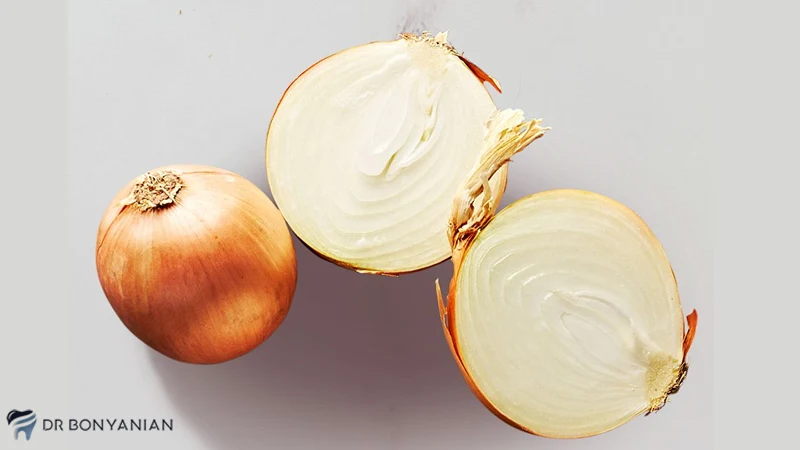
Onions have antibacterial properties and can reduce tooth pain by killing infection-causing microbes. Either place a piece of raw onion on the problematic tooth or boil the onion for a few minutes to help release its juices more. Then, gargle with the onion juice in your mouth.
16. Treating Toothache with Turmeric | Turmeric for Quick Treatment of Tooth Infection
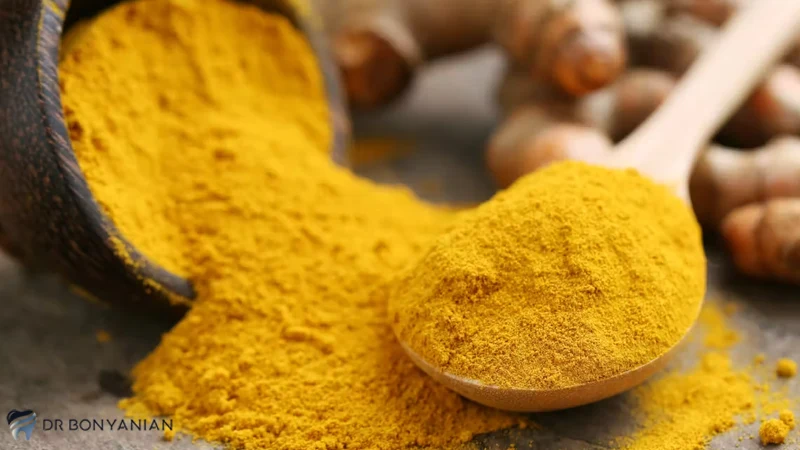
Turmeric, a popular spice with strong anti-inflammatory and antiseptic properties, has long been used in traditional medicine to treat various ailments, including toothaches. The active compound in turmeric, curcumin, plays a significant role in its therapeutic effects.
The benefits of using turmeric for a toothache include reducing inflammation and pain, fighting infection and eliminating harmful dental bacteria, reducing swelling, and improving oral hygiene by helping to remove plaque and tartar.
How to use turmeric for a toothache:
- Turmeric Mouthwash: Mix one teaspoon of turmeric powder with a glass of warm water. Rinse your mouth with this solution several times a day.
- Turmeric Paste: Mix one teaspoon of turmeric powder with a little water or coconut oil to create a thick paste. Apply the paste to the affected tooth and gum and leave it for 10 to 15 minutes. Then rinse your mouth with warm water.
17. Aloe Vera Gel, a Strong Painkiller for Toothache
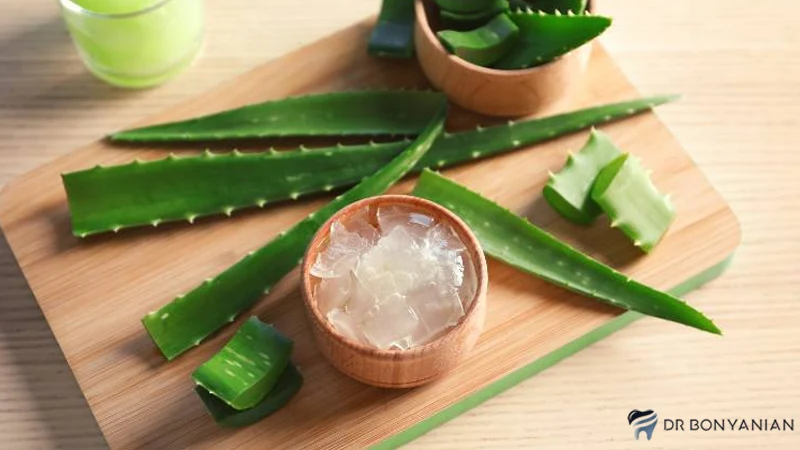
Aloe vera is rich in antioxidants and has anti-inflammatory properties. This plant is very useful and practical for soothing and reducing inflammation around the area where your wisdom tooth is trying to erupt.
If your gums are scratched during the tooth’s eruption, aloe vera gel helps in the faster healing of these scratches. Also, using aloe vera gel helps to relieve tooth pain and cool the gums.
18. Treating Toothache with Turmeric
Turmeric, this golden and miraculous spice, with its strong anti-inflammatory and antibacterial properties, has long been used in traditional medicine to treat various diseases. One of the interesting applications of turmeric is relieving tooth pain because turmeric contains a substance called curcumin. A substance that helps reduce your tooth pain by reducing inflammation and fighting bacteria.
You can use turmeric in several different ways to benefit from its properties for treating toothache. For example, you can mix turmeric spice with a little water to get a thick paste. Then apply this paste to the painful area of your tooth and gum and keep it there for 15 to 20 minutes. Then rinse your mouth with warm water.
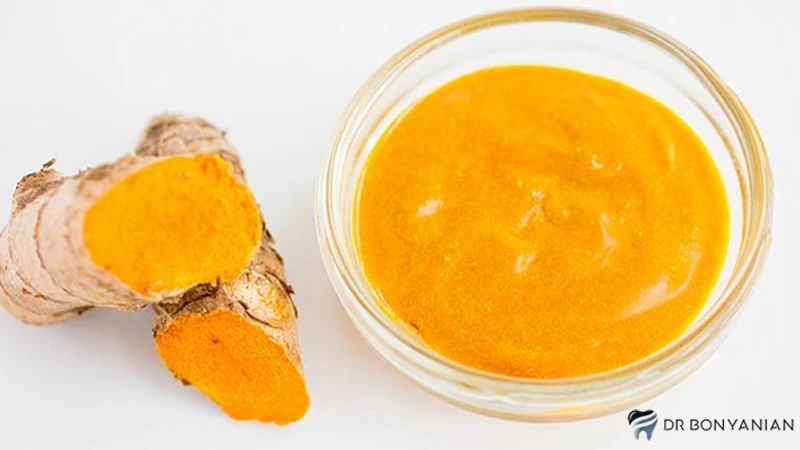
You can even dissolve turmeric powder in warm water and use this mixture as a mouthwash. Of course, in this case, your teeth will turn yellow, which is not a problem! Because instead, your toothache will be reduced.
Treating Severe Toothache
Severe toothache can be very annoying and worrying. This pain is usually a sign of a serious problem with the teeth or gums, such as the nerve being affected, a broken tooth root, or a severe root infection.
Our recommendation in this situation is to see a dentist immediately. But if you don’t have access to a dentist at the time of the pain, you can use the following temporary and home remedies to treat your severe toothache:
- Rinsing the mouth with salt water
- Using a cold compress
- Chewing cloves or placing a cool clove tea bag on the painful area
But the most definitive solution for treating a toothache is to go to the dentist, treat the problem with that tooth, and get an anti-pain injection.
Remember that delaying the treatment of a toothache can have serious consequences for you. For example, the tooth infection could spread to other parts of the body and cause more serious problems.

I have a severe toothache. What should I do?
We understand how annoying a toothache can be. But you also need to stay calm and follow the steps we tell you:
- First of all, make some salt water for yourself and gargle with it in your mouth. Repeat this 3-4 times in a row.
- Wait 5 minutes and then take a painkiller. Take any painkiller you have on hand. Because whatever it is, even a simple, ordinary painkiller is better than being in pain!
- After taking the pill, wrap a piece of ice in a thin cloth and place it on your cheek to gradually numb that area. Repeat this process for 15 to 20 minutes.
- Now, pick up the phone and call one of the nearest dental clinics in your area and make an “emergency appointment”. If it’s the middle of the night and the dental offices are closed, either go to the hospital or find a 24-hour dental clinic.
Treating Toothache at Home with Medication
Medication use must be individualized and supervised by a qualified clinician; do not self-medicate.
We have discussed the complete range of painkillers for toothache in a separate article. However, in this section, we will also mention the most suitable painkillers for relieving tooth pain:
| Pain Reliever | Approved Age Range | Suitable For |
|---|---|---|
| Acetaminophen | 6 months and up | Mild to moderate pain, fever |
| Ibuprofen | 6 months and up | Mild to moderate pain, inflammation |
| Naproxen | 12 years and up | Moderate pain, inflammation, infection |
| Mefenamic Acid | 12 years and up | Severe pain, infection |
| Gelofen | 15 years and up | Severe pain, infection |
Strong Home Pain Relievers for Toothache
In times when you don’t have immediate access to a dentist, you should look for home remedies for temporary pain relief. In these situations, the most effective and guaranteed painkillers prescribed for treating toothache are drugs like ibuprofen, Gelofen, mefenamic acid, and acetaminophen with codeine.
Of course, in situations where your condition is very acute and serious, you can also use diclofenac suppositories after consulting a specialist doctor. This suppository has a faster absorption rate than oral painkillers.
Instant Home Remedy for Toothache
There are several home remedies that can help temporarily relieve tooth pain. Of course, these methods are not a substitute for visiting a dentist and are only used for temporary pain relief.
One of the effective methods for immediate pain relief is using a cold compress. Placing an ice pack wrapped in a clean cloth on the cheek in the painful area can help temporarily numb the nerve and reduce swelling.
Also, rinsing your mouth with lukewarm salt water can reduce the bacteria in your mouth and soothe the inflammation of your mouth and teeth. To do this, you should dissolve a teaspoon of salt in a glass of warm water and rinse your mouth with it.

In addition, taking over-the-counter painkillers like ibuprofen or acetaminophen can also help reduce your toothache.
Some people also use the anti-inflammatory and pain-relieving properties of garlic. You can also crush a clove of garlic and place it on the aching tooth to reduce some of the inflammation.
Instant Home Remedy for Children’s Nighttime Toothache
All parents know how annoying a nighttime toothache in children can be and how it can disrupt the peaceful sleep of both the child and the parents. Fortunately, there are several home remedies that can help temporarily relieve tooth pain. However, we reiterate that these methods are not a substitute for visiting a dentist and are only for temporary pain relief.
One of the most effective methods for reducing tooth pain in children is using a cold compress. Using an ice pack wrapped in a clean cloth on the child’s cheek can help reduce swelling and temporarily numb the painful area.

Placing a cool tea bag on the child’s aching tooth may also slightly reduce the child’s tooth pain. This is because tea, especially chamomile tea, has very strong anti-inflammatory properties.
In addition to the above, you can also mix a few drops of clove oil with a little coconut oil and gently apply it to your child’s painful gums to reduce their pain.
Quick Treatment for Children’s Toothache
Fortunately, there are several home remedies that can temporarily reduce children’s tooth pain. But for the umpteenth time, we emphasize that these methods are not a substitute for visiting a dentist and are only for situations where access to a doctor is not possible.
One of the solutions for instant treatment of children’s toothache is to dissolve a teaspoon of salt in a glass of warm water and ask the child to rinse their mouth with it. This will reduce inflammation and bacteria in your child’s mouth.
Then, you should wrap an ice pack in a thin cloth and place it on the child’s cheek in the area of the aching tooth. This will help reduce swelling and temporarily numb the painful area of your child’s face.
Finally, you should use a painkiller specifically for children. For example, acetaminophen drops for children, or any other medication that the dentist has allowed you to use.

The Best Home Remedy for Toothache
Among all the methods we mentioned, using a cold compress, turmeric, and salt water are the best home remedies for teeth. This is because the effectiveness of these options is faster than other treatments.
Using over-the-counter painkillers also significantly helps in the quick treatment of your toothache, provided that you only use painkillers until you visit the dentist.
Home Treatment for Nerve-Related Toothache
Nerve-related toothache is usually caused by damage to the nerve inside the tooth and is very annoying and painful. Although no home remedy can replace a visit to the dentist, taking painkillers can temporarily reduce this pain.
Other home remedies for toothache are not very effective for this type of pain because this toothache is usually much more serious and severe than other toothaches.
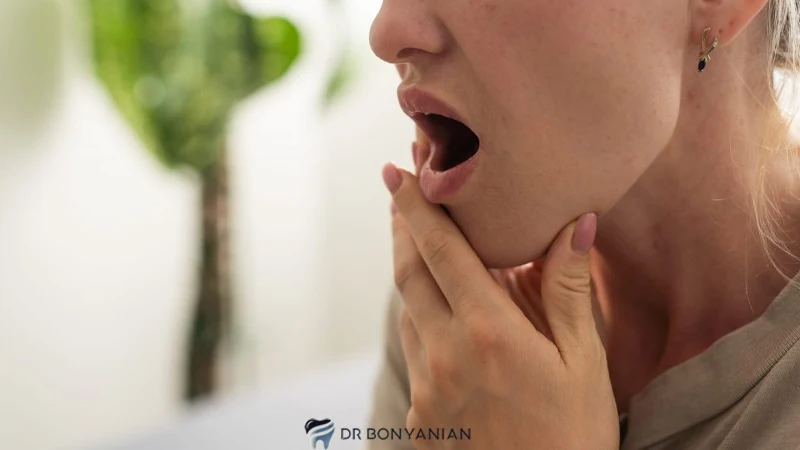
Treating Pain After Lower Wisdom Tooth Extraction
Everyone who has had their wisdom teeth extracted knows how painful this procedure is. But fortunately, there are several ways to manage and reduce this pain.
The dentist will prescribe painkillers like ibuprofen or naproxen immediately after the wisdom tooth extraction. So, take the first painkiller immediately after leaving the dental office.
Then, as soon as you get home, place a cold compress on the cheek on the side of the extracted tooth to gradually numb that area. During this time, do not talk at all so that the blood clot on your tooth is not dislodged.
Remember that tooth pain, especially after extracting a stubborn tooth like a wisdom tooth, is completely normal and may continue for 3 to 4 days. So, try to control this pain by taking your painkillers regularly.
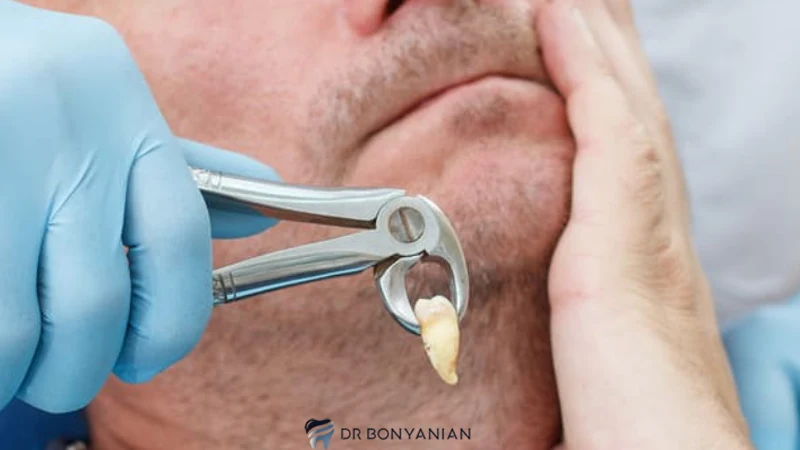
Which Doctor Should I See for a Toothache?
If you have a toothache, the best course of action is to see a dentist. A dentist can diagnose the cause of your pain and provide the appropriate treatment. However, if you are in a situation where there is no dentist nearby, you can also see an emergency room physician.
Final Summary
Many people do not pay attention to their oral health until they face serious problems and pain, such as a severe toothache. But once they experience a very severe and painful toothache, they decide to pay more attention to their oral hygiene.
We hope you are not one of these people and that you prevent toothaches by regularly following hygiene practices. If you have any questions in this regard, you can contact us through the form below.

Dr. Nazi Bonyanian
Dental Surgeon (DDS) — Medical Council Number: 138662
Graduate of Isfahan University of Medical Sciences with over 15 years of experience in implants, laminates, and oral and dental surgery.
Address: No. 22, Unit 7, West Alley 6, Bokharest Street, Argentina Sq., Tehran, Iran
Phone: +98-21-88539720 | WhatsApp: +98-912-514-2202
Email: info@drbonyanian.com
Working Hours: Sat–Wed 09:00–20:00 | Thu 09:00–14:00 | Friday Closed
⚠️ اطلاعات این صفحه صرفاً برای آگاهی است و جایگزین معاینه و تشخیص تخصصی نمیباشد.
