



What is a tooth extraction socket? A tooth extraction socket is the space in the gum and jawbone that forms after a tooth is removed. This socket naturally fills with a blood clot and is gradually repaired over time by gum tissue and bone.
What should we do to help the extraction socket close?
- Avoid vigorous rinsing of the mouth for the first 24 hours.
- Do not smoke or use a straw for drinking.
- Do not consume alcohol.
- Eat soft, cool foods.
The complete healing process may take several months; be patient.
Tooth extraction, especially the removal of teeth like the wisdom teeth, is one of the most common dental procedures. After a tooth is extracted, a socket forms in the gum, which gradually closes and heals through the body’s natural processes.
But a question many patients have is: how long does it take for the tooth extraction socket to close? In fact, many of our patients at the Dr. Bonyanian Dental Clinic also ask us, “When will my extraction site heal?”
This frequent question from you prompted us to dedicate a specialized article on the Dr. Bonyanian dental website to examine all aspects of this topic and provide important tips for faster healing of the extraction site.
What is a Socket After Tooth Extraction?
The “formation of a socket after tooth extraction” means that after the tooth is removed from the jawbone, a void is created where the tooth’s root used to be. This empty space, or socket, appears as a depression in the gum and is precisely where the tooth root was previously located.

Why Does a Socket Form?
When a tooth is extracted, not only the crown but also the root is removed from within the bone. The remaining empty space naturally fills with a blood clot, which is the first stage in the wound healing process and the closing of the tooth socket.
Causes of Dry Socket After Tooth Extraction
The primary cause of a dry socket after tooth extraction is the dislodging or improper formation of the blood clot in the extraction site. Furthermore, the following factors can increase the risk of this complication:
Smoking After Tooth Extraction
Smoking immediately after a tooth extraction can cause the blood clot to dislodge from the wound site. The nicotine in cigarettes reduces blood flow and slows down the healing process. The heat and suction pressure from smoking also increase the risk of developing a dry socket.
Rinsing the Mouth Within 24 Hours: A Mistake That Dislodges the Clot
One of the most common mistakes patients make is vigorously rinsing their mouth in the first few hours after tooth extraction. This action can dislodge the blood clot, leaving the socket open and leading to pain and dental inflammation. It is best to avoid rinsing and gargling for the first 24 hours.
Using a Straw for Drinking
Sucking liquids through a straw creates negative pressure in the mouth, which can pull the blood clot out of the wound site. This action exacerbates the risk of a dry socket. Therefore, you should use a glass for drinking liquids for the first few days.
Infection of the Wound Site After Extraction
If the extraction site becomes infected, the socket’s closing process slows down significantly. An infection can destroy new tissue, causing pain, swelling, and even prolonged exposure of the wound site. Maintaining oral hygiene and taking antibiotics as prescribed by your doctor is crucial.
Use of Certain Medications
Medication use must be individualized and supervised by a qualified clinician; do not self-medicate.
Drugs such as anticoagulants (like warfarin), steroids, or chemotherapy medications can negatively affect blood clot formation or tissue repair.

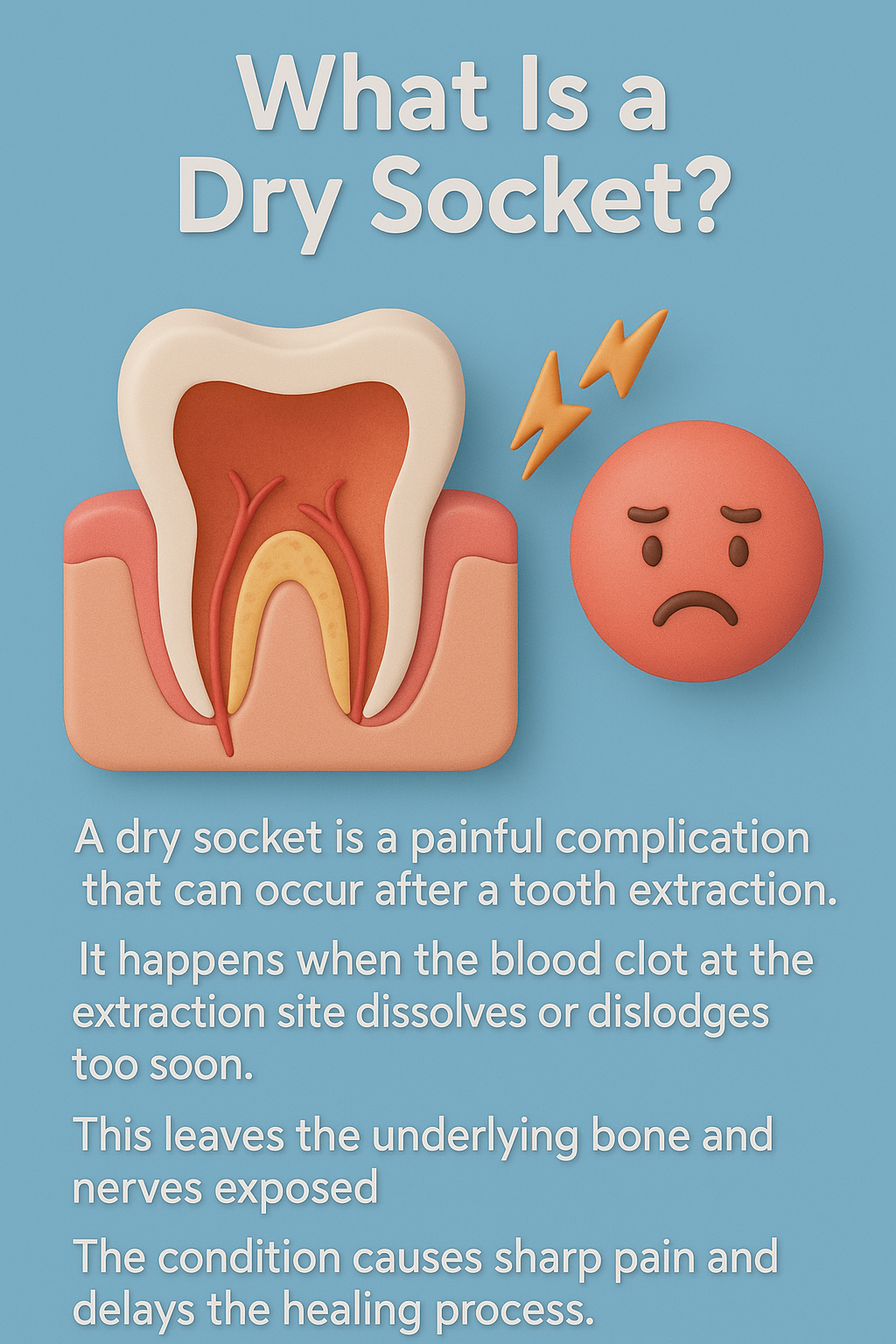
What is a Dry Socket?
A dry socket, or alveolar osteitis (Dry Socket), is one of the most common and painful complications following a tooth extraction. This condition occurs when the natural blood clot that should form in the extraction site:
- Fails to form at all, or
- Is dislodged prematurely (e.g., by vigorous rinsing, using a straw, or smoking).
As a result, the bone and nerve endings within the tooth socket are left exposed, causing severe pain, inflammation, and sometimes a foul odor from the mouth.
Difference Between a Normal Socket and a Dry Socket
After a tooth extraction, a natural socket forms where the root was located. This is a completely normal part of the healing process.
However, if this socket does not heal properly and the blood clot fails to form or is lost, the person may develop a dry socket, which is a painful complication.
Comparison Table: Normal Socket vs. Dry Socket
| Feature | Normal Socket (Natural Healing) | Dry Socket (Complication) |
|---|---|---|
| 🔹 Definition | A natural socket in the gum after tooth extraction | A condition where the blood clot is lost or fails to form |
| 🔹 Healing Process | Natural and with minimal pain | Slow, with severe and persistent pain |
| 🔹 Blood Clot Presence | Present | Absent or dislodged |
| 🔹 Pain Intensity | Mild and tolerable | Severe, throbbing, sometimes radiating to the jaw or ear |
| 🔹 Onset Time | Immediately after extraction | 2 to 4 days after extraction |
| 🔹 Treatment | Home care, keeping the area clean | Requires a visit to the dentist for dressing placement |
| 🔹 Socket Appearance | Dark-colored with a visible blood clot inside | Empty, with visible whitish bone |
| 🔹 Potential Complications | None, follows the natural healing path | Risk of infection, delayed healing, bad breath |
Gum Socket After Wisdom Tooth Extraction
When a wisdom tooth, especially an impacted one, is extracted, it leaves a relatively deep socket in the gum. This socket is usually covered with soft tissue within the first week and, if there are no complications, will close completely over several months. Although the external appearance of the gum may normalize sooner, the internal healing process continues.
Therefore, the formation of a socket in the gum after a wisdom tooth extraction is a natural phenomenon, and proper care is essential to prevent infection and accelerate the healing process.
If your wisdom teeth have not yet erupted and you are wondering how to know if your wisdom teeth are coming in, you should pay attention to signs like pain at the back of your jaw, gum swelling, or pressure on adjacent teeth, and consult a dentist if you observe these symptoms.

Dry Socket After Impacted Wisdom Tooth Surgery
A dry socket after impacted wisdom tooth surgery occurs when the blood clot is dislodged from the socket or fails to form correctly. In this situation, the bone and nerve endings are left exposed, leading to severe pain, bad breath, and a delay in the healing process.
Socket Formation After Wisdom Tooth Surgery
The socket created in the gum after wisdom tooth surgery is usually deeper than in routine tooth extractions, and for this reason, its healing process may take longer.
In these cases, sutures are sometimes used to help it close faster. Additionally, it is essential to fully adhere to the dentist’s recommendations, take antibiotics, and avoid applying pressure to the surgical area.
Socket Formation After Pulling a Wisdom Tooth
In some individuals, especially those whose wisdom teeth have not fully erupted, the socket created after extraction can be deeper and carry a higher risk of developing a dry socket. Proper care, avoiding tobacco, and maintaining good oral hygiene are key factors in preventing potential problems.
Healing Time for a Tooth Extraction Socket
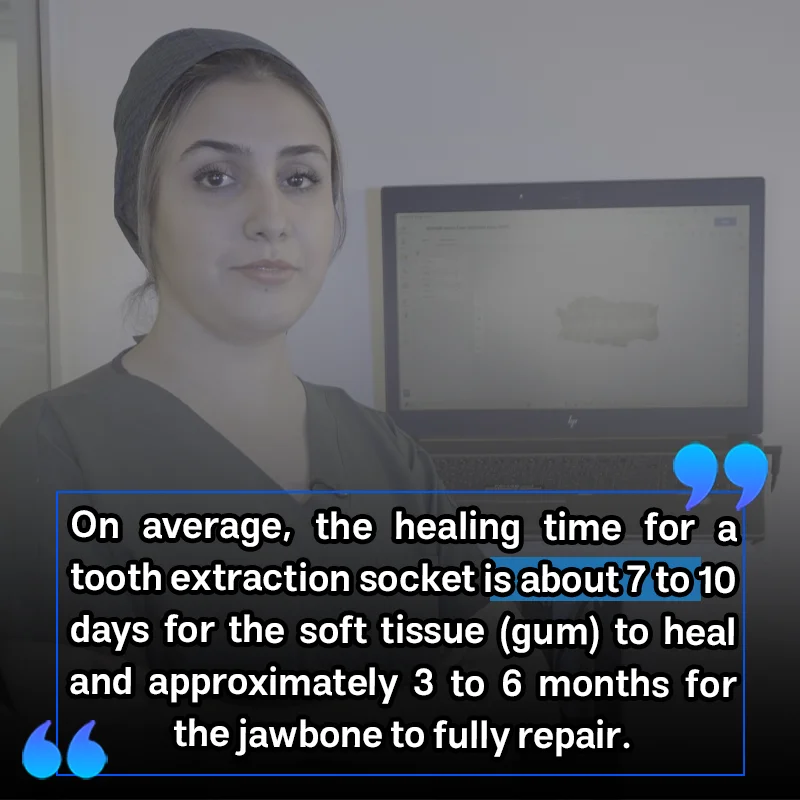
On average, the healing time for a tooth extraction socket is about 7 to 10 days for the soft tissue (gum) to heal and approximately 3 to 6 months for the jawbone to fully repair. However, this timeframe can vary depending on factors such as age, general health status, the type of extraction (simple or surgical), the tooth’s location, and oral hygiene practices.
Time to Close Extraction Gaps in Orthodontics
In cases where a tooth is extracted for therapeutic purposes, such as orthodontics, the gap is gradually filled by the movement of adjacent teeth using braces.
The time it takes to close an extraction gap in orthodontics typically ranges from 6 to 12 months or more, depending on the treatment plan and the severity of the jaw discrepancy.
What Should Be Done for Proper Healing of an Extraction Site?
Nazi Bonyanian:
Complete and rapid healing of a tooth extraction site requires proper care in the initial days and long-term adherence to oral hygiene. The blood clot that forms in the extraction site is the most critical factor in initiating the healing process. Therefore, preventing damage to this clot (e.g., by intentional manipulation) and promoting the regeneration of gum and bone tissue are the keys to a faster recovery.
Strategies for Faster Healing of the Extraction Site
Apply pressure with a sterile gauze pad on the socket:
For 30 to 60 minutes after the extraction, gently bite down on a sterile gauze pad to stop the bleeding and allow a clot to form.
Avoid rinsing your mouth for 24 hours:
Rinsing your mouth or gargling with any substance like water, saltwater, or mouthwash can dislodge the blood clot from the socket and disrupt your healing process.
Do not drink liquids with a straw:
Sucking with a straw creates negative pressure and may dislodge the clot. Drink liquids from a glass instead.
Abstain from smoking and alcohol:
Cigarettes, hookahs, and alcohol slow down healing and increase the risk of dry socket by reducing blood flow and increasing inflammation.
Eat soft and cool foods:
Lukewarm soup, yogurt, mashed potatoes, or smoothies are suitable options for the first few days. Avoid hard and hot foods.
Keep your mouth clean:
Starting from the second day, gently clean the area around the extraction site with a soft-bristled toothbrush and use an alcohol-free mouthwash as recommended by your dentist.
If prescribed, take antibiotics and painkillers as directed:
Medication use must be individualized and supervised by a qualified clinician; do not self-medicate.
Medications help manage pain, prevent infection, and accelerate the healing process. So, if your toothache is severe, use a strong painkiller for toothache as advised.

When Does the Tooth Extraction Site Fill In?
The question, “When does the tooth extraction site fill in?” is one of the most common questions from patients, and the answer depends on the type of tooth and the extraction method. But in general:
- Soft gum tissue: Heals within 7 to 10 days
- Jawbone: Heals within 3 to 6 months
- Orthodontic gaps: Close in 6 months to 1 year
So if you are planning to get a dental implant, you must wait until the jawbone has fully healed.
Summary of the Tooth Socket Topic
The time it takes for a tooth extraction socket to close varies from a few days to several months, depending on various conditions. By following post-operative care instructions and visiting a good dentist regularly, you can prevent complications like dry socket and speed up the healing process.

Dr. Nazi Bonyanian
Dental Surgeon (DDS) — Medical Council Number: 138662
Graduate of Isfahan University of Medical Sciences with over 15 years of experience in implants, laminates, and oral and dental surgery.
Address: No. 22, Unit 7, West Alley 6, Bokharest Street, Argentina Sq., Tehran, Iran
Phone: +98-21-88539720 | WhatsApp: +98-912-514-2202
Email: info@drbonyanian.com
Working Hours: Sat–Wed 09:00–20:00 | Thu 09:00–14:00 | Friday Closed
⚠️ اطلاعات این صفحه صرفاً برای آگاهی است و جایگزین معاینه و تشخیص تخصصی نمیباشد.
