



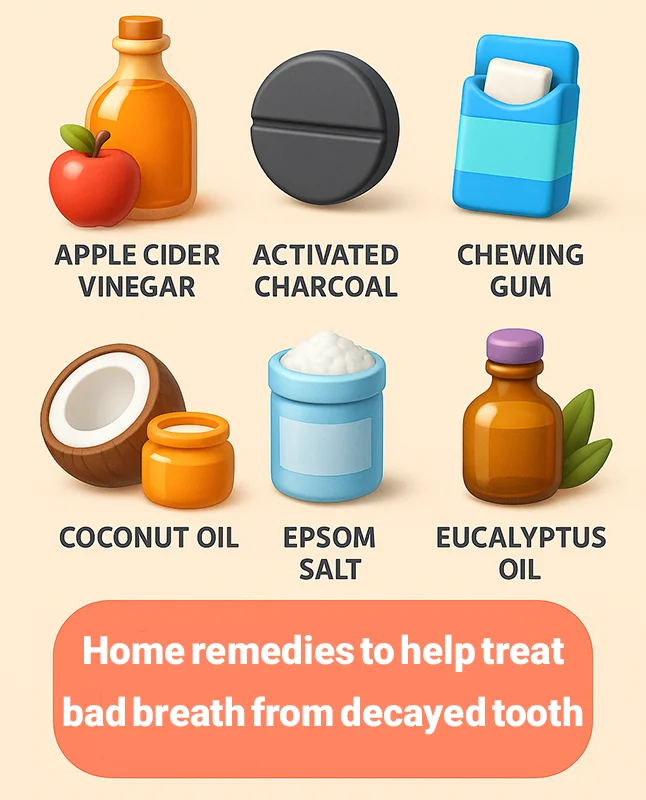
If you suffer from bad breath, you can use the following home remedies to help treat bad breath from a decayed tooth at home:
- Apple Cider Vinegar
- Activated Charcoal
- Chewing Gum
- Coconut Oil
- Epsom Salt
- Eucalyptus Oil
- Fennel Seeds
- Ginger
- Green Tea
- Grapefruit Seed Extract
- Parsley
Understanding Bad Breath and Its Impact
Bad breath can create an unpleasant impression of you in social interactions or business meetings. This seemingly simple problem can sometimes cause such complications in people’s lives that its impact is undeniable.
While bad breath is often caused by poor oral hygiene habits (like not brushing or flossing), it can sometimes be a sign of more serious health problems.
In this article, the specialists at Dr. Bonianian Dental Clinic will examine the common causes of bad breath, methods for prevention, and treatment for bad breath. We will also provide useful tips for maintaining oral health and having fresh breath.
What is Bad Breath?
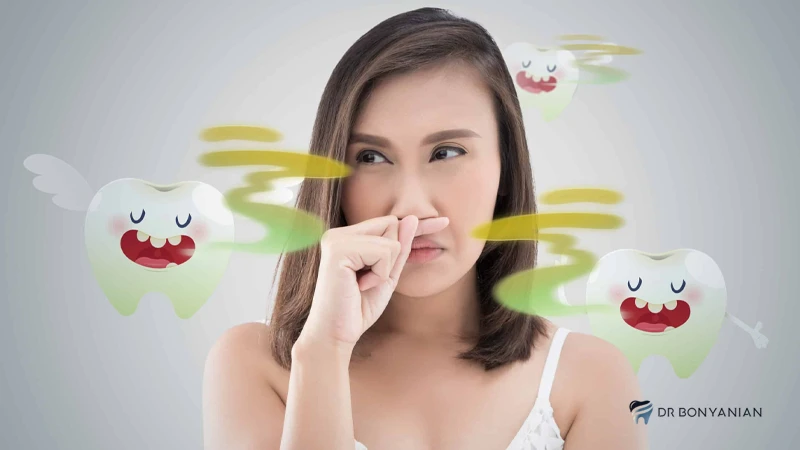
Bad breath, scientifically known as halitosis, is a common problem that occurs when volatile sulfur compounds (VSCs) accumulate in the mouth, creating an unpleasant odor. This condition is very common and can cause embarrassment and social anxiety.
Almost everyone you know has encountered this condition multiple times, and at least once has struggled with it for an extended period. Dental specialists state that at least one in every four people regularly struggles with the condition of bad breath.
Diagnosing Bad Breath
Naturally, someone whose mouth smells bad will notice it themselves, and they may also receive feedback from others about their bad breath. However, it’s better to diagnose the problem ourselves before someone else points it out!
There are two general methods for diagnosing bad breath:
1. Self-Diagnosis of Bad Breath
- Method One: Lick the inside of your wrist with your tongue. Wait about 5 to 10 seconds. After it dries, smell your wrist. If you encounter a bad odor, you’ll know your mouth smells bad.
- Method Two: Cup your hands into a semi-circle shape and place them in front of your face. Then, exhale forcefully and immediately smell the air. Using this method, you can also detect your own bad breath.
2. Diagnosing Bad Breath Using a Device
There are special devices, like the Halimeter, that can detect bad breath in individuals. However, purchasing these devices is not usually recommended for individuals because they are expensive and perhaps not very cost-effective. Furthermore, their accuracy depends on various factors, which reduces the certainty of the device’s readings.
Some well-equipped dental clinics also have various devices for diagnosing bad breath. You can visit a dentist to investigate this issue and use their devices.

Types of Bad Breath
It might seem a bit strange, but bad breath can resemble the smell of a specific substance! Each of these odors is also a sign of specific problems. For example:
- Fetid Breath: This odor is a sign of a sexually transmitted infection that exists as a painless disease in the reproductive system, intestines, and mouth. If not treated promptly, this infection can spread to other parts of the body, like the heart and brain.
- Sour and Acidic: This smell is related to the stomach and other parts of the digestive system.
- Fishy: This odor is a sign of Trimethylaminuria, also known as Fish Odor Syndrome, which is very rare.
- Fruity: The breath of individuals with diabetes smells like acetone. Due to high blood sugar and the improper use of insulin in these individuals, we witness the production of ketones, and the breath smells close to sweetness.
What is Pseudo-Halitosis (Halitophobia)?
Halitophobia, or pseudo-halitosis, is a psychological disorder in which an individual constantly and very intensely worries about having bad breath, even if the smell doesn’t actually exist!
People suffering from this condition often obsessively clean their mouths. This means they constantly chew gum, brush frequently, even spray perfume or cologne inside their mouths, and avoid social interactions.
Real halitosis is when a person actually has bad breath! In contrast, with pseudo-halitosis, the odor exists only in the person’s mind and is not detectable by others. That’s why it’s called “pseudo” or false.

Symptoms of Bad Breath
The first, most common, and relatively obvious sign of bad breath is a bad taste and smell, which you usually notice first thing in the morning. However, there are other symptoms associated with this condition as well. For example:
- Dry mouth
- Plaque buildup around teeth, especially near the gumline
- White coating on the tongue
- Sensation of sinus drainage down the throat (post-nasal drip)
Causes of Bad Breath
Unpleasant mouth odor occurs for various reasons, ranging from internal causes and developing various diseases to reasons like eating a delicious and flavorful, but bad-smelling, meal!
Next, we will introduce you to some of the most prominent causes of bad breath:
- Improper brushing
- Gum disease
- Tooth decay
- Foods like onions and garlic
- Food debris in teeth and on the tongue
- Low-carbohydrate diet
- Alcohol
- Gastroesophageal reflux disease (Acid Reflux)
- Diabetes
- Lung infection
- Specific medications such as antihistamines and tricyclic antidepressants

Poor Oral Hygiene
Lack of oral hygiene is one of the most common causes of bad breath, especially when we don’t brush our teeth regularly or use dental floss.
In this state, tiny food particles from the last meal (and even previous meals) remain between the teeth and on the tongue. Then, these particles are broken down over time by bacteria present in the mouth, producing compounds with an unpleasant odor.
These compounds contain sulfur and create a bad smell similar to rotten eggs. For this reason, a very, very bad and strong odor emanates from our mouths.
Besides food debris, plaque and tartar can also produce bad breath because their rough surfaces become suitable spaces for bacterial accumulation. Consequently, bacteria produce acid, and in addition to increasing the risk of tooth decay, they also cause embarrassment in social settings!
Gum Disease
Gum disease is a serious problem that can cause many complications for oral and dental health. Bad breath is considered one of the smallest and most minor of these complications!
When the gums become inflamed and infected, bacteria thrive in that environment. They then damage the gum tissues and cause the formation of small pockets of pus around the teeth. These pockets, which many of us know by names like canker sores, abscesses, or cysts, are the very cause of bad breath.
Note: It might be interesting for you to know that these pus-filled pockets don’t just form on the surface of the mouth and teeth! Sometimes, they might form under the tooth and near the root. So, you might not even be aware of the existence of these cysts!

Tooth Decay
The link between tooth decay and bad breath is so close that sometimes a dentist can diagnose tooth decay based on the smell of the breath, as bad breath can be a sign of bacterial accumulation and infection on one or more teeth or gums.
Why Does Tooth Decay Cause Bad Breath?
When we discussed the cause of bad breath following signs of tooth decay with Dr. Banianian, we encountered an interesting point. Dr. Banianian explained it to the writing team this way:
Teeth decay due to bacterial growth in the mouth. These bacteria are inherently bad-smelling and secrete a type of sulfur compound. Consequently, they gradually penetrate the soft tissues of your teeth and make the bad smell persistent in your mouth. Furthermore, infection itself is one of the main factors causing bad breath.
Tobacco and Smoking
The first and foremost reason for bad breath is the use of various types of tobacco products. Cigarette smoke contains over 7000 chemical substances, many of which are harmful and carcinogenic. Some of these chemicals, like hydrogen sulfide, methyl mercaptan, and butyric acid, have a bad odor and can deposit in the mouth, on the tongue, and gums, causing bad breath.
Additionally, smoking can cause dry mouth. Since saliva plays an important role in washing the mouth and removing bacteria and food particles, this problem, in turn, can lead to bad breath.

Alcohol Consumption
It might be interesting for you to know that alcohol is a potent diuretic, causing the body to lose more water. The mouth is no exception to this rule, meaning alcohol essentially removes moisture from your mouth. As a result, natural mouth bacteria stick to the teeth, roof of the mouth, and tongue.
Although this is not the only adverse effect alcohol has on your teeth and breath!
Alcohol irritates the mucous membranes of the mouth, causing inflammation and redness. This inflammation creates more favorable conditions for bacterial growth and contributes to the production of bad odor. Furthermore, alcohol consumption can disrupt the balance of bacteria present in the mouth. Some types of bacteria grow better in environments containing alcohol and cause the production of foul-smelling compounds.
Alcohol consumption can negatively impact your digestive system, potentially causing acid reflux and bringing acid back into your mouth, leading to bad breath.
Reduced saliva production, changes in the sense of smell, and contribution to faster tooth decay are other adverse effects of alcohol consumption on the health of your mouth and teeth.
Dental Problems
Cavities and deep pockets resulting from gum disease offer a more suitable hiding place for bad-smelling bacteria! A place that won’t be easily accessible even with brushing and flossing.
Sometimes, your tooth may also develop an infection or abscess. Therefore, the bacteria causing the tooth infection produce foul-smelling chemical substances that can accumulate in your mouth and cause bad breath.
Furthermore, tooth infection can lead to the formation of dead tissue and pus (which has a bad smell) and add to your bad breath.
Oral, Nasal, and Throat Infections
Problems with the nose, sinuses, and throat cause nasal discharge and play a fundamental role in creating bad breath. These bacteria feed on the mucus produced by the body when fighting sinus infections. For this reason, they cause an unpleasant odor.

Dry Mouth
Saliva is very effective in maintaining dental health and fresh breath, washing away unwanted residual substances from your mouth. It also helps break down food during eating and fights against tooth decay and infection.
If not enough saliva is produced in your mouth, halitosis (bad breath) may occur. Dry mouth usually occurs for various reasons such as medication use, alcohol consumption, and smoking tobacco or excessive caffeine intake.
Chronic Diseases
Unpleasant mouth odor is sometimes caused by problems such as acid reflux, liver or kidney disease, and diabetes. In such situations, you should look for other reasons for developing the disease (and not just focus on the bad breath).
Lung cancer, heart failure, tonsil infections, and digestive and respiratory infections are among the most common disease-related and internal causes of bad breath.
Bad Breath Originating from the Stomach
We separated bad breath originating from the stomach from bad breath due to illness to teach you a fundamental point: In many cases, bad breath has absolutely no connection to teeth and mouth! Instead, this smell originates directly from the stomach!
The return of food odor from the stomach to the mouth or developing problems like H. pylori bacteria, which is the cause of stomach ulcers, are among the main reasons for bad breath that both originate from the stomach.

Foods Like Onion and Garlic
Before you worry about contracting a serious illness, think about what foods you’ve consumed in the past 24 hours! Onion, pickles, garlic, or some types of spices will create an unpleasant odor in your mouth.
This smell is usually from your stomach and has no connection to your mouth. That’s why processes like brushing or using mouthwash and gum don’t have much effect on eliminating it!
Use of Certain Specific Medications
This issue occurs for several different reasons:
- Dry Mouth: Many medications can cause dry mouth.
- Medication Breakdown: Some drugs, when broken down by the body, produce foul-smelling compounds that are expelled through breathing.
- Changes in Oral Microbiome: Some drugs can disrupt the balance of natural bacteria in the mouth, leading to bad breath.
Hormonal Changes
Hormonal changes, especially in women and due to reasons like pregnancy and menstruation, are also considered causes of bad breath. These changes, due to the production of progesterone and estrogen in the body, lead to plaque accumulation on the teeth.
Causes of Bad Breath in Children
Bad breath in children can be a worrying situation for parents. However, until the source of this smell is identified, there is no reason for concern.
Most children enjoy eating snacks like sweets, chocolate, and chips. They haven’t yet learned how to clean their teeth properly, and their oral and dental hygiene is not well maintained. Therefore, in many cases, their bad breath is considered a non-serious issue.
Thumb sucking and nail biting are also two effective factors in children’s bad breath. These factors can cause bacterial accumulation and bad breath in children.
Furthermore, decay in baby (milk) teeth can also be a cause of bad breath in children. Because baby teeth usually decay and develop cavities sooner than permanent teeth, these cavities become a place for bacteria to gather. Bacteria that cause acid production make your child’s breath smell bad.
However, if you feel your child’s bad breath is a persistent and long-lasting problem, it’s best to consult a dentist. By doing so, if the problem stems from your child’s teeth, the dentist can resolve the issue by fixing the tooth problem, thereby eliminating your child’s bad breath.
Bad Breath Originating from the Stomach (in Children)
As we explained from the beginning of the article, bad breath can have various causes. One of these causes is digestive problems, especially stomach issues.
When the digestive system doesn’t function correctly, food isn’t digested well. Consequently, certain gases and compounds are produced in the stomach, the smell of which returns to the mouth via the same path food takes to the stomach. As a result, your mouth takes on a very bad smell.
For example, one of the common causes of bad breath originating from the stomach is acid reflux. In this condition, stomach acid (which contains compounds with an unpleasant odor) flows back into the esophagus and throat, causing heartburn and bad breath. It might even cause erosion of your tooth enamel due to this constant return of acid to the mouth.
Other problems such as Irritable Bowel Syndrome (IBS), the growth of harmful bacteria in the intestines, and certain liver diseases can also cause bad breath. Because these problems lead to the production of foul-smelling gases in the intestines, although they are eventually expelled through the large intestine and rectum, a portion of these gases can return to the mouth and cause bad breath.
Whether your bad breath originates from your stomach or your mouth is something that needs to be diagnosed by a specialist physician. However, we recommend that if you are facing the issue of bad breath, first visit a dentist, and then consult an internal medicine specialist.
Morning Breath
Many of us have experienced (or currently experience) having bad breath first thing in the morning. Most of us think this smell is normal and will go away on its own after eating breakfast. But let’s explain a few reasons why having bad breath in the morning isn’t as normal as we might think!
One of the main reasons for morning bad breath is dry mouth. During sleep, saliva production decreases, and this allows bacteria present in the mouth to find an opportunity to grow and produce foul-smelling substances. Since saliva naturally helps clean some of these bacteria, a decrease in saliva production can lead to bad breath.
If you drink enough water throughout the day, or even drink a little water before sleeping and immediately after waking up, you’ll see that this morning bad breath will no longer be an issue!
However, in addition to dry mouth, gum disease, tooth decay, and sinus infections can also cause morning bad breath. Because bacteria that grow in these conditions produce sulfur compounds with a very unpleasant odor.
Even dietary habits can affect morning breath. For example, consuming certain sulfur-containing foods like garlic, onions, and spicy foods in the past 24 hours can cause bad breath.
We’ve already established the role of smoking and alcohol consumption!

What Diseases Can Different Types of Bad Breath Indicate?
Feeling bad breath in the mouth might be a sign of specific problems and diseases. For example:
- Fetid Breath: This odor is a sign of a sexually transmitted infection that exists as a painless disease in the reproductive system, intestines, and mouth. If not treated promptly, it can also affect other parts of the body like the heart and brain.
- Sour and Acidic Breath: Sour and acidic breath is usually related to problems in the digestive tract. For example, one of the most common causes of sour breath is acid reflux. Diabetes, liver diseases, and kidney diseases can also cause sour and acidic breath.
- Fishy Breath: This odor is a sign of Trimethylaminuria, also known as Fish Odor Syndrome, and is very rare.
- Fruity Breath: The breath of individuals with diabetes smells like acetone. Due to high blood sugar and the improper use of insulin in these individuals, we witness the production of ketones, and the breath smells close to sweetness.
Definitive Cure for Bad Breath
The truth is that until the exact cause of your bad breath is identified, no solution will exist as a fundamental and definitive cure for bad breath. You need to adopt the appropriate solution based on the cause of your bad breath to eliminate this condition.
However, the main strategies for treating bad breath include the following:
Maintaining Oral Hygiene
- Brush twice a day: Use a soft toothbrush and fluoride toothpaste.
- Floss daily: Use dental floss to remove plaque and food particles from between your teeth.
- Use mouthwash regularly: Mouthwash can help kill odor-causing bacteria.
- Clean your tongue: Clean your tongue using a toothbrush or tongue scraper.
Lifestyle Changes
- Drink plenty of water: Dehydration can cause dry mouth and worsen bad breath. Drink 6 to 8 glasses of water daily.
- Avoid tobacco and alcohol: Quit smoking and drinking alcohol.
- Maintain a healthy diet: Avoid consuming spicy, odorous, and high-sugar foods.
- Control your stress: Stress can increase dry mouth and bad breath. Manage stress with methods like exercise, meditation, or yoga.
- Chew gum: Use sugar-free, pleasant-smelling chewing gum.
Medical Treatments
- If you have decayed or infected teeth, visit a dentist for treatment.
- Visit a dentist for checkups and to assess the health status of your mouth, teeth, and gums.
- If you use specific medications and feel your bad breath intensifies after taking them, consult your doctor about changing your medication.
- Take action to treat underlying medical conditions (like diabetes, digestive, or respiratory problems).
20 Home Remedies for Bad Breath
In this section, to answer the frequently asked question, “What should I do to get rid of bad breath?”, we provide solutions for the home treatment of bad breath.
Apple Cider Vinegar
Apple cider vinegar is a natural product with antibacterial properties that greatly helps reduce halitosis (bad breath) and restores the pH balance in the mouth. The acid present in this natural product makes the mouth environment unsuitable for the growth of bacteria and fungi.
To use apple cider vinegar to eliminate bad breath, you can mix one or two tablespoons of apple cider vinegar with a glass of water and gargle for 30 seconds to a minute. Then, rinse your mouth with lukewarm water.
You can do this once or twice a day until your bad breath gradually returns to a normal, natural state.
Activated Charcoal
Charcoal absorbs impurities present in the mouth, eliminates harmful bacteria, and helps eliminate bad breath. This substance is also suitable for whitening your teeth. That’s why the use of charcoal toothpaste has become so popular among people in recent years.
However, be aware that using activated charcoal long-term or excessively can cause enamel abrasion. Therefore, it’s better to use it as a supplementary method and periodically.
To benefit from this product, it’s enough to brush your mouth with charcoal-containing toothpaste or activated charcoal itself. By doing this, your bad breath will gradually improve.
Chewing Gum
Chewing gum is one of the common methods for temporarily relieving bad breath. Although this method alone cannot replace complete oral and dental hygiene, it can help reduce bad breath in some cases.
This action stimulates saliva production, and since saliva acts as a natural cleanser in the mouth, it washes away and eliminates bacteria that cause bad breath. Additionally, saliva helps neutralize acids produced by bacteria, clean teeth and gums, and reduce plaque on the tooth surface.
However, note that chewing gum is only a temporary solution, and to completely eliminate bad breath, you must address its root cause.
Coconut Oil (Oil Pulling)
Gargling with coconut oil is a popular method used to maintain oral health and eliminate bacteria. This oil has anti-inflammatory and antimicrobial properties and is used to eliminate bad breath.
Ingredients: 1 tablespoon pure coconut oil.
How to perform: Swish the coconut oil in your mouth for 5-10 minutes and then spit it out. After this, use lukewarm water to rinse your mouth. Repeat this process every day until your bad breath disappears.
Epsom Salt
Epsom salt, or magnesium sulfate, is a mineral compound used in many personal care and health products due to its diverse therapeutic properties. One of the lesser-known applications of Epsom salt is its use for eliminating bad breath.
This salt, due to its natural antibacterial properties, can eliminate bacteria present in the mouth (which cause bad breath). It can also help reduce gum inflammation and disrupt the environment for bacterial growth. Additionally, Epsom salt can help regulate your mouth’s pH.
To use Epsom salt to eliminate bad breath, you can dissolve one teaspoon of Epsom salt in a glass of lukewarm water and gargle for several minutes. Then, rinse your mouth with lukewarm water. You can do this once or twice a day so that your bad breath disappears over time.
Eucalyptus Oil
Eucalyptus oil has antibacterial effects on various types of bacteria. This oil also possesses anti-inflammatory and analgesic properties that relieve pain and swelling in your mouth and are beneficial for eliminating bad breath.
To use this natural extract, simply combine a cup of water with 2-3 drops of eucalyptus oil and gargle this mixture in your mouth. Finally, rinse your mouth with plain water.

Fennel Seeds
Fennel (which is an inherent part of Indian culinary culture) is very effective in resolving halitosis and helps eliminate bad breath. Fennel freshens your breath and also protects your mouth against infections that cause bad breath.
To benefit from the properties of fennel for eliminating bad breath, simply chew one teaspoon of fennel seeds and then spit them out of your mouth. Be careful to expel all the fennel seeds from your mouth, as swallowing these seeds may cause some hormonal changes in your body.
Ginger for Bad Breath
The antimicrobial properties of ginger help eliminate bad breath as well as various types of mouth and throat infections. For this method of use, it’s sufficient to dissolve one teaspoon of ginger juice in a glass of warm water and rinse your mouth with it.
Do this initially after your meals and then once every few days until your bad breath is eliminated.
Green Tea
Drinking green tea early in the morning (instead of tea, coffee, or milk) can go a long way in your battle against halitosis. The phytochemicals present in green tea are naturally antibacterial and eliminate odor-causing bacteria, helping to eliminate bad breath.
Ingredients: One green tea bag, one cup of hot water, and honey (for taste and flavor).
How to use: Steep the tea bag for a few minutes and then remove it. Add honey to the mixture to flavor it, and then drink this tea.
Grapefruit Seed Extract
This citrus extract deodorizes the mouth and also eliminates bacteria that may grow there. It is sufficient to apply 1-2 drops of grapefruit seed extract onto your toothbrush and, using it, brush your teeth with patience and care.
Parsley
Perhaps you have heard about the properties of parsley for bad breath. Parsley not only makes digestion effective and easy but is also a good home remedy for halitosis. The chlorophyll present in parsley acts as an antibacterial agent, helps eliminate odor-causing bacteria in the mouth and throat, and contributes to eliminating bad breath.
To benefit from the properties of parsley for eliminating bad breath, simply chew a few fresh parsley leaves directly or add them as a garnish to your food.
Lemon Juice and Yogurt for Bad Breath
Lemon juice inherently possesses antibacterial properties and eliminates odor-causing bacteria. The good bacteria present in yogurt also cause balance in the natural flora of your mouth cavity. So combine this miracle substance and let it remain on your teeth for 5-7 minutes. Then rinse your mouth.
Baking Soda and Lemon Juice for Bad Breath
Benefit from the properties of baking soda for bad breath. Baking soda balances the pH level in the mouth and lowers acidity because it is a natural antacid. This remedy, combined with the antibacterial properties of lemon juice, creates a powerful combination for eliminating bad breath and is used as a home treatment for bad breath.
Combine one teaspoon of baking soda with ½ teaspoon of lemon juice. Then mix the ingredients until you get a coarse paste. Finally, gently apply this paste to your teeth and allow it to remain exactly on your teeth for one minute.
But be careful not to use this solution frequently and regularly. Because excessive use of baking soda can damage your tooth enamel.
Salt Water for Bad Breath
Saltwater solution neutralizes the mouth’s pH and cleans it. Also, this solution has antimicrobial properties and is used to eliminate bad breath. Many dentists suggest to their clients that instead of using mouthwash, they use salt water. The ingredients and method of use are also completely clear to everyone!
Sesame Oil
Just like coconut oil, sesame oil also cleanses your mouth and improves the health of your teeth. Another benefit of using this solution is that sesame oil also whitens your teeth.
For this, you need to combine one tablespoon of sesame oil with lukewarm water and rinse your mouth with it.
Tea Tree Oil for Bad Breath
You can use the properties of tea tree oil for bad breath. Tea tree oil is a powerful antioxidant and antibacterial substance. This substance acts against various types of bacteria, eliminates them, and is used as a home remedy for bad breath.
Ingredients: 1-2 drops of tea tree oil and one glass of cool water.
How to use: Add tea tree oil to the water and gargle this solution for 3-5 minutes. Then, spit it out and rinse your mouth with plain water.
Guava
Guava is full of Vitamin C, tannic acid, malic acid, and oxalates and is a suitable treatment for bleeding gums, diseased gums, bad breath, and sensitive teeth. Just chew this amazing fruit to improve the overall health of your mouth!
Cardamom for Bad Breath
Cardamom is used in India after meals. This substance acts as an aromatic freshener for the mouth and reduces bad breath. Using it is also very simple! Just chew some cardamom seeds or powder, or sprinkle it in the form of a spice on your food.

Hydrogen Peroxide
Hydrogen peroxide is a strong antimicrobial solution that can easily get rid of bad breath caused by bacterial activity. This substance can also help whiten teeth. However, note that using this solution is only possible under the supervision of a physician.
Cinnamon Properties for Bad Breath
Cinnamon and honey both possess antimicrobial properties that disinfect and cleanse your mouth. Lemon also contains acids that, while balancing the mouth’s pH, have an antibacterial effect on the mouth’s flora. If you are looking for a natural substance to eliminate bad breath, be sure to add cinnamon to your diet.
Ingredients: ½ tablespoon cinnamon powder, 1-2 tablespoons honey (preferably Manuka honey), two lemons, and one cup of warm water.
How to use: Squeeze the fresh juice from the lemons into an airtight container, then add the cinnamon powder and honey. Pour hot water over it, close the lid of the container, and shake well until all ingredients are mixed. Then use 1-2 tablespoons of this mixture to rinse your mouth after brushing, and finally rinse your mouth with plain water.
You can store the cinnamon mouthwash in an airtight container for future use. With this method, you make the best mouthwash for bad breath yourself and use it as a home remedy for bad breath.
Home Remedy for Bad Breath from a Decayed Tooth
Sometimes the main cause of bad breath is the decay of a tooth. Because tooth decay is essentially a cavity where bacteria gather and produce foul-smelling compounds.
Unfortunately, when bad breath is caused by tooth decay, it is much more severe and worse than in other situations. So, to some extent, you can distinguish this smell from other annoying mouth odors.
But What Should We Do to Treat This Bad Breath?
The first step is to visit a dentist and treat that decayed tooth. Because as long as a decayed tooth exists in your mouth, your breath will still smell bad.
The second step is cleaning the mouth using a toothbrush, dental floss, and mouthwash. This action eliminates the existing bacteria in your mouth and part of your bad breath.
Consuming specific foods, chewing raw vegetables like carrots or apples, consuming fruits like strawberries and kiwi, and drinking green tea and water are other actions that will come to the aid of your bad breath in the third step!
Eliminating Bad Breath from Tooth Decay Permanently
Those who constantly struggle with bad breath and tooth problems should look for a permanent and lasting solution for the home treatment of bad breath from decayed teeth. Meaning:
- Treat the decayed tooth.
- Change their diet.
- Follow up on gum problems and dry mouth.
- If they use specific medication, change it in consultation with their physician.
- Pay more attention to their oral and dental hygiene.
- Use pleasant-smelling and sugar-free gum.
Immediate Relief for Bad Breath
One of the quickest methods for temporarily reducing bad breath is using antibacterial mouthwashes. These mouthwashes reduce bad breath temporarily by eliminating odor-producing bacteria in the mouth.
If you want to get rid of your bad breath immediately and quickly, it’s better to use mouthwashes that contain fluoride to protect your tooth enamel in addition to eliminating the bad odor.
However, note that mouthwashes, like other methods we explained, are only a temporary solution. But to get your work done quickly and urgently, they are considered the best option.
How to Get Rid of Bad Breath for Good?
Permanent relief from bad breath is only possible by finding the cause of that odor. So, if you want to get rid of this unpleasant and annoying condition, it’s better to find the cause and origin of this smell.
The path you should take to find the cause of your bad breath starts right from the area of your mouth and teeth. Checking the health status of teeth, having or not having gum disease, and dry mouth are the first issues examined in this process.
If the origin of the bad breath is none of these cases, you should see an internal medicine specialist so that factors such as sinus or respiratory infections, digestive diseases, liver or kidney diseases, and diabetes are examined.
So, be careful that the best way for the permanent treatment of bad breath is finding the cause of this condition and consulting with skilled dentists and internal medicine specialists.
Recommendations for Preventing Bad Breath
- It’s best to brush at least twice daily after each meal and change your toothbrush every 2 to 3 months.
- By cleaning your tongue, you remove food particles and dead cells from its surface and cause the elimination of microbial plaque.
- Regular cleaning of dental prosthetics helps greatly in reducing odor. If using dentures and orthodontic appliances, be sure to follow this point. Also, using a special toothbrush for dental implants greatly helps in eliminating this problem.
- Using dental floss greatly helps in removing trapped particles and keeps the tooth surface clean.
- Maintain a suitable diet and avoid eating foods with excessive spices, garlic, and onions.
- Try to quit smoking tobacco.
What to Eat to Eliminate Bad Breath?
Considering that diet is one of the influential factors on people’s breath odor, consuming the following foods helps in the home treatment of bad breath from decayed teeth:
- Fresh fruits and vegetables
- Probiotic yogurt
- Cabbage, spinach, and lettuce
- Green tea
- Apple
- Coconut
- Ginger
- Mint gum

Addressing Bad Breath from a Decayed Tooth
If you have a decayed tooth and feel your mouth smells bad, the reason is that the decayed tooth provides a suitable environment for bacteria to gather, and by producing sulfur compounds, they cause bad breath.
To solve this problem, the first step is to visit a dentist so that the damaged tooth can be restored or receive root canal treatment. Of course, observing meticulous oral and dental hygiene, including brushing twice a day, using dental floss, and, if recommended by the physician, using mouthwash, will also play an important role in improving bad breath.
Eliminating Bad Breath Permanently
The only way to permanently eliminate bad breath is to find the cause of the bad breath. Meaning, if your bad breath originates from the stomach and digestive problems, even if you brush a thousand times, the bad breath will still remain in your mouth! So, first of all, you must investigate the root cause of the problem.
Sometimes bad breath is due to lesser-known reasons such as digestive problems, acid reflux, chronic sinus infections, or even liver and kidney disorders.
In these cases, visiting a general practitioner or a gastroenterologist can be the key to solving the problem. Additionally, correcting lifestyle habits plays an important role in the home treatment of bad breath. Meaning, implementing behaviors such as drinking enough water, reducing consumption of heavy and sulfur-containing proteins, quitting smoking, and even managing stress.
When to See a Doctor?
If your bad breath does not improve after 48 hours, or if you frequently encounter this problem, first visit a good dentist to check the condition of your mouth and teeth. If your problem is not related to the health of your mouth and teeth, the dentist will refer you to an internal medicine specialist.
To receive free dental consultation services, we invite you to visit our clinic located at Unit 7, No. 22, West 6th Street, Ahmad Qasir (Bokharest) Street, Arjantin Square, Tehran, or contact us by phone at +9821-88539720.
Final Summary
No one likes to show signs of bad breath on the strained faces of those around them during an important work meeting or conversation.
The condition of bad breath is a social and very important issue that must be addressed at the earliest opportunity. Therefore, the specialists at Dr. Banianian Dental Clinic tried in this article to familiarize you with the main causes of bad breath and strategies for resolving this issue.
However, if you did not find the answer to your question or questions in this article, you can enter your information in the field below so that our experts can contact you at the earliest opportunity.

Dr. Nazi Bonyanian
Dental Surgeon (DDS) — Medical Council Number: 138662
Graduate of Isfahan University of Medical Sciences with over 15 years of experience in implants, laminates, and oral and dental surgery.
Address: No. 22, Unit 7, West Alley 6, Bokharest Street, Argentina Sq., Tehran, Iran
Phone: +98-21-88539720 | WhatsApp: +98-912-514-2202
Email: info@drbonyanian.com
Working Hours: Sat–Wed 09:00–20:00 | Thu 09:00–14:00 | Friday Closed
⚠️ اطلاعات این صفحه صرفاً برای آگاهی است و جایگزین معاینه و تشخیص تخصصی نمیباشد.
