



What are the Symptoms of an Abscess?
- Severe and throbbing pain
- Swelling and redness of the gums or face
- Sensitivity to heat and cold
- Discharge of pus from the tooth or gum
- Fever and bad breath
How is an Abscess Treated?
- Drainage of pus by a dentist
- Root canal therapy (endodontic treatment) or tooth extraction
- Use of antibiotics
- Use of pain relievers and warm compresses
- Rinsing the mouth with salt water
Since the incidence of oral and dental abscesses is very common among both adults and infants who are teething, we suspect that you or someone around you may have encountered this problem before. You might even be dealing with a dental abscess right now, which is likely why you searched for “tooth abscess and its treatment methods.”
Don’t worry, and do not touch your dental abscess under any circumstances while reading this article. Specialists at Dr. Banianian Dental Clinic will familiarize you with this lesion, its cause, and treatment strategies in the following sections.
What is a Tooth Abscess?
A tooth abscess (or periapical abscess) is a pocket of pus inside the tooth or at its root, usually caused by deep decay, a cracked tooth, or failed root canal treatment (endodontics). If left untreated, this type of abscess can spread to the jawbone and cause more serious problems for the individual.
A tooth abscess is a painful condition that can look like a swollen red, white, or yellowish bump. Abscesses can also form in various parts of the mouth but usually develop on the gums.

What is ‘Pileh Dandan’?
‘Pileh Dandan’ is the same as a tooth abscess. The term “Pileh Dandan” is used colloquially to describe an abscess that forms around the root of a tooth or the gum. Many of our elders know abscesses by the name ‘Pileh Dandan,’ which has no scientific or semantic difference.
What is a tooth abscess?
A tooth abscess is a pocket of pus caused by a bacterial infection. It’s a painful condition that usually occurs at the root of a tooth or in the surrounding gum area. The infection can spread if left untreated and may lead to serious complications.
What is a Gum Abscess and How Does it Differ from a Tooth Abscess?
Unlike a tooth abscess, a gum abscess is a localized infection in the gum tissues, with no connection point to the tooth itself. This type of abscess usually develops due to bacterial accumulation in gum pockets or between the tooth and gum. It is often caused by gum diseases (like gingivitis or periodontitis), trapped food particles, and poor oral hygiene.
Differences Between Gum Abscess and Tooth Abscess
| Feature | Tooth Abscess | Gum Abscess |
|---|---|---|
| Location of Infection | Inside the tooth and its root | In the superficial gum tissues |
| Primary Cause | Severe decay, cracked tooth, root infection | Gum disease, trapped food particles |
| Pain | Severe and throbbing, may radiate to jaw and ear | Less severe and more localized |
| Accompanying Symptoms | Severe swelling, fever, pus discharge from tooth, sensitivity to cold and heat | Redness, inflammation, gum swelling |
| Treatment | Root canal therapy, extraction (in severe cases), antibiotics | Pus drainage, antibiotics, scaling, gum disease treatment |
Symptoms of a Dental Abscess
Rest assured that a dental abscess will certainly not go unnoticed by you. If you develop this condition, you will become aware of it because this bump is usually painful and makes its presence known by causing bad breath.
However, other signs indicate the presence of an abscess in your mouth, the main ones being:
- Pain in the tongue and mouth
- Bad breath due to pus and infection
- Tenderness of the gums to touch
- Bad taste in the mouth
- Difficulty opening the mouth
- Difficulty swallowing food due to food particles hitting the abscess
- Facial swelling
If the dental abscess is severe, you might also experience pain in the ears, neck, and eyes. The individual might even develop fever, nausea, and vomiting due to the infection, similar to infants experiencing fever during teething.
So, if you experience these symptoms, either go to the hospital immediately or visit a dental clinic so a specialist dentist can promptly examine the affected tooth.

Types of Dental Abscesses
There are three different types of dental abscesses:
- Periapical Abscess: This is the most common type of tooth abscess and occurs when the infection reaches the tip of the tooth root. In a periapical abscess, the infection enters the soft tissue of the tooth from the tooth surface and eventually involves the root.
- Periodontal Abscess: This abscess forms on the gum next to the tooth root. It may also spread to the surrounding tissue and bone.
- Gingival Abscess: A gingival abscess is related only to the gum and is not caused by infection or damage within the tooth. Specialists also refer to this type of abscess as a gingival abscess.
Causes of Tooth Abscess | What Causes Gum Abscess?
Although the outer surface of the tooth has a hard structure, bacteria can penetrate the center of the tooth (the pulp), which contains nerves, connective tissue, and blood vessels. If this happens, the tooth becomes infected, and a dental abscess forms as a sign of infection.
However, how an abscess develops also depends heavily on its type. For example, in periapical abscesses, bacterial penetration into the tooth pulp is one of the main causes. In contrast, gum abscesses usually arise from external infections of the gum itself and the trapping of plaque and food debris between the teeth.
Other causes of dental abscesses include:
- Tooth decay
- Cavities in the mouth
- Gum diseases like periodontitis
- Injury and trauma to the tooth from impact
- Certain diseases and medications (cancer, chemotherapy drugs)
- Diets high in sugar

Diagnosing a Tooth Abscess
The most common symptom of a tooth abscess is swelling and pain. However, because the abscess might blend in with the color of the gum or lack significant protrusion, this condition might remain hidden from your view, and you might only experience the associated pain and discomfort.
In such situations, when you visit a dentist with symptoms of tooth pain, the dentist will first gently tap on your tooth to see if you feel anything different.
If this method yields no results, your dentist will refer you to an endodontist (a root canal specialist). Your abscess will definitely be diagnosed and treated by this specialist.
If you feel you have a dental abscess, you can visit Dr. Banianian Dental Clinic located at Unit 7, No. 22, West 6th St., Ahmad Qasir St. (Bokharest), Arjantin Sq., Tehran for specialized consultation and examination. Our skilled dentists will assess the condition of your tooth and the abscess.
You can also fill out the form below (Note: No form included in OCR text) so our experts can contact you to schedule a consultation appointment.
Complications of Developing a Tooth Abscess
You must follow through with the treatment process for your abscess. Otherwise, the infection might spread to the neck, jaw, and other areas of the head, such as the brain, especially if your immune system is weak.
Tooth Abscess and Facial Swelling
An abscess can spread to the surrounding tissues of the tooth, leading to facial swelling. This swelling usually occurs on one or both sides of the face and is accompanied by redness, pain, and tenderness to touch.
If you experience facial swelling along with tooth pain, seeking immediate dental attention is crucial. This is especially important if the facial swelling is accompanied by fever, chills, or difficulty breathing, as it signifies increased severity.
Preventing Dental Abscesses
Following some tips for maintaining the health of your teeth will help prevent the formation of abscesses. These tips include:
- Brush your teeth twice daily and use fluoride toothpaste.
- Clean between your teeth with dental floss.
- Limit your intake of sugary foods and drinks.
- Visit your dentist regularly.
When Should We See a Dentist for Abscess Treatment?
It is best to visit a dentist upon noticing the first signs of infection in the tooth and observing an abscess. Prompt and early treatment of the abscess prevents the spread of infection to other teeth and body tissues.
Remember that an abscess might appear harmless and small, but like any other infection, it can be troublesome and turn your health situation into an emergency. Therefore, if you observe an abscess, you should visit a dentist or an emergency dental clinic on the same day.

Tooth Abscess Treatment
Abscess treatment depends on how it formed, and usually, one treatment method is not used for everyone. Dentists typically choose the best type of treatment based on factors such as the initial location of the abscess, the extent of the infection, and the body’s immune response to the infection.
Below, we will introduce the best treatment methods for dental abscesses.
Root Canal Therapy
If the abscess has formed due to an infection in the root of your tooth, you will need to undergo root canal treatment (RCT), also known as ‘Asab Keshi’. However, the dentist might prescribe antibiotics before performing the root canal. This creates a pause of up to 6 days between your first visit to the dentist and the root canal procedure.
Read More: Understanding Root Canal Therapy (RCT)
Apicoectomy
Sometimes, RCT is not effective in eliminating the abscess, and other methods like apicoectomy or apico-curettage must be used. This procedure involves removing tissues in the apical area (root tip) and cutting off the part affected by the abscess.
During an apicoectomy, the dentist needs to open the gums to access and remove the infected tissues and the end of the tooth root. For this reason, the abscess treatment process with this method might be somewhat painful for you.
Another, more common name for this procedure is incision and drainage. This is performed at Dr. Banianian Dental Clinic under the supervision of top oral and dental surgery specialists. You can visit our clinic for this procedure. Simply call 021 – 88539720, and our staff will book the earliest available appointment for you.
Antibiotic Use
The dentist may prescribe antibiotics for you to reduce the infection and prevent its spread. The type and dosage of the antibiotic will also be determined based on the severity of the infection and whether you have used other antibiotics for abscess treatment previously.
Furthermore, if the infection is severe, the dentist might use injectable antibiotics to speed up the healing process and prevent further spread of the abscess infection.
Drainage
In some specific cases, infection specialists directly drain the pus from the infected area. For example, drainage might be needed to remove the infection from a parapharyngeal abscess located at the back of the mouth.

Sepsis Treatment
When the body’s immune system reacts severely to an infection in the blood, a serious medical condition called Sepsis occurs for the patient. If sepsis is not treated, it will lead to serious complications. This means the patient might go into septic shock and consequently suffer a dangerous drop in blood pressure, which can cause organ failure and even death in some cases.
Individuals with sepsis require care in an intensive care unit (ICU). In this situation, they are usually treated with intravenous (IV) antibiotics and fluids. Other treatments might also be necessary to protect organs and reduce damage caused by the infection. Surgery or dialysis are among these treatments.
Answers to Some Frequently Asked Questions About Dental Abscesses
How long does it take for a tooth abscess to heal?
The healing time for a dental abscess depends on the severity of the infection and the treatment method used. If the abscess is drained and necessary treatments (like root canal or antibiotics) are performed, the abscess usually improves within 3 to 5 days.
However, if you intend to treat your abscess using home remedies and self-treatment, recovery might take one to two weeks.
What should we do to open a tooth abscess?
To open a tooth abscess, you MUST visit a dentist so they can drain the infection. At home, you can apply a warm compress to the swollen area, rinse your mouth with warm salt water, and use anti-inflammatory pain relievers like ibuprofen to reduce pain. Never try to lance the abscess yourself, as the infection might spread.
What is the best antibiotic for a tooth abscess?
The best antibiotic for a tooth abscess is Amoxicillin (with or without clavulanic acid), which should typically be taken for 7 to 10 days. If you are allergic to penicillin, Clindamycin or Metronidazole are alternative options. Note that the dose and duration of antibiotic use must be determined by a dentist. Therefore, avoid self-medicating with antibiotics.
Read More: Best Pain Relievers for Toothache
Home Remedies for Tooth Abscess
Although visiting a dentist is one of the most reliable solutions when facing a dental abscess, a dentist might not be available in certain situations (e.g., holidays or the middle of the night).
Therefore, it’s helpful to be familiar with home remedies for abscess treatment to prevent further spread of infection in such situations until you can access a dentist.
To relieve pain using home methods, you can use the following strategies:
- Rinsing the mouth with salt water and gargling.
- Using a paste of baking soda and salt.
- Applying a cold compress.
- Placing clove oil on the abscess.
- Placing garlic on the abscess in the mouth.
These methods are only temporary solutions for relieving the pain of a dental abscess and might even be considered risky. They should not be used as a primary (self-)treatment method. Therefore, be sure to visit a dentist at the earliest opportunity and seek treatment for this abnormal and painful condition.
Immediate Tooth Abscess Treatment with Pills
When we asked Dr. Banianian about treating an abscess with pills, we received this response:
You should avoid self-treating a dental abscess at home as much as possible and visit a specialist dentist for this problem.
However, if you lost sleep due to severe abscess pain in the middle of the night and had to use medication, use an over-the-counter pain reliever for toothache, such as ibuprofen, naproxen (found in Aleve), or diclofenac.
These pills are non-prescription pain relievers, and their use is possible without a doctor’s prescription.
How a Tooth Abscess is Drained
If your tooth has abscessed, you should visit a dentist as soon as possible so they can drain the infection and prevent it from spreading. The steps for draining a dental abscess by a dentist are as follows:
1. Examination and Diagnosis
The dentist first examines your tooth and gum and, if necessary, checks the extent of the infection with an X-ray (radiograph). Then, they decide which is the best method for treating your abscess.
2. Draining the Infection Inside the Abscess
In the second step, the dentist drains the collected pus and infection by making a small incision at the site of the abscess. This reduces pain and inflammation in your mouth.
If the abscess is very large, the dentist might use a small tube called a drain to help slowly remove the pus from inside your mouth.
3. Treating the Source of Infection Causing the Abscess
Depending on the severity of the infection and the condition of the tooth, one of the following methods is used to treat the infection that caused the gum abscess:
- Root Canal Therapy: If the abscess is caused by a root infection, the dentist first cleans the inside of the tooth, removes the infection, and disinfects the root canals. Then, the tooth is filled, and if necessary, a crown is placed on it.
- Tooth Extraction: If the tooth is severely damaged and cannot be saved, the dentist extracts it to prevent further spread of the infection.
4. Prescribing Medication
The dentist may prescribe antibiotics to control the infection and prevent its spread. You must complete the full course of your antibiotics to eliminate all remaining infection.
Depending on the severity of the inflammation in your mouth, some pain relievers might also be prescribed to reduce pain and inflammation.
5. Post-Treatment Care
After the abscess drainage, you should follow these points:
- Take prescribed medications according to the doctor’s instructions.
- Use antiseptic mouthwashes.
- Avoid eating hard and hot foods until fully healed.
- Maintain oral hygiene to prevent recurrent infection.
If after 3 days, the symptoms of the abscess infection (like swelling, severe pain, or fever) persist, you should consult your dentist again to re-evaluate the reason for the lack of improvement.
Treatment for Swelling from a Tooth Abscess
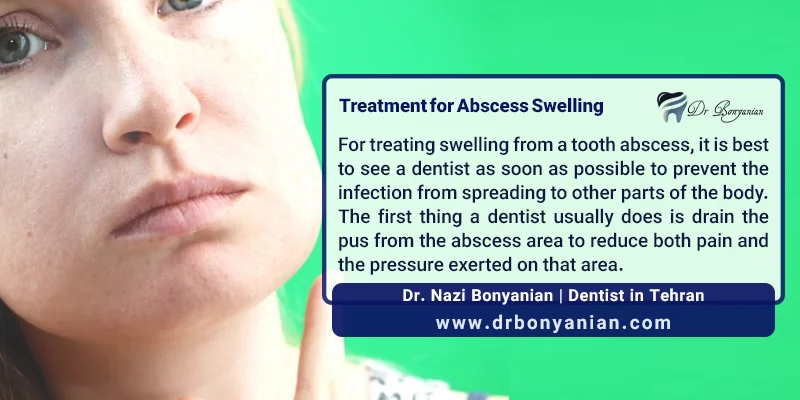
For treating swelling from a tooth abscess, it is best to see a dentist as soon as possible to prevent the infection from spreading to other parts of the body. The first thing a dentist usually does is drain the pus from the abscess area to reduce both pain and the pressure exerted on that area.
In some cases (depending on the severity of the infection), antibiotics may be prescribed to control the bacteria.
Also, if the problem stems from deep decay or root infection, the dentist might require you to undergo root canal therapy. Of course, if the damage is more severe than this, tooth extraction will be the only possible solution for treating the swelling.
Tooth Abscess During Pregnancy
Hormonal changes, morning sickness, and dietary changes in pregnant women can become serious factors contributing to the development of dental abscesses. For this reason, dental abscess is one of the common and unavoidable problems that arise for these mothers.
If you are pregnant and facing this problem, be sure to visit a dentist, as tooth infection is considered dangerous not only for you but also for the child in your womb.
Oral Abscesses in Children
Teething in infants and suitable space for bacterial growth in children’s mouths are among the reasons for children developing oral abscesses. In such situations, the gums recede by about 3 millimeters from the tooth due to infection, creating space for abscess formation.
Wisdom Tooth Abscess
One common type of abscess is caused by the presence of an impacted tooth in your mouth. This type of abscess, which usually affects the lower jaw, is very common among impacted and partially erupted wisdom teeth.
Treating these abscesses, due to difficult access, is only possible through dental intervention and sometimes even requires tooth extraction (کشیدن دندان).
What is a Lip Abscess and How is it Treated?
A lip abscess is another type of abscess and belongs to the family of infectious abscesses in the mouth and tooth area. It is a lump full of pus and infection that forms on the soft tissues of the lip. This condition usually occurs due to the entry of bacteria into a wound, sore, tooth infection, or non-hygienic and improper cosmetic injections (like gel or filler injections).
A lip abscess is very painful due to the numerous nerves in the lip area and causes severe inflammation and swelling in that area.
Symptoms of a Lip Abscess
- Swelling and redness of the lip
- Pain and tenderness to touch
- Presence of a pus-filled lump
- Fever (in severe cases)
- Feeling of burning or heat in the affected area

Treatment for a Lip Abscess
If the lip abscess does not improve on its own within 48 hours or its symptoms worsen, you should see a doctor. The doctor will assess the severity of the infection through a physical examination and, in some cases, imaging, and find the best solution for treating your lip abscess.
For example, if the abscess is large, the dentist will likely drain the pus with a small incision and disinfect the area. If the abscess is not very large or infected, they might prescribe oral or topical antibiotics to prevent the infection from spreading to other areas of the lip and mouth.
Remember that applying a warm compress to the painful and inflamed area helps reduce pain and aids in pus drainage. So, do this several times a day.
Be careful to avoid doing certain things while you have a lip abscess. For example, do not eat spicy, acidic, or heavily spiced foods, and refrain from applying lip makeup or using lipstick until fully healed.
Tooth Abscess Treatment at Dr. Bonianian Dental Clinic
As we have repeatedly mentioned throughout this article, a dental abscess is one of the common and painful problems of the mouth and teeth, which can lead to more serious complications if not treated promptly.
At Dr. Bonianian Dental Clinic, using the latest equipment and the clinical experience of our specialist team, dental abscess treatment is performed accurately, safely, and in a calm, stress-free environment.
We guarantee your oral health and peace of mind through early diagnosis, proper pus drainage, root canal treatment if necessary, and follow-up until complete recovery.
If you or your child are experiencing pain, swelling, or suspicious symptoms of a dental abscess, contact us today to book your initial consultation appointment.
Contact the Clinic: 021 – 88539720
Address: Unit 7, No. 22, West 6th St., Ahmad Qasir St. (Bokharest), Arjantin Sq., Tehran
Successful Treatment of a 7-Year-Old Child’s Tooth Abscess at Dr. Banianian Clinic, Without Fear or Tears!
A few weeks ago, a 7-year-old boy named Arad came to Dr. Bonianian Dental Clinic with severe pain in his lower jaw and noticeable swelling on his gum. His mother said Arad hadn’t been eating well for a few days and would wake up at night from the pain.
With an initial examination and an X-ray, it was determined that an abscess had formed at the root tip of one of his primary molars. The abscess likely formed due to deep decay (which had not been previously treated).
By calming Arad and explaining the treatment steps stage by stage, the existing pus was first drained using local anesthesia. Fortunately, Arad cooperated well, and with encouragement from Dr. Banianian, he comfortably went through the treatment stages.
Then, a course of antibiotics was prescribed for him to control the infection. After a few days, the swelling completely subsided, and in the next session, it was decided to perform root canal treatment on the damaged tooth to preserve the tooth and its natural function.
This successful clinical experience once again demonstrated how much early diagnosis and empathetic communication with the child can make the treatment process easier and more effective.
Final Summary
A dental abscess is an unpleasant condition that confronts individuals with multiple problems, including pain, tooth decay, and even tooth loosening. Therefore, its treatment is considered a necessary and essential step. If you are also facing the problem of an abscess, we suggest you visit a dentist at the earliest opportunity and take action to treat this condition.
Also, if you are a resident of Tehran, you can benefit from the dental abscess treatment services at Dr. Banianian Dental Clinic. If you need an appointment or consultation with our specialists, you can contact us through the form below (Note: No form included in OCR text).

Dr. Nazi Bonyanian
Dental Surgeon (DDS) — Medical Council Number: 138662
Graduate of Isfahan University of Medical Sciences with over 15 years of experience in implants, laminates, and oral and dental surgery.
Address: No. 22, Unit 7, West Alley 6, Bokharest Street, Argentina Sq., Tehran, Iran
Phone: +98-21-88539720 | WhatsApp: +98-912-514-2202
Email: info@drbonyanian.com
Working Hours: Sat–Wed 09:00–20:00 | Thu 09:00–14:00 | Friday Closed
⚠️ اطلاعات این صفحه صرفاً برای آگاهی است و جایگزین معاینه و تشخیص تخصصی نمیباشد.
