



Pain in a filled tooth that has not had a root canal is usually due to the complications of filling a tooth without a root canal. Other complications of filling a tooth without a root canal include the following:
- Pain and sensitivity
- Reinfection or inflammation
- Tooth fracture
- Need for further treatments
- Recurrent decay despite the filling
“Filling” is a more colloquial term for tooth restoration. This method is used when a dentist intends to fill a cavity or cavities within a tooth. However, whether the process of filling a tooth has complications, whether filling a tooth without a root canal has complications, under what conditions the complications of filling a tooth arise, and what happens if we don’t get a root canal, are topics that we will address in the continuation of this article from the website of Dr. Bonyanian’s Dental Clinic.
Complications of Filling a Tooth
In general, the process of filling a tooth is usually performed without any specific complications. This method is most often performed to restore a tooth that has previously undergone a root canal, but in some situations, the dentist may determine that a root canal is not necessary. Before examining the complications of filling a tooth without a root canal, it’s worth looking at the general complications of this process to see if filling a tooth is harmful and if pain after a filling is normal, and what the cause of tooth pain after filling is.
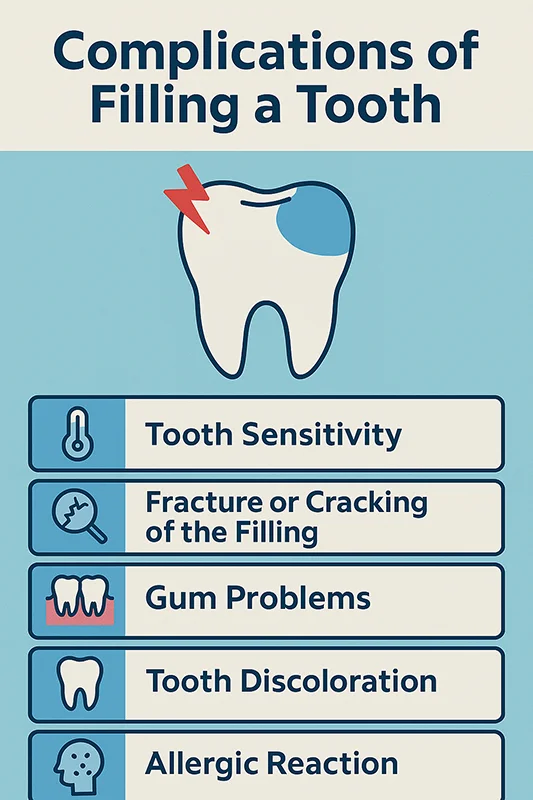
Tooth Sensitivity
Tooth sensitivity is the most common complication of a tooth filling. This problem is caused by the irritation of the tooth nerve in the first few hours and days after the filling. This sensitivity is usually temporary and disappears within a few weeks.
Fracture or Cracking of the Filling
Another complication of a tooth filling is the fracture of the tooth. This complication is caused by chewing hard foods, trauma to the tooth, teeth grinding (bruxism), and bad habits such as chewing on objects and using teeth as tools. The presence of large fillings, sudden temperature changes, and structural problems of the tooth are also among the reasons that can cause a restored tooth to crack.
Gum Problems
Gum pain after a tooth filling may occur. If the filling materials are not properly smoothed and polished, they can cause inflammation and infection of the gum after the filling. For this reason, proper tooth restoration is of great importance.
Tooth Discoloration
Another complication of filling a tooth is the darkening of the root-canaled tooth’s color over time. In this situation, the tooth filling material, amalgam or composite, will change color over time due to exposure to the colors of food and colored drinks.
Allergic Reaction
In very rare cases, a person may be allergic to tooth filling materials such as amalgam or composite. In such situations, the person will experience tooth pain after the filling and will need to visit a dentist to resolve it.
Filling a Tooth Without Root Canal Treatment
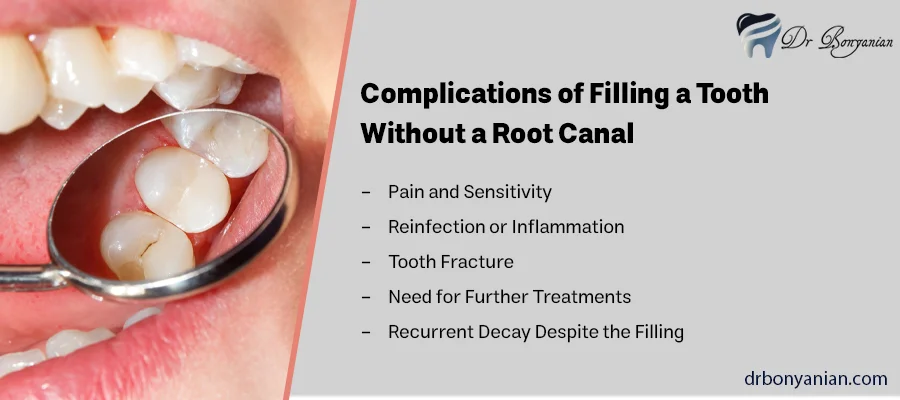
In situations where the decay and damage to the tooth have not reached the root, the dentist can perform a surface filling of the tooth without going through the root canal treatment steps. This means that the prerequisite for this process is a healthy tooth tissue and nerve. This method is particularly more practical and effective when the extent of tooth damage is minor, compared to when a person has to undergo both a root canal and a filling. Also, in special circumstances such as the rapid treatment of toothache during pregnancy, where there are limitations on the use of anesthetic drugs or antibiotics, this method can be a safe and beneficial option. In this method, the tooth will be filled without the need for anesthesia and in a single session lasting at most 30 minutes. But does this cause any complications for the individual? What happens if we don’t get a root canal?
Complications of Filling a Tooth Without a Root Canal
Filling a tooth without performing a root canal usually does not cause a problem for the individual, but the probability of pain and sensitivity of the tooth after filling is higher in this case than at other times. This is because in this method, the tooth still has its nerve and can feel the pressure from the filling material, causing the person to experience tooth pain after the filling. We have prepared these complications for you based on a reputable article on the “Long-term outcome of primary non-surgical root canal treatment,” and we will mention some of these complications below.
Pain and Sensitivity
One of the common complications of filling a tooth without a root canal is temporary pain and sensitivity to cold and heat. If the tooth decay has reached an area close to the nerve, the person may experience severe pain or sensitivity when consuming hot or cold foods after the tooth is filled. This sensitivity usually decreases over time, but in some cases, it can persist for a long time and require further treatment.
Reinfection or Inflammation
If the tooth decay is not completely cleaned out or the tooth filling is not done correctly, a root-canaled tooth infection or re-inflammation in the tooth may develop over time. In this case, there is a risk of the infection spreading to the tooth root and even other parts of the mouth and jaw. This problem may require more complex treatments such as a root canal or even tooth extraction.
Tooth Fracture
Teeth that are filled without a root canal may become weaker than healthy teeth if they have severe decay. In this situation, excessive pressure or trauma to the tooth can lead to its fracture. This problem is particularly more common in posterior teeth, such as molars, where most of the chewing pressure is applied.
Need for Further Treatments
In some cases, if a tooth is filled without a root canal and the main problem, which is infection or inflammation, is not resolved, the tooth may again suffer from pain and infection after some time. In this case, the person may need additional treatments such as a root canal or even tooth extraction. Therefore, in cases where the tooth nerve is affected, it is better to perform a root canal to prevent future problems.
Recurrent Decay Despite the Filling
Recurrent decay despite a tooth filling is one of the potential complications of filling a tooth without a root canal. If the tooth decay is not completely removed or the filling material is not placed correctly and securely, a gap may form between the tooth and the filling material over time. This space can be a suitable place for bacteria to grow and lead to the recurrence of tooth decay. Also, if the tooth is affected by internal infections due to incomplete treatment, this decay can spread rapidly and create more problems for the tooth. In these cases, the tooth may require additional treatments such as a root canal or even extraction. In special circumstances such as pregnancy, we suggest you consult with a specialist dentist and also read the article on root canal treatment during pregnancy.
Is Filling a Tooth Without a Root Canal Painful?
Under normal circumstances, filling a tooth without a root canal may be accompanied by some pain or sensitivity, but the intensity of this pain depends on the depth and extent of the tooth decay. That is, if the decay is superficial and has not reached the tooth nerve, usually not much pain is felt. There might only be a slight sensitivity of the tooth to cold and heat. But if the decay is deeper and reaches the area near the nerve, the dentist will have to use local anesthesia so that the patient feels no pain. After the filling, there may be temporary sensitivity to hot or cold foods and drinks for a few days, which will gradually disappear. If the pain is severe or prolonged, a re-evaluation and even root canal treatment may be necessary.
Pain in a Filled Tooth Without a Root Canal
Sometimes it happens that after filling a tooth that has not had a root canal, the person experiences a toothache. This pain can indicate a problem in the internal tissue of the tooth or pressure and inflammation around the nerve.
Other common reasons for pain in a filled tooth without a root canal:
- Deep decay reaching the tooth nerve
- Inflammation or infection of the pulp (pulpitis)
- Improper filling or excessive pressure on the filling
- Remaining decay under the restoration
- An imperceptible crack or fracture in the tooth structure
- Temporary sensitivity due to nerve irritation after treatment
What Happens If We Don’t Get a Root Canal?
If a tooth that needs a root canal is filled without this treatment, serious problems can arise for that tooth. In the first scenario, the existing infection or inflammation in the tooth pulp remains and can cause severe pain, constant sensitivity, and even the spread of infection to the jawbone and surrounding tissues. In the second scenario, the pressure from the filling material on the inflamed nerve may intensify the pain and necessitate re-emptying and proper treatment. Finally, in more advanced cases and later stages, failure to treat the tooth nerve can lead to the formation of an abscess. An abscess, in addition to severe pain, increases the risk of the infection spreading to other parts of the body. Before filling a tooth, it is essential that the dentist checks whether a root canal is needed to prevent more serious problems.
Ways to Reduce Complications of Filling a Tooth Without a Root Canal
To reduce the complications of filling a tooth without a root canal, you can take the following steps:
- Visit an experienced and skilled dentist.
- Gather the necessary information about different filling materials.
- Take proper care of your oral hygiene.
- Visit your dentist regularly for check-ups and examinations of your teeth.
Complication-Free Tooth Filling at Dr. Bonyanian’s Dental Clinic
Dr. Bonyanian’s Dental Clinic is one of the best dental centers in Tehran, offering services such as tooth fillings to all its clients. This clinic, with the presence of top specialist dentists from all over Tehran, will provide you with the best treatment solution, whether it be a root canal and restoration or restoration and filling without a root canal, after a precise diagnosis of your problem. Some of the services at Dr. Bonyanian’s Dental Clinic include tooth fillings, root canals, scaling, tooth extraction, dental implants, dental crowns, and dental laminates. For more information about these dental processes and to book an appointment, you can call 00982188539720 or use the form below.
Is it Better to Fill a Tooth Without a Root Canal or After?
Whether it is better to fill a tooth without a root canal or after a root canal depends on the condition of the tooth and your dentist’s opinion. Identifying the following factors will help you gain more information in this regard:
- Depth of Decay: If the decay has reached the tooth nerve, a root canal before filling is essential. But if the tooth decay is superficial, the tooth may be filled without needing a root canal, and you would only pay the price for filling a tooth without a root canal.
- Amount of Pain: If your tooth is painful, you likely need a root canal.
- General Health of the Tooth: If your tooth is weak or brittle, a root canal will be necessary to preserve it. If the tooth does not undergo a root canal, you may experience tooth pain after the filling in the future and will need re-treatment.
- Dentist’s Opinion: Ultimately, the best way to determine whether you need a root canal is to consult with a root canal specialist. Your dentist can examine the condition of your tooth with the help of special images and recommend the best treatment method for you.
It is worth knowing that root canal treatment for children’s baby teeth is also possible and even necessary in some cases.
| Factor | Filling Without Root Canal | Filling After Root Canal |
|---|---|---|
| Preservation of the Tooth Nerve | Yes | No |
| Need for a Dental Crown | Less likely | In most cases |
| Cost | Lower | Higher |
| Likelihood of Future Repair/Replacement | Higher | Lower |
| Likelihood of Pain and Sensitivity | Higher | Lower |
| Prevention of Tooth Infection | Less effective | More effective |
| Long-term Preservation of the Tooth | Less likely | More likely |
Which Teeth Can We Fill Without a Root Canal?
Teeth that can be filled without needing a root canal are usually those that have superficial or moderate decay and their nerve has not been affected by this decay. In these teeth, only the enamel layer or a part of the dentin is damaged, and the tooth pulp (the nerve) remains healthy. Therefore, these teeth are able to withstand pressure and daily activities without causing severe pain or sensitivity. In this situation, if the decay has not reached the tooth nerve, a filling is sufficient and a root canal will not be necessary. But if the decay reaches the area near the nerve and the tooth shows severe pain or high sensitivity to heat or cold, it may require root canal treatment.

How to Know if We Need a Root Canal or a Simple Filling?
To diagnose whether you need a root canal or just a simple filling is enough, you must visit a dentist so that the dentist can decide which method is more suitable for you by carefully examining the tooth and your symptoms. If the tooth only has superficial decay and you do not have much pain or sensitivity to cold and heat, a simple filling is usually enough. But if you feel severe pain that intensifies with temperature changes or pressure, or if the tooth is very sensitive when chewing or touching, the tooth nerve may be damaged and require root canal treatment.
In addition, if the tooth suffers from infection or inflammation in the nerve area, a root canal will be necessary. For an accurate diagnosis, it is best to visit a dentist so that they can recommend the best treatment using radiological images and an examination.
New Method for Filling a Tooth Without a Root Canal
In recent years, new methods have been introduced for filling a tooth without the need for a root canal. Methods that allow modern dentistry to achieve the best results in treating damaged teeth and prevent the pain and complications arising from a root canal. Root canal treatment is performed as one of the treatment methods for severe decay or deep inflammation of the tooth due to bacterial infection in the root canal. In this method, the dentist creates a hole in the tooth to access the root canal and then, using special tools, removes bacteria, dead tissues, and inflammation from inside the root canal. After complete cleaning of the infection, the root canal is filled with disinfecting materials, and finally, the hole in the tooth is closed with a suitable restoration.
Final Conclusion on the Topic of Complications of Filling a Tooth Without a Root Canal
Preserving a person’s natural tooth, by any means, has a higher priority than extracting it. The process of restoring or filling a tooth is one of the measures taken with the aim of preserving the natural tooth. However, this process faces the possibility of some complications such as pain, sensitivity, penetration of the filling material into the tooth nerve, and the potential need for re-treatment. In this article, we tried to examine the complications of filling a tooth without a root canal and what happens if we do not get a root canal.

Dr. Nazi Bonyanian
Dental Surgeon (DDS) — Medical Council Number: 138662
Graduate of Isfahan University of Medical Sciences with over 15 years of experience in implants, laminates, and oral and dental surgery.
Address: No. 22, Unit 7, West Alley 6, Bokharest Street, Argentina Sq., Tehran, Iran
Phone: +98-21-88539720 | WhatsApp: +98-912-514-2202
Email: info@drbonyanian.com
Working Hours: Sat–Wed 09:00–20:00 | Thu 09:00–14:00 | Friday Closed
⚠️ اطلاعات این صفحه صرفاً برای آگاهی است و جایگزین معاینه و تشخیص تخصصی نمیباشد.
