



What is a remaining tooth root after extraction? > A relatively common complication that may occur after a tooth extraction. In this complication, a part of the tooth root remains inside the gum or even the jawbone after the extraction.
What are the symptoms of a retained tooth root after extraction?
- Persistent pain
- Swollen gums
- Redness around the extraction site
- Pus discharge and bad breath
- Sensitivity to hot and cold foods
- Difficulty chewing
- Formation of abscess cysts
- Fever
Is it dangerous for a wisdom tooth root to remain after extraction?
– Yes, because it can lead to severe infection and inability to eat or even open and close the mouth to speak. Therefore, if a piece of the tooth remains after extraction, you must take immediate action to resolve this issue.
Did you know that if a tooth root is not completely removed after an extraction, it can lead to infection, inflammation, or even damage to other oral tissues? Many people are unaware of a hidden root in their gums. Sometimes, due to a lack of awareness of the root’s presence inside the gum or refusal to treat it, the tooth socket heals after a while, and the gum covers the tooth root. But does this event lead to any particular problem or not? What happens if the tooth root remains in the gum? Is it dangerous for a tooth root to remain in the gum after an extraction? What is the cause of a tooth root remaining in the gum after extraction?
Is a Remaining Tooth Root in the Gum Dangerous?
A remaining tooth root in the gum, or “Remaining roots in the gums,” is associated with unpleasant complications such as sensitivity, pain, and infection, which must be examined and removed by a dentist. Stopping the bleeding of an extracted tooth is also very important after such surgeries to prevent prolonged bleeding and subsequent problems. Usually, teeth are hidden under the gum for various reasons, such as being broken or not fully erupted, and require surgery for removal. Extracting a tooth from under the gum can be performed by surgeons. In some cases, the extraction operation can be easily done by making a small incision on the gum. However, sometimes the surgery for a hidden tooth is difficult and involves many complexities.
In this situation, the dentist deals with special tools to perform the tooth extraction steps. While removing the tooth, the surgeon applies slow and steady pressure on it, during which the patient may feel some discomfort. But after the tooth is removed, everything returns to normal. In some rare cases, a piece of bone may be felt inside the gum after a tooth extraction. This remaining piece moves to the empty socket after a while, then irritates the tongue, and over time, the probability of infection in the gum increases.

What Happens If a Piece of Tooth Remains in the Gum? | Complications of a Retained Tooth Root
A piece of a tooth remaining in the gum after an extraction or fracture can have serious consequences for oral and dental health. These consequences usually occur due to the infection that develops around the remaining piece of the tooth. A retained tooth after extraction may cause problems such as infection, abscess, gum disease, difficulty in chewing food, bad breath, and the spread of infection to other areas. Therefore, this issue is generally considered a dangerous complication that must be treated if it occurs.
What Are the Symptoms of a Retained Root in the Gum? | Signs of a Remaining Root After Extraction
Sometimes, a retained tooth root after extraction is asymptomatic. But in most cases, when a root remains in the gum, it shows symptoms that the individual can easily notice. According to an article titled “Tooth Broken with Root Still in Gums”, the most common signs and symptoms of a retained root in the gum after tooth extraction include the following:
- Feeling persistent pain in the area where the tooth was extracted, pain that may spread to other areas of the face or jaw and does not get better over time.
- Swelling and redness of the gum around the tooth extraction site.
- Pus discharge due to infection in that area.
- Bad breath.
- Difficulty in chewing.
- Sensitivity to hot and cold foods.
- A change in the sense of touch, numbness, or tingling in the area around the root.
- Formation of abscess cysts around the remaining root.
- Fever, in case of severe infection.

How to Know If a Tooth Root Has Remained?
If, after 5 days from your tooth extraction, you have symptoms like persistent pain in the extracted area, swelling and redness of the gum, pus discharge, bad breath, difficulty chewing, and sensitivity to hot and cold foods, you can be sure that a part of the root has remained in your mouth. That 5-day grace period is so you don’t confuse the complications of the extraction itself with the feeling of a part of the root remaining in your mouth.
In What Cases Is Surgery Used for Tooth Extraction?
In cases where a tooth is broken for any reason, dental surgery is necessary. Pulling out a damaged tooth or extracting a wisdom tooth that has not naturally erupted from the gum is impossible with conventional extraction methods. In the surgical process, the doctor makes an incision on the gum to access the tooth and, by applying the necessary force, removes the tooth from within the jaw. Then, the remaining wound is sutured. Tooth extraction is a bit more frightening than common dental procedures and services, especially if it involves surgery. However, by talking to the dentist and having them provide details of the surgery, one can be more prepared for the surgery and feel at ease during the procedure. The dentist first examines how to maintain and repair the damaged tooth, and if the damage is so severe that it cannot be fixed, they will have no choice but to extract the tooth. We have discussed the topic of when a tooth needs to be extracted in a separate article.
Removing a Tooth Root from the Gum
Root surgery is a bit more complex than other dental surgeries. This procedure is performed by oral and dental surgeons. However, some experienced general dentists also perform this task. To perform the surgery to remove a retained tooth root, the doctor first makes a small incision on the gum. Then, by removing a very small amount of bone tissue around the tooth, they stimulate the tooth for removal and easily pull it out. But for a conventional tooth extraction, the entire tooth is visible and is composed of roots that are very easy to separate, and it does not require surgery.
Dr. Bonyanian’s Dental Clinic, with its experienced surgeons, assures you that the process of tooth extraction or surgery will be performed for you in the best possible way and with complete precision. For a free dental consultation in this matter, you can use the form below.
Removal of a Retained Tooth Root in the Gum at Dr. Bonyanian’s Dental Clinic
About a month after completing root canal treatment at another clinic, a female patient of about 35 years of age came to our dental clinic still feeling persistent pain in the treated tooth area. Our initial examinations showed that although the patient’s root canal had been done correctly at the previous facility, pain, mild gum inflammation, and pressure sensitivity still remained, which was considered abnormal. After taking a detailed radiograph, we noticed that a small part of the tooth root had not been completely removed or cleaned and had remained deep in the gum. This part of the root was irritating the surrounding tissues and was the source of the patient’s chronic pain. After fully informing the patient, we decided to perform a minor surgery to remove the remaining root. This surgery was performed with local anesthesia and using a minimally invasive surgical technique. The remaining piece of the root was carefully removed, and the surgical area was thoroughly cleaned and sutured. A week later, at the follow-up session, the patient’s pain had completely resolved, and the gum healing process was progressing very well.
Remaining Tooth Root in the Gum
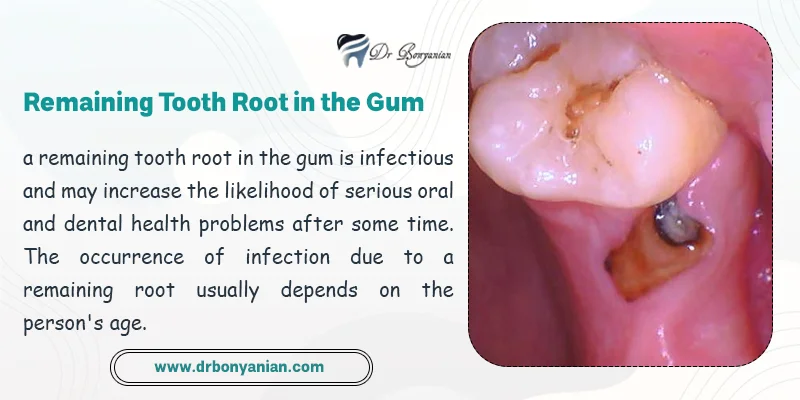
Sometimes, a retained tooth root in the gum after extraction causes no unpleasant sensation. For this reason, the individual may not take action to have it removed. But you might ask, what happens if the tooth root remains in the gum? You should note that a remaining tooth root in the gum is infectious and may increase the likelihood of serious oral and dental health problems after some time. The occurrence of infection due to a remaining root usually depends on the person’s age. The stronger the body’s immune system, the lower the chance of infection from the broken root. But in cases where the person’s immune system is weakened, a latent infection inside the gum will undoubtedly occur, which in serious cases will be accompanied by swelling, pain, and facial swelling after the tooth extraction.
How to Extract a Broken Tooth Root
Initially, the dentist numbs the area around the tooth with local anesthesia so that the patient feels no pain during the procedure. Then, using an X-ray, they determine the exact position of the broken root to plan the surgery more accurately. After anesthesia and assessing the tooth’s condition, the dentist separates the remaining tooth root from the gum using special dental instruments such as forceps and elevators. In some cases, a small incision in the gum may be necessary to make access to the root easier. After removing the root, the dentist cleans the surgical site and sutures it. Finally, they prescribe painkillers and antibiotics for the patient to prevent infection resulting from the surgery.
| Influential Factor | Explanation |
|---|---|
| Severity of Fracture | If the root fracture is severe, a more complex surgery may be needed. |
| Root Position | If the root is located deep in the gum or jawbone, its removal is more difficult. |
| Patient’s General Health | Diseases such as diabetes or heart problems can affect the surgical method and recovery. |
Aftercare Following the Removal of a Retained Root in the Gum
After any treatment is completed, performing the recommended aftercare is essential because it greatly helps in the faster recovery of the tooth and mouth. So, after the surgery for a retained tooth root in the gum, pay close attention to the doctor’s tips and be sure to observe oral and dental hygiene. In the following cases, you will become familiar with some common aftercare practices after surgery for a retained root in the gum:
- Avoid heavy activities or excessive head movement.
- In the first few days, it is better to consume cold and soft foods. As your condition improves, there is no problem with eating warm and solid foods.
- Do not irritate the surgical site.
- Wait for the recovery period to proceed naturally.
- It is recommended to refrain from smoking for the first 48 hours. Smoking causes blood clotting and delays the healing process.
- After 24 hours, rinse your mouth with salt water to disinfect the area.
- If you feel pain and discomfort, you can relieve the pain from the tooth extraction or root extraction within the gum by taking prescribed medications such as ibuprofen.
- In the first few hours after the surgery, do not remove the sterile gauze from your tooth and prevent bleeding by applying pressure to it.
- To reduce swelling, you can place ice packs on your face. After the swelling subsides, using warm compresses is recommended.

Remaining Wisdom Tooth Root After Extraction
By Dr. Nazi Bonyanian
A wisdom tooth root remaining after extraction is not a rare event, as various reasons can cause this problem. Reasons such as the complexity of the wisdom tooth root, fracture of the root during the operation, or insufficient visibility for the dentist during surgery.
Symptoms of a Retained Wisdom Tooth Root
If a wisdom tooth root remains in the mouth, the individual may face complications such as infection, persistent pain, gum swelling, pus discharge, and even cyst formation. These complications not only affect the health of the mouth and all of their teeth but may also impact other aspects of their life by causing bad breath and an inability to eat.
Diagnosis and Treatment of a Retained Root in a Wisdom Tooth
To accurately diagnose the problem of a remaining piece of tooth after extraction, the dentist uses radiography (X-ray of the wisdom tooth). If the diagnosis is confirmed, treatment is performed surgically to remove the remaining root. This type of surgery is done to prevent more serious complications and is considered an outpatient procedure. However, in case of infection, it may be necessary to take one or two courses of antibiotics before the surgery. To prevent this problem, it is better to visit a dentist who has sufficient experience in wisdom tooth surgery. Because a wisdom tooth is difficult enough to access, let alone when the goal of the surgery is to extract a part of the remaining root in it. So, if you experience symptoms like persistent pain, swelling, or pus discharge after a wisdom tooth extraction, be sure to visit a dentist so that your problem can be diagnosed and treated quickly. Remember that early diagnosis and treatment of this problem prevent more serious complications.
Conclusion
If you are facing the problem of a tooth root remaining in the gum after extraction, it is best to first talk to an experienced and professional dentist in the field of surgery and ask for their opinion on its removal. If surgery is needed, pay attention to the doctor’s words and recommendations to be fully prepared. Otherwise, as long as the root does not cause a problem for you, you do not need to worry. So, if you intend to benefit from the oral and dental surgery services at Dr. Bonyanian’s Dental Clinic, you can call 00982188539720 to receive a free consultation and visit appointment, or visit our clinic at the address: Unit 7, No. 22, 6th West Street, Ahmad Qasir (Bokharest) Street, Arjantin Square, Tehran.

Dr. Nazi Bonyanian
Dental Surgeon (DDS) — Medical Council Number: 138662
Graduate of Isfahan University of Medical Sciences with over 15 years of experience in implants, laminates, and oral and dental surgery.
Address: No. 22, Unit 7, West Alley 6, Bokharest Street, Argentina Sq., Tehran, Iran
Phone: +98-21-88539720 | WhatsApp: +98-912-514-2202
Email: info@drbonyanian.com
Working Hours: Sat–Wed 09:00–20:00 | Thu 09:00–14:00 | Friday Closed
⚠️ اطلاعات این صفحه صرفاً برای آگاهی است و جایگزین معاینه و تشخیص تخصصی نمیباشد.
