



Which is the best toothache pill?
- Ibuprofen
- Naproxen
- Gelofen
- Acetaminophen Codeine
- Diclofenac
What pill is a “toothache killer”?
Ibuprofen 400 or 600 mg is the strongest and most effective pill for rapid toothache relief.
A toothache is one of the most annoying pains anyone can experience. Sometimes, enduring this pain isn’t too difficult; for example, a small distraction might make us forget the pain we’re in. However, at other times, a toothache can be so severe and terrible that there is no choice but to use a strong painkiller for the toothache.
But the question is, what painkillers should we use to treat a toothache? Which pill is suitable for severe toothache? What pill works as an immediate pain reliever for a toothache? What is the best painkiller for a toothache? Specialists at Dr. Bonyanian’s dental clinic will answer all these questions below. So, stay with us until the end of this article.
Information You Need Before Taking Painkillers for a Toothache
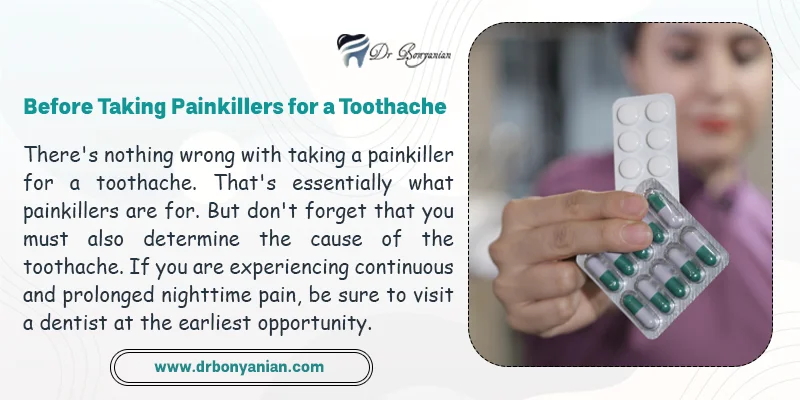
There’s nothing wrong with taking a painkiller for a toothache. That’s essentially what painkillers are for. But don’t forget that you must also determine the cause of the toothache. If you are experiencing continuous and prolonged nighttime pain, be sure to visit a dentist at the earliest opportunity. Sometimes, a root canal or a dental restoration can completely eliminate the pain.
Excessive consumption of anything will have side effects. So, take painkillers for a toothache according to the instructions on the packaging. We know your tooth pain is annoying and even terrible. But remember that taking more painkillers will not reduce your pain faster.
If you have specific medical conditions or if you are pregnant, do not take any pills for a toothache without consulting your specialist doctor or an experienced dentist.
If you experience other symptoms besides a toothache, such as fever or facial swelling, see a dentist immediately after taking a painkiller, as you likely have a dental infection and may need antibiotics.
Introducing 7 Over-the-Counter Pills for Toothache
Now that you have learned the basic instructions and tips before taking painkillers to treat a toothache, it’s a good idea to get acquainted with some good and practical painkillers for this problem. If you’ve been asking “what pill is good for a toothache?”, stay with us to find the best painkiller for your toothache.

1. Acetaminophen for Toothache
One of the first options used during a toothache is Acetaminophen. This painkiller, usually found in every home, is one of the best options for relieving a toothache and reducing fever caused by a dental infection. This medication helps relieve your tooth pain and inflammation by inhibiting the production of prostaglandins in the body, which are factors that cause pain and inflammation. Simple Acetaminophen has fewer side effects compared to other painkillers and is suitable for both children and adults. However, it is not typically used for severe toothaches. In contrast, a stronger type of this painkiller, Acetaminophen Codeine, is suitable for moderate to severe toothaches.
How to use Acetaminophen for toothache:
- Dosage: The dose of acetaminophen depends on age, weight, and the severity of the pain.
- Frequency of use: Usually, one dose of acetaminophen can be taken every 4 to 6 hours.
Different forms of Acetaminophen:
- Tablet: The most common form of acetaminophen is the tablet.
- Capsule: Acetaminophen capsules are suitable for people who have difficulty swallowing tablets.
- Syrup: Acetaminophen syrup is used for children’s toothaches.
- Suppository: Acetaminophen suppositories are also suitable for individuals who cannot take tablets or syrup.
Note: Acetaminophen Codeine has more side effects, such as drowsiness, constipation, nausea, and dizziness. Also, its use is prohibited for pregnant or breastfeeding individuals, those with respiratory problems, or a history of drug addiction.
2. Novafen for Toothache
It would not be an exaggeration to introduce Novafen as one of the best painkillers for a toothache. This painkiller, which contains a combination of acetaminophen, ibuprofen, and caffeine, helps treat your toothache with its rapid absorption through the digestive system. If your toothache is caused by inflammation, for example after getting an implant, Novafen would be a more suitable option than other painkillers. Of course, in special cases like rapid toothache treatment during pregnancy, any medication must be taken with the consultation of a doctor or dentist, as some compounds may be harmful to the mother or fetus. The method of taking this painkiller is also once every 4 to 6 hours, similar to acetaminophen. Novafen is mostly marketed in capsule form and has fewer side effects than a painkiller like Gelofen.
3. Ibuprofen for Toothache
Ibuprofen (also known as Brufen) is a non-steroidal anti-inflammatory drug (NSAID) used to treat pain, inflammation, and fever. This painkiller has a very good effect on toothaches and is usually used for severe pain, for example, the pain from a tooth extraction. We suggest you use this pill for severe toothache. One of the available forms of this painkiller is topical ibuprofen gel. You can get this gel from a pharmacy and apply it to the inflamed and painful area of your tooth every 4 hours, up to a maximum of three times a day.
Note: Ibuprofen can cause stomach irritation, stomach pain, heartburn, and indigestion. Drowsiness and dizziness are also side effects of taking Brufen. Therefore, if you take ibuprofen for a toothache, you will not be allowed to drive.
4. Gelofen for Toothache
The painkiller we are introducing in this section usually has more side effects than benefits. However, due to its high effectiveness, it has been popular among many people for years. Gelofen can eliminate your pain within 30-45 minutes, but using it more than twice in a 24-hour period can cause severe damage to your stomach and intestines. For this reason, dentists usually suggest that you only use this painkiller for your toothache when the pain is unbearable.
5. Mefenamic Acid for Toothache
Mefenamic acid is another practical and low-side-effect over-the-counter painkiller used to treat mild to moderate toothaches. Taking this painkiller up to 3 times a day, once every 8 hours, is permissible. You can use mefenamic acid to relieve the pain of a tooth that has had a root canal. However, you should note that this painkiller is not allowed for pregnant and breastfeeding women and those with respiratory problems.

6. Diclofenac for Toothache
Diclofenac is less commonly used for treating toothaches, but if you find yourself in a situation where other painkillers are not available, you can use diclofenac for your toothache. Diclofenac comes in various forms: tablets, capsules, suppositories, injections, and topical gels. Tablets and capsules should be taken at intervals of 4 to 6 hours, suppositories every 8 hours, topical gel every 4 hours, and injections only with a doctor’s prescription and at most once a day.
7. Naproxen for Toothache
Naproxen tablets are one of the drugs in the family of non-steroidal anti-inflammatory drugs (NSAIDs) used to relieve many types of pain, such as headaches, muscle aches, inflammation, and toothaches. However, you should note that if you have a history of allergic reactions to aspirin or other NSAIDs, you should not use naproxen tablets for your toothache.
Comparison of Different Painkillers for Toothache
After reading the information we provided about the various painkillers suitable for treating a toothache, you can use the table below to compare them and choose the best painkiller for your toothache based on the level of pain and the side effects of each.
| Drug Name | Suitable for | Side Effects |
|---|---|---|
| Acetaminophen | Mild to moderate pain | No side effects if not overused |
| Novafen | Severe and inflammatory pain | Drowsiness and dizziness |
| Ibuprofen | Mild to moderate pain | Digestive problems, dizziness, and drowsiness |
| Gelofen | Mild to moderate pain | Digestive problems, stomach pain, intestinal damage |
| Mefenamic Acid | Menstrual and muscle pain | No side effects if not overused |
| Diclofenac | Severe and inflammatory pain | No side effects if not overused |
| Naproxen | Mild to moderate pain | Drowsiness and dizziness |
Painkillers for Children’s Toothache
Toothache in children is a common and frequent problem. This issue often arises due to the child’s failure to maintain oral hygiene, trauma to the teeth from playing, the habit of teeth grinding (bruxism), and the age when baby teeth fall out and permanent teeth emerge.
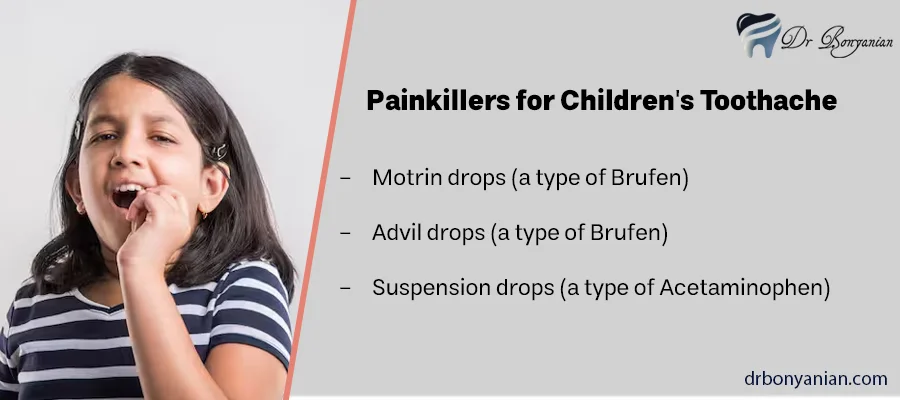
If your child comes to you with a toothache problem, it is best to first schedule a dental appointment for a more detailed examination of their problem and then proceed to treat the toothache with the help of painkillers specifically for children. The appropriate painkillers for treating toothaches in children aged 2 to 12 include the following:
- Motrin drops (a type of Brufen)
- Advil drops (a type of Brufen)
- Suspension drops (a type of Acetaminophen)
For using these painkillers, be sure to read the instructions on the packaging, and if your child is under 2 years old, do not give them any medication without the prescription and opinion of a pediatric dentist.
Immediate Pain Relief for Toothache
If you want to get rid of your toothache as quickly as possible, we suggest you use painkillers like Ibuprofen and Novafen. These drugs have a faster absorption rate than other painkillers and can be used for immediate relief of a toothache. We also recommend that you read about home remedies for toothache.
Strong Painkiller for Toothache
If your toothache is unbearable, you can’t stand it, and you are looking for a strong painkiller for your toothache, we advise you to go to a hospital or a 24/7 dental clinic. The emergency specialist, if deemed necessary, will prescribe pain-relieving injections such as Ketorolac or Ibuprofen for strong pain relief. To find the cause of your severe toothache, we recommend that you definitely see a good dentist.
Dr. Bonyanian’s Dental Clinic, with its specialist and experienced dentists, is ready to provide all dental services to you dear ones. If you need to get a free dental consultation appointment and book an appointment online, you can use the form below.
Toothache Painkillers During Pregnancy
Women who are pregnant or breastfeeding should use painkillers with greater caution, as the side effects from the painkiller may be transferred to their child. Simple Acetaminophen is considered the least risky and most suitable painkiller for use during pregnancy. Although acetaminophen may not have the effectiveness of a strong painkiller, its use for a toothache during pregnancy poses no risk to you or your child. If you do not experience a reduction in your toothache symptoms after taking acetaminophen, it is best to change your painkiller to a stronger type after consulting with a dental specialist and a gynecologist.
Best Painkiller for Toothache While Breastfeeding
Acetaminophen (Tylenol) is the best and safest painkiller for a toothache during breastfeeding because a very small amount enters the breast milk and poses no risk to the infant. Ibuprofen, in the usual dose (200 to 400 mg), is also safe and helps reduce inflammation and pain.
Painkiller for an Extracted Tooth
The best painkillers for treating the pain from a tooth extraction include the following:
- Novafen
- Ibuprofen
- Dexamethasone
- Gelofen
- Acetaminophen Codeine

Painkiller for a Teething Baby
A baby’s first milk teeth usually start to grow between the ages of 5 to 7 months. However, since the baby cannot express its pain, it may show its discomfort through restlessness and nighttime crying. The pediatric dental specialists at Dr. Bonyanian’s Dental Clinic suggest that you consult a specialist before making an arbitrary decision about the reason for your baby’s restlessness. If the cause of the restlessness is diagnosed as teething, the doctor will prescribe a suitable painkiller along with the dosage. Therefore, we strongly suggest that you avoid self-medicating with painkillers for your baby’s teething.
Best Painkiller for a Tooth with Nerve Pain
Brufen, Novafen, and Gelofen are the best painkillers used to relieve the pain of a tooth that has reached the nerve. But do not forget that this relief will be temporary, and after 4 to 5 hours, your pain will start again. Therefore, we suggest that you see a good root canal specialist at the earliest possible time to treat the root of your tooth. If you live in Tehran, you can visit Dr. Bonyanian’s Dental Clinic, which is considered one of the best dental clinics in Tehran. If you wish to receive a consultation appointment, you can call 00982188539720 or visit the address: Unit 7, No. 22, 6th West Street, Ahmad Qasir (Bokharest) Street, Arjantin Square, Tehran, and benefit from the dental services of the experienced and skilled specialists at Dr. Bonyanian’s Dental Clinic in Tehran.
Which is the “Toothache Killer” Painkiller?
There are various painkillers to reduce toothache, which can be used depending on the severity and cause of the pain. But the painkillers that many know by the name “toothache killers” include:
- Ibuprofen: A strong and effective anti-inflammatory for reducing pain and swelling, provided you are not allergic.
- Gelofen: Similar to Ibuprofen and effective on toothache.
- Naproxen: A long-acting painkiller that controls pain better.
- Acetaminophen (Tylenol): A suitable option for people who cannot take Ibuprofen.
Topical Painkillers for Toothache
- Lidocaine or Benzocaine Gel: A topical anesthetic that is applied directly to the tooth or gum.
- Clove Oil: Has natural anesthetic and anti-inflammatory properties.
Which Over-the-Counter Drug is Good for Nerve-Related Toothache?
For nerve-related toothaches, which originate from inflammation of the tooth nerve, you should take non-steroidal anti-inflammatory drugs (NSAIDs) that are available without a prescription. Suitable options include:
- Ibuprofen
- Naproxen
- Acetaminophen (Tylenol)
- A combination of Ibuprofen and Acetaminophen
- Topical anesthetic gels containing Benzocaine or Lidocaine
Note: Be aware that if your pain is severe and persistent, these painkillers will only temporarily relieve your pain and do not eliminate the need for dental treatment, as nerve pain usually indicates nerve inflammation or infection.
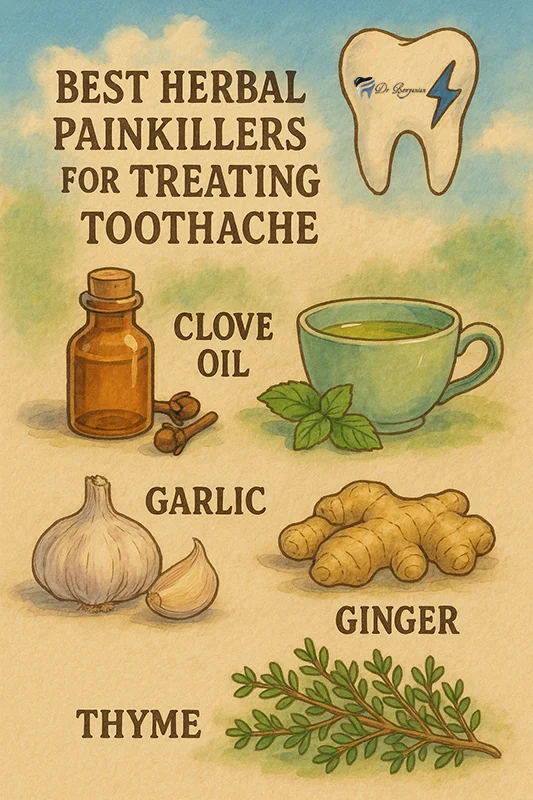
Best Herbal Painkillers for Treating Toothache
☑ Clove Oil
Clove oil is one of the best herbal painkillers for treating a toothache. This oil contains a substance called Eugenol, which has anti-inflammatory, antiseptic, and anesthetic properties and can reduce tooth pain to a great extent. In addition to reducing pain, clove oil also eliminates harmful bacteria in the mouth and helps to improve infection.
How to use: Soak a small piece of cotton in a few drops of clove oil and place it directly on the painful tooth or gum. Let it stay in place for 15 to 20 minutes. You can repeat this method every 3 to 4 hours and avoid swallowing the clove oil.
☑ Peppermint Tea
Peppermint is a plant with natural soothing and pain-relieving properties. The Menthol present in peppermint has a cooling and numbing effect and can help reduce your toothache. This plant also has antibacterial and anti-inflammatory properties and can prevent infection.
How to use: Place a peppermint tea bag in boiling water and let it steep for 5 to 10 minutes. Then take it out and, after it has cooled, place it on the painful area. You can also mix cooled peppermint tea with water and use it as a mouthwash. Do this 2 to 3 times a day.
☑ Garlic
One of the best herbal painkillers for treating a toothache is garlic. Garlic has strong antimicrobial and anti-inflammatory properties and can fight harmful bacteria in the mouth and help soothe your toothache. Garlic not only reduces your pain but can also prevent the progression of infection.
How to use: Crush a fresh clove of garlic to release its juice. Then, gently place it on the painful tooth or gum and let it stay for 10 to 15 minutes. Do this 2 to 3 times a day. If the taste of garlic is bothersome to you, you can add a little salt to it.
☑ Ginger
Ginger has anti-inflammatory and antibacterial properties that can help reduce your tooth pain. This plant can reduce nerve inflammation and soothe pain by relieving swelling and infection.
How to use: Peel a small piece of fresh ginger root and chew it, or crush it and place it on the affected tooth. You can also dissolve a teaspoon of ginger powder in warm water and use this mixture as a mouthwash. Do this method 2 times a day.
☑ Thyme
Thyme has strong antibacterial and antioxidant compounds, so it directly helps to reduce toothache and prevent infection.
How to use: Dilute a few drops of thyme oil with a teaspoon of coconut or olive oil. Soak a cotton ball in this mixture and place it on the painful tooth. You can also brew thyme tea and, after it has cooled, rinse your mouth with it. Repeat this 2 times a day.
Final Conclusion
Although using pills for a toothache is not a definitive solution for treatment, it can reduce your pain until you can visit a dentist. If you are also facing severe pain in your tooth, you can temporarily reduce your pain by using one of the over-the-counter painkillers sold in pharmacies and visit a dentist at the earliest possible time. In this article, we introduced 7 painkillers and the features of each so that you can choose the best painkiller for your toothache.

Dr. Nazi Bonyanian
Dental Surgeon (DDS) — Medical Council Number: 138662
Graduate of Isfahan University of Medical Sciences with over 15 years of experience in implants, laminates, and oral and dental surgery.
Address: No. 22, Unit 7, West Alley 6, Bokharest Street, Argentina Sq., Tehran, Iran
Phone: +98-21-88539720 | WhatsApp: +98-912-514-2202
Email: info@drbonyanian.com
Working Hours: Sat–Wed 09:00–20:00 | Thu 09:00–14:00 | Friday Closed
⚠️ اطلاعات این صفحه صرفاً برای آگاهی است و جایگزین معاینه و تشخیص تخصصی نمیباشد.
