



What is a dental bone graft? It is a type of surgery that, in many cases, is prescribed for candidates before dental implant surgery.
Of course, besides dental implant candidates, the following individuals also require implant surgery (bone grafting is a prerequisite for implants, so contextually, this implies needing bone grafts for implants):
- Individuals with gum disease
- Candidates for sinus lift surgery
- Applicants for increasing jawbone diameter (ridge augmentation)
One of the potential and necessary surgeries before dental implants is dental bone graft surgery. But what is a dental bone graft? Is dental bone grafting painful? In what situations are we forced to undergo this surgery? How is a dental bone graft performed? Stay with us in this article from the Dr. Bonianian Dental Clinic website to get answers to all these questions.
However, it’s better to understand that dental bone graft surgery for bone loss is usually performed when a person has experienced bone resorption. Before discussing the surgical method, let’s answer the question: what is dental bone, where is it, and does it even undergo resorption?
What is Dental Bone and Where is It Located?
Teeth are located on the bone, but they are not bone themselves. In fact, teeth are directly situated on the jawbones and are connected to them. They sit on joints that allow teeth to remain firmly in place and perform functions such as chewing and speaking.
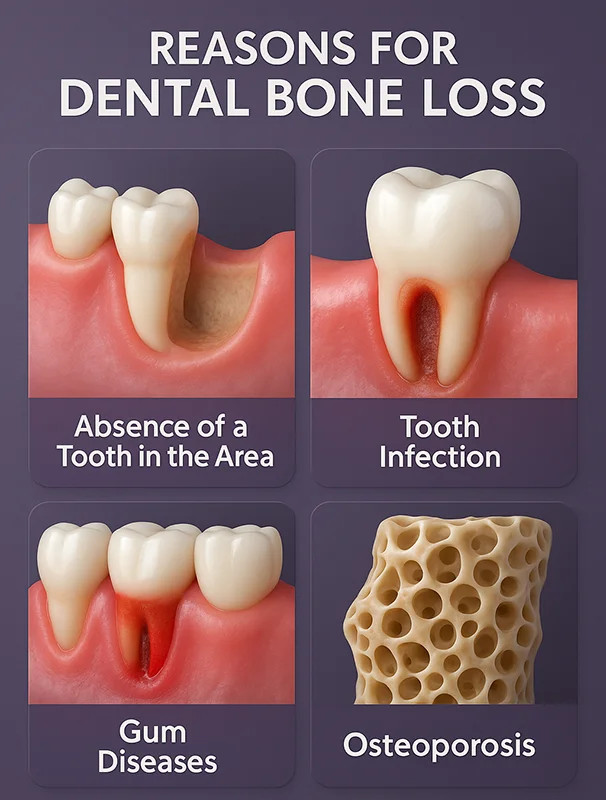
Reasons for Dental Bone Loss
The main reasons for jawbone resorption include the following:
- Absence of a tooth in the area
- Tooth infection
- Gum diseases
- Osteoporosis
- Misaligned teeth and not undergoing orthodontic treatment
What is Dental Bone Graft Surgery?
Dental bone graft surgery is a procedure performed to increase the amount of bone in a part of the jaw where bone has been lost or needs more support. In this method, materials are added to the individual’s jawbone to properly strengthen the bone.
Various methods exist for performing this surgical procedure. However, the fundamental approach in all these methods is consistent: the dentist or oral surgeon creates an incision in the jaw and grafts (attaches) bone material to the jaw.
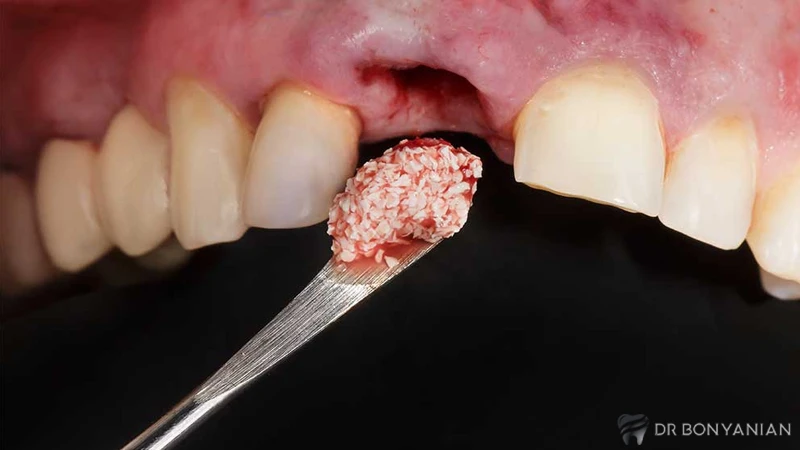
What is dental bone grafting surgery?
Dental bone grafting surgery is a procedure used to restore or build up bone in the jaw, often in preparation for dental implants or to prevent further bone loss after tooth extraction. It involves placing bone graft material—either from the patient (autograft), a donor (allograft), animals (xenograft), or synthetic sources—into the area where bone is deficient.
Over time, this graft material integrates with the natural bone, encouraging new bone growth and providing a stable foundation for future dental work. The surgery is commonly performed when the jawbone has become too thin or soft to support an implant or has deteriorated due to gum disease, trauma, or long-term tooth loss.
What is the Difference Between Gum Bone Graft and Dental Bone Graft?
Both terms, gum bone graft and dental bone graft, refer to the same concept and are the same outpatient surgery performed with the aim of strengthening the jawbone for dental implant placement.
So, if you hear the term “gum bone graft” in a dental clinic, don’t be surprised. This term is synonymous with dental bone graft, jawbone graft, or oral bone graft.
Types of Jawbone Density
Jawbone is generally classified into three levels of density, each having a direct impact on the success of dental implant placement:
-
High Density
This type is the ideal condition for implant placement. Bone with high density has sufficient strength to hold the implant and withstand chewing pressures, thus the probability of success in this condition is very high.
-
Medium Density
In this state, the jawbone has relatively good strength but may require reinforcement or minor adjustments, such as a limited bone graft, for greater implant stability.
-
Low Density
The lowest bone density corresponds to this group. In such conditions, the jawbone lacks sufficient strength to support an implant, and it is often necessary to perform a bone graft before placement to provide a suitable foundation for the implant.
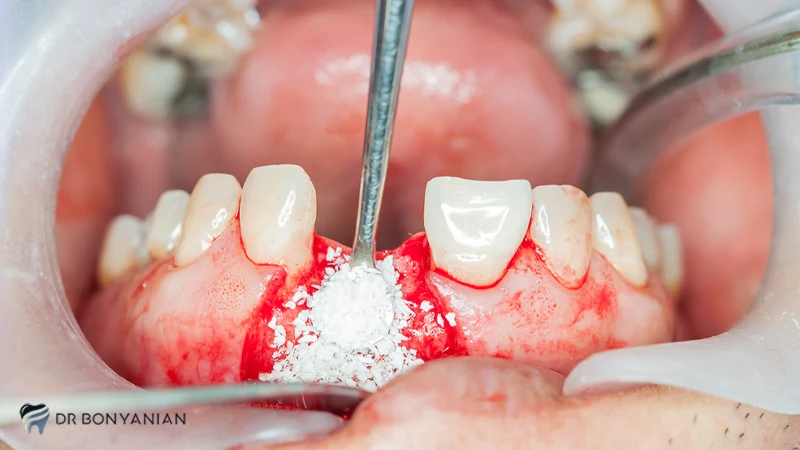
Types of Sources Used in Dental Bone Grafting
The graft source is selected based on the extent of the area needing treatment and by using one of the following 4 sources:
-
Autografts
This type of graft involves connecting bone from the patient’s own body, such as the hip or the back of the jaw (ramus), to the jaw. In situations where a large area of bone has resorbed, a hip autograft is used, and if the resorption area is small, an autograft from the back of the jaw (ramus) is used.
-
Allografts
In this method, bone from another person (usually deceased individuals or brain-dead patients) is used. Allografts are typically used for relatively small and partial surface grafts.
-
Xenografts
This type of graft involves connecting bone from another species (such as cow, pig, or coral). Xenografts, like allografts, are used in small and partial surface surgeries and are similar to allografts.
-
Alloplasts
In this type of graft, synthetic materials such as calcium phosphate or calcium sodium phosphosilicate (Bioglass) are used.
The preferred source for performing this graft is the use of bone from the patient’s own hip, tibia, or back of the jaw (ramus). This procedure is known as an autograft. Autografts are known as the “gold standard” because, being made of the patient’s own bone, they heal more quickly.
In the results of a 2019 research study, researchers noted that no substitute material for bone has yet been produced by humans. A part of this study stated: “We have not yet found ideal bone regeneration materials, but there are promising signs regarding achieving bone graft materials using cells, growth factors, and gene-modifying drugs under investigation.”
Who Performs Dental Bone Graft Surgery?
All types of bone grafts are performed in a dental clinic by a specialist maxillofacial surgeon. The only situation where the surgery cannot be performed in a dental clinic is a bone graft from the hip (pelvis), which must be performed by a surgeon in a hospital setting under general anesthesia.
You can have your dental bone graft procedure performed at the Dr. Bonianian Dental Clinic, one of the best clinics, under the supervision of the top maxillofacial surgeons in Tehran. Our dentists in Tehran, with the highest level of experience in performing this surgery, will carry out a simple and trouble-free procedure for you.
Contact 00982188539720 or use the “Request Appointment” phone number to get an online appointment via the link.

Is Jawbone Grafting Painful?
Bone grafting, just like any other surgical procedure, is accompanied by some pain. However, because dentists numb the area before the procedure, you will not feel any pain during the operation.
Although after the surgery and once the anesthesia wears off, you will experience various sensations such as pain, swelling, and discomfort, all of which can be controlled by taking painkillers prescribed by your dentist.
Also, don’t forget that the amount of pain and discomfort after the surgery depends on various factors such as the volume of the grafted bone, the location of the graft, and your individual tolerance. However, this pain is temporary and will decrease over time.
Who Needs a Bone Graft?
Dental bone graft surgery is generally used when an individual’s bone has resorbed due to toothlessness (and even in cases with existing teeth). The main candidates for bone grafting are individuals with the following conditions:
- Some dental implant applicants
Or those who need bone grafting for their lost teeth, it is very common in individuals who are to receive implants to fill the gap of an extracted tooth. If it has been a long time since you lost your tooth, you will likely need this surgery and bone powder injection for the implant before undergoing the implant procedure; because the empty space of the tooth will gradually resorb over time. If you intend to get an immediate dental implant, your bone density should be checked by a specialist dentist before proceeding with the implant.
Reasons for the Necessity of Bone Grafting in Dental Implants
Bone grafting for dental implants becomes necessary when the jawbone is not strong, thick, or healthy enough. Therefore, the main reasons for needing this procedure are so that it can properly support the implant base.
- Resorption of the jawbone due to long-term tooth loss (which causes the bone to diminish over time).
- Severe gum infections (periodontitis) that lead to the destruction of the bone tissue around the teeth.
- Trauma or injury to the jaw that may have destroyed part of the bone.
- Congenital defects or structural problems of the jaw that cause insufficient bone density or volume for implant placement.
- Prevention of implant failure; because without a strong bone foundation, there is a possibility of the implant loosening or not fusing with the bone.
In such situations, bone grafting helps create a suitable foundation for successful implant placement.
-
Individuals with Gum Disease
In some cases, having gum disease (periodontitis) leads to resorption and loss of your jawbone. In such situations, a periodontist will suggest that you prevent the progression of the disease and further bone loss, as well as long-term complications of gum disease, by undergoing bone graft surgery and injecting bone powder into the gum.
-
Candidates for Sinus Lift Surgery
When a person has been toothless for some time, their sinuses move downwards. In such situations, the dentist will be. In one of the steps to place the implant base in the jaw and create enough space, they are forced to perform sinus lift surgery. During the sinus lift surgery stages, bone powder material must be filled under the sinus so that the sinuses remain in their place.
-
Applicants for Increasing Jawbone Diameter (Ridge Augmentation)
Bone grafting is also applicable in situations where the gum diameter has resorbed over time. In these conditions, the dentist opens the gum and injects bone powder into it to strengthen the jawbone.
How Does a Dentist Assess Jawbone Density?
To assess jawbone density and determine the need for a bone graft, the dentist uses imaging. The most common methods include:
- Panoramic X-ray (OPG) of the upper and lower jaw, teeth, and jaw joints.
- CT scan (CBCT – Cone Beam CT Scan) to assess the volume, density, height, and width of the jawbone.
- Clinical examination to assess the condition of the gums, history of oral and dental diseases, and the patient’s general condition.
Based on the results of these assessments, the dentist decides whether the patient needs a bone graft or can directly proceed with implant placement.
Stages and Procedure of Bone Graft Surgery for Dental Implants
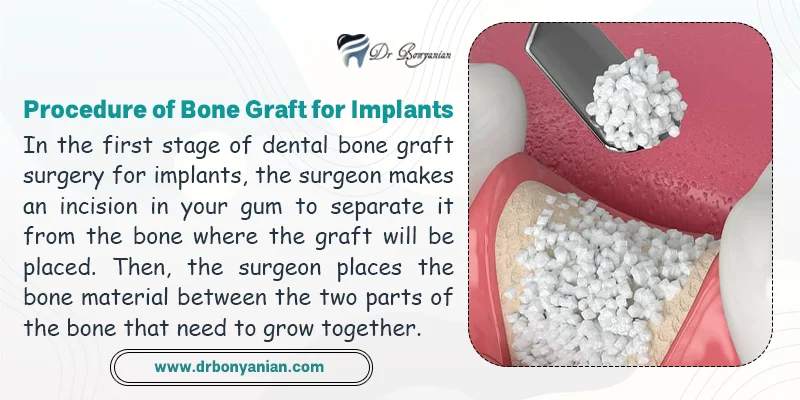
In answer to those who ask, “How is bone grafting for implants done?” we should say that in the first stage of dental bone graft surgery for implants, the surgeon makes an incision in your gum to separate it from the bone where the graft will be placed. Then, the surgeon places the bone material between the two parts of the bone that need to grow together.
Finally, the bone is secured with a dissolvable adhesive material, membrane, or special screws. Then, the incision site is sutured to heal.
Maxillary (Upper Jaw) Bone Graft
In upper jaw bone graft surgery (performed to repair and strengthen the jawbone in the upper area), the dentist removes a portion of bone from another part of the body (such as the hip bone or lower jaw) or prepares it from synthetic materials and grafts it to the desired location in the upper jaw.
This graft acts like a scaffold that helps new bone grow and allows the implant to be securely placed in the jawbone. After performing the bone graft with the upper jaw, a healing period is also necessary for the grafted bone to fuse with the natural jawbone.
How Long is the Recovery After an Upper Jaw Bone Graft?
The recovery time after bone graft surgery depends on various factors such as the volume of the grafted bone and your general condition. However, it usually takes about 1 to 2 weeks for the recovery period to be successfully completed.
Benefits of Dental Bone Grafting for Implants
- Creating a solid foundation for the implant
- Increasing the probability of implant success
- Preventing further resorption of the jawbone
- Improving the aesthetics of the smile and facial symmetry
- Enabling implant placement in complex cases
- Improving chewing and speech function

Disadvantages and Complications of Dental Bone Grafting for Implants
The most common complication of dental bone graft surgery is swelling and inflammation in the surgical area. This complication will resolve after 5 to 7 days with the use of an ice pack and regular use of painkillers.
Other complications of dental bone grafting include:
- Minor bleeding
- Difficulty chewing
- Difficulty speaking
Although this process is usually safe and natural, and all patients can tolerate it, there are always risks. Infection is the most concerning factor in any surgery. Therefore, completing the full course of antibiotics after surgery is very important. Other uncommon (but serious) complications of dental bone grafting include:
- Blood clots
- Nerve damage
- Anesthesia complications
- Graft rejection
When Should You See a Doctor?
Dr. Nazanin Bonianian explained in response to this question:
“In case of complications such as pain that continues for several days after the surgery or worsens, redness and increased swelling around the gum, persistent tingling or numbness, discharge of pus and infection from the surgical site, and gum recession (gum pulling away from the tooth) below, you should see a doctor as soon as possible.”
Is Jawbone Grafting Dangerous?
If the bone graft surgery is performed by a specialized and experienced dentist, and in a specialized dental clinic, no danger will threaten you.
However, performing this treatment procedure by unprofessional and inexperienced dentists, using old and risky methods, as well as using low-quality powders, can lead to severe damage to you.
Therefore, we recommend that you undergo this treatment with an experienced specialist to prevent any complications.
Experience of a Successful Bone Graft Surgery at Dr. Bonianian Clinic
In one of our recent clinic visitors, we encountered a 47-year-old woman who, due to the loss of her molar teeth in the upper jaw, was found to have significant bone resorption on CBCT. After detailed examinations and imaging, it was determined that the posterior area of her upper jaw was not sufficient for implant placement and required a sinus lift and bone graft.
The surgery was performed by our surgical team using external bone powder and a protective membrane, via an open sinus lift method. The surgical process was completely painless and performed under local anesthesia, and the patient was discharged on the same day. After about 6 months, follow-up examinations showed that new bone had formed well and an ideal bed for implant placement was provided.
Ultimately, the implants were successfully placed, and after the prosthetic phase, the patient was able to eat comfortably again and experience a beautiful smile.
This experience was another of the hundreds of successful bone graft surgeries at Dr. Bonianian Clinic, demonstrating the expertise, precision, and commitment of our treatment team to preserving the health and beauty of our clients.
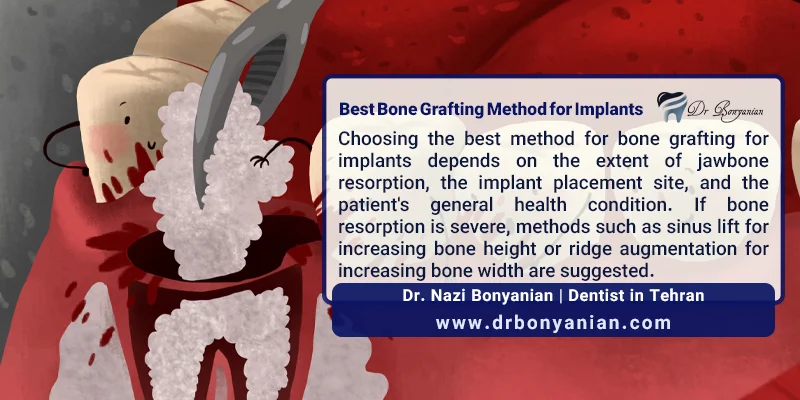
What is the Best Bone Grafting Method for Implants?
Choosing the best method for bone grafting for implants depends on the extent of jawbone resorption, the implant placement site, and the patient’s general health condition.
If bone resorption is severe, methods such as sinus lift for increasing bone height or ridge augmentation for increasing bone width are suggested. However, in milder cases, less invasive techniques like connective tissue grafting can be used.
However, generally, the most suitable method should be chosen by a specialist dentist considering the individual patient’s conditions to achieve the best results for implant placement.
Cost of Dental Bone Grafting
The complexity of the surgery and the source of material used are two main and influential factors in determining the price of dental bone grafting. For this reason, determining the exact price of this surgery is a difficult task. However, we have reviewed the approximate cost of this surgery in the article on dental implant.
You can receive a free dental consultation from our specialists by visiting the Dr. Bonianian Dental Clinic located in Tehran, Arژantin Square, Ahmad Qasir (Bokharest) Street, Sixth West Street, No. 22, Unit 7. In this session, in addition to providing detailed information about this surgery, its exact cost will also be estimated for you. To get an appointment, you can proceed through the form below.
How Should I Prepare for Dental Bone Graft Surgery? | Pre-Bone Graft Preparation
Pay attention to these few points to prepare for dental bone graft surgery:
- Depending on the type of anesthesia used, refrain from eating or drinking anything for 8 to 12 hours before the surgery.
- Consult your doctor about the medications you use (especially blood thinners that increase the risk of bleeding complications during surgery).
- Make necessary arrangements for returning home, as you will feel dizzy after the surgery.
Is Gum Bone Grafting a Surgical Procedure?
Gum or jawbone grafting is considered a surgical procedure. But not the kind of surgery you might think! In fact, this process is an outpatient surgery. Without the need for general anesthesia or hospitalization.
To undergo this surgery, you simply visit a well-equipped dental clinic like Dr. Bonianian Dental Clinic. The rest of the steps, as previously explained, are performed by a specialist dentist under local anesthesia.
Post-Operative Care After Dental Bone Grafting for Implants
After a bone graft, the area around the incision in your mouth will usually be dressed with sterile gauze. Clinic specialists will provide you with instructions for changing the dressing within the next 24 hours. Additionally, a prescription for antibiotics (to prevent infection) and painkillers (to prevent pain) will be given to you.
Other post-operative care tips for implants include the following:
- Use ice packs to reduce pain and swelling in the first few days.
- Eat soft foods at a mild temperature for a week.
- When sleeping, keep your head elevated higher than your body to avoid bleeding.
During the initial recovery period, you should also avoid the following:
- Avoid consuming hot beverages.
- Do not eat hard or crunchy foods like nuts and tahdig (crispy rice).
- Refrain from strenuous physical activities.
You will likely return to your normal, initial state after 10 days. However, this does not mean you are ready to receive an implant. The diagnosis of this matter is up to your treating dentist.
Final Summary
In this article from the Dr. Bonianian Dental Clinic website, we learned that dental bone graft surgery is a type of supportive treatment for strengthening the jawbone.
This surgery is usually performed before placing the dental implant base. Performing this surgery is not mandatory for all implant applicants and is only done for a group of individuals who have non-dense bone.
If you know someone, we suggest you consult the best dental implant specialist for advice on this matter.

Dr. Nazi Bonyanian
Dental Surgeon (DDS) — Medical Council Number: 138662
Graduate of Isfahan University of Medical Sciences with over 15 years of experience in implants, laminates, and oral and dental surgery.
Address: No. 22, Unit 7, West Alley 6, Bokharest Street, Argentina Sq., Tehran, Iran
Phone: +98-21-88539720 | WhatsApp: +98-912-514-2202
Email: info@drbonyanian.com
Working Hours: Sat–Wed 09:00–20:00 | Thu 09:00–14:00 | Friday Closed
⚠️ اطلاعات این صفحه صرفاً برای آگاهی است و جایگزین معاینه و تشخیص تخصصی نمیباشد.
