



Diastema is a space or gap between the teeth. This gap is usually not harmful and can occur in children ← What is Diastema or Diastema? and adults. In children, this gap usually reduces as their permanent teeth grow in.
Types of Methods to Close Gaps Between Teeth (Diastema)
- Composite Veneer (Closing gaps with tooth-colored materials)
- Ceramic Laminate (Aesthetic and durable covering to correct gaps)
- Orthodontics (Gradual movement of teeth to close gaps)
- Dental Crown (In specific cases for restoring tooth form and closing gaps)
- Frenectomy (If there is gum tissue attachment between the teeth)
- Combination of Treatments (e.g., Orthodontics + Cosmetic Dentistry for more complete results)
Perhaps you, too, feel self-conscious about the noticeable gaps between your teeth when you look in the mirror or pay close attention to them. Or maybe you notice the gaps between other people’s teeth when they speak. A certain amount of space between teeth is natural. However, for some individuals, this gap is so large that it generally disrupts the appearance of their teeth.
So, what is the solution? How can we fill the gap between teeth? Is it possible to fill the gap between front teeth?
Don’t worry. The specialists at Dr. Bonianian Dental Clinic have decided to provide you with all the necessary information regarding the causes, symptoms, and treatment of gaps between teeth, or diastema, in this article. Stay with us until the end of this article and share your questions with us at the bottom of this page.
What is a Gap Between Teeth or Diastema?
A gap between teeth, professionally known as diastema, refers to the empty space between teeth. This empty space can exist between any of the teeth in the upper or lower jaw; however, this phenomenon primarily occurs in the front teeth of the jaw.
In some cases, this gap is very small and rarely seen. But sometimes, this gap is very wide and, in addition to creating an unsightly appearance, it also causes several problems for individuals.
Causes of Gaps Between Teeth or Diastema
Gaps between teeth occur for various reasons. We can point to the following as some of the main reasons for this occurrence:
Size of Teeth Compared to Jawbone
If an individual’s teeth are too small relative to the size of their jawbone, gaps may form between their teeth. The size of the jawbone and teeth can be genetic and the reason for this problem.
Missing or Smaller Than Normal Teeth
If an individual loses a tooth or teeth, over time, they will develop gaps between their teeth. Additionally, teeth that are different in size and smaller than usual can also lead to this problem.
Large Labial Frenum
The labial frenum is a tissue that extends from the inside of the upper lip to the gum above the front teeth of the upper jaw. If this tissue is larger than usual, it can cause a dental diastema or a gap between the front teeth of the upper jaw.
Gum Disease
Tooth movement is a sign of advanced gum disease. In individuals with gum disease, inflammation damages the supporting bone of the teeth. Eventually, teeth may become loose, and gaps may appear between them.
Incorrect Swallowing Reflex
When the swallowing reflex occurs correctly, the tongue presses against the roof of the mouth. Instead, some individuals may push their tongue against their front teeth when swallowing. Over time, this repeated pressure pushes the front teeth forward, causing gaps and spaces between the front teeth.
Bad Habits
Thumb sucking, lip sucking, tongue thrusting against teeth, teeth grinding (bruxism), and other similar bad habits can put pressure on the front teeth and push them forward. This can lead to dental diastema.
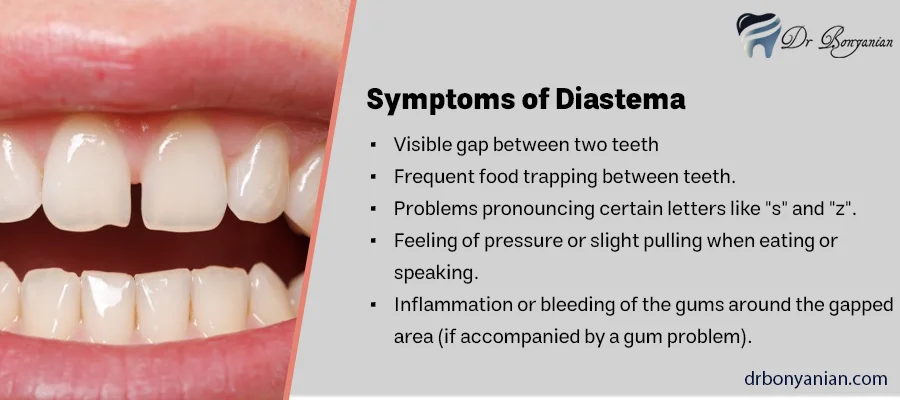
Symptoms of Diastema
- Visible gap between two teeth (mostly in the front teeth of the upper jaw).
- Frequent food trapping between teeth.
- Problems pronouncing certain letters like “s” and “z”.
- Feeling of pressure or slight pulling when eating or speaking.
- Inflammation or bleeding of the gums around the gapped area (if accompanied by a gum problem).
- Changes in the alignment or position of other teeth over time.
Dental Diastema in Children
Children experience gaps between their teeth during the period between the loss of baby teeth and the eruption of permanent teeth. This is not at all concerning or dangerous. Many dentists believe this problem is only a “temporary diastema” and will disappear after the full eruption of permanent teeth.
In an article titled “Prevalence and risk indicators of diastema in the primary dentition” published in the journal Acta Odontologica Scandinavica in 2023, the issue of gaps between teeth in children has been thoroughly investigated.
The authors of this article pointed to the following issues in parts of it:
- The prevalence of diastema in children is 23.4%.
- The most common location for diastema is between the upper front teeth.
- Family history plays a significant role in the problem of dental diastema.
Types of Gaps Between Teeth
Dentists usually classify gaps between teeth based on 3 different criteria:
Criterion 1: Cause of the Gap Between Teeth
Gaps between teeth occur for 2 main reasons:
- Physiological Diastema: This type of gap between teeth is common in children and is usually caused by insufficient jaw growth and its disproportion to tooth size. There is no need to worry about this type of diastema in children because, with the child’s growth, the loss of baby teeth, and the eruption of permanent teeth, this gap will close on its own.
- Pathological Diastema: Pathological diastema mostly occurs in adults. There are various reasons for this type of gap between teeth, some of which we mentioned at the beginning of this content. However, generally, tooth loss, disproportionate tooth and jaw size, gum disease, and a large upper labial frenum play a role in this condition.
Criterion 2: Location of Diastema
Gaps between teeth are divided into two categories based on their location: median diastema (between the two front teeth) and lateral diastema (between the side teeth).

Criterion 3: Dimensions of Diastema
Types of diastema based on size include the following:
- Small diastema: less than 2 mm
- Moderate diastema: 2 to 5 mm
- Large diastema: more than 5 mm
What are the Complications of Dental Diastema?
While some people accept diastema as a unique facial feature, in many cases, this gap can be associated with problems in terms of aesthetics, function, and oral health.
Depending on the cause of diastema (hereditary, oral habits, gum problems, etc.), this gap may increase over time and require specialized treatment.
Common Complications of Dental Diastema:
- Gaps between teeth can lead to decreased self-confidence, especially when speaking or smiling.
- Open spaces between teeth provide a suitable place for food to get trapped and plaque to form, which can lead to gum inflammation or cavities.
- In some cases, gaps between teeth can cause difficulty in correctly pronouncing letters like “s” and “z”.
- Untreated diastema can, over time, cause changes in the position of other teeth and disrupt dental alignment.
- Some diastemas are due to gum problems and may be accompanied by the progression of gum disease.
According to Dr. Nazanin Bonianian:
In many patients, diastema is not just a cosmetic issue. It can be indicative of underlying problems in the gums or jawbone that, if neglected, can affect the overall health of the mouth and teeth.
Does Diastema Affect Speech?
Diastema can affect speech in some individuals. Because the gap between teeth, especially in the front teeth, can cause difficulty in correctly pronouncing certain sounds like “s”, “z”, or “t”, and air may pass abnormally between the teeth during speech. This issue can sometimes also cause a whistling sound in words.
At Dr. Bonianian Dental Clinic, by accurately evaluating the cause of diastema and assessing its impact on speech, appropriate treatment solutions are offered to improve both aesthetics and function simultaneously.
(Placeholder for Elementor Template 37006)
Preventing Diastema
To prevent diastema (gaps between teeth), you should maintain good oral hygiene, try to eliminate bad habits like thumb sucking or tongue thrusting, and promptly treat gum disease and replace missing teeth with implants or bridges.
Also, dental check-ups for children at age 7 by an orthodontist can help in the early detection of jaw and dental problems and prevent the future occurrence of diastema.
Closing Gaps Between Teeth or Diastema
Although a gap between teeth is not a serious or dangerous problem, if you want to have straight and beautiful teeth, you can visit a dentist and take steps to close the gap. Below, we discuss how to fill the gap between teeth.
Treatment
Treatment options for this issue include:
Treating Gaps Between Teeth with Orthodontics
An orthodontist can close the gap between your teeth using orthodontic treatment. In this method, wires and braces apply pressure to the adjacent teeth, and over time, this gap is reduced. Alternatively, the orthodontist, based on the gap between your teeth, will suggest one of the types of orthodontics (including fixed orthodontics, invisible orthodontics, Damon orthodontics) to you.
Advantages of Closing Gaps Between Teeth with Orthodontics:
- Permanent closure of the gap between teeth.
- Improved oral and dental health.
- Correction of jaw problems.
Disadvantages of Closing Gaps Between Teeth with Orthodontics:
- Long treatment duration.
- Very high cost.
- Need for special care.
- Feeling of discomfort.

Closing Gaps Between Teeth with Bonding
Bonding is another method for closing diastema. Filling the gap between teeth with the help of bonding involves correcting minor dental problems and defects such as repairing and closing tooth gaps.
In this method, the dentist minimizes this gap with the help of white (composite) materials. If you are looking to fill the gap between front teeth with white materials, you can use this method.
Advantages of Filling Gaps Between Teeth with Materials:
- High speed.
- Low cost.
- No need for tooth preparation (shaving).
Disadvantages of Filling Gaps Between Teeth with Materials:
- Temporary.
- Color change.
- Low strength.
- Limitations in use cases.
Closing Gaps Between Teeth with Crowns
The next solution for closing diastema is using dental crowns. In this method, the dentist shaves your adjacent teeth and, after taking impressions and making the crown, places the crown on your teeth. For information on the cost of treatment with this method, you can visit the dental crown cost page.
Advantages of Crowns for Closing Diastema:
- Relatively high durability.
- Strength.
- Natural appearance.
- Correction of other dental problems.
Disadvantages of Crowns for Closing Diastema:
- Relatively high cost.
- Need for tooth preparation (shaving).
- Need for special care.
Closing Gaps Between Teeth with Laminates
Teeth with gaps. Laminates, in addition to hiding this gap, are one of the best methods for closing gaps between teeth. Dental laminates and aesthetics also gift your face a very beautiful smile. In this method, a specialized cosmetic dentist shaves a thin layer from the outer enamel of your tooth and places the laminate sheet on your tooth.

This laminate, with very suitable dimensions, eliminates the gap between your teeth. To see before and after photos of dental laminates, click here.
Advantages of Laminates for Gapped Teeth:
- Natural appearance.
- High durability.
- Aesthetics.
- Non-invasive.
- Correction of other dental problems.
Disadvantages of Laminates for Gapped Teeth:
- Relatively high cost.
- Irreversible.
- Fragile.
Closing Diastema with Composite
Closing diastema with composite is one of the quick methods for correcting gaps between teeth, which is mostly used for front teeth. In this method, using tooth-colored resin materials, the empty space between the teeth is filled, and a natural and harmonious appearance is restored to the smile.
Advantages of Closing Gapped Teeth with Composite:
- No need to shave healthy teeth.
- Done in one session.
- Cost-effective.
- Immediate results.
Disadvantages of Closing Gapped Teeth with Composite:
- Possibility of color change over time.
- Less durable compared to other methods.
- Requires careful maintenance.
- Possibility of edge chipping or detachment over time.
- Limitation in correcting severe forms or large gaps.
If you are also looking for a more beautiful and harmonious smile, Dr. Bonianian Dental Clinic, using the latest technologies and a specialized team, is ready to provide services for closing diastema with composite or any other method to you dear ones. For a specialized consultation and to schedule an appointment, contact us right now.
(Placeholder for Elementor Template 37006)
Dental Implants
If the gap between the teeth is so wide and large that none of the above solutions are effective, the individual should use implants. By implant, we mean replacing a missing tooth with a more extensive dental procedure like a dental implant, using an implant post and a crown on top of it. If you are also considering using an implant to close a diastema by filling an empty tooth space, it is better to check the dental implant cost.
Advantages of Implants for Closing Diastema:
- Very high durability.
- Strength.
- Natural appearance.
- Prevention of bone resorption.
- Improved oral and dental health.

Disadvantages of Implants for Closing Diastema:
- Very high cost.
- Need for surgery.
- Long treatment duration.
- Need for special care.
Choosing the Best Treatment Method for Gaps Between Teeth
Naturally, each of the introduced methods will be more suitable for individuals with specific characteristics. For example, orthodontics is not a good method for someone who only has a problem with gaps between their teeth. However, if this same person, in addition to diastema, is also dealing with other dental and jaw misalignments, no solution other than orthodontics will be effective for them.
Diagnosing the best way to treat gaps between teeth should be determined considering various factors such as the type and size of the gap, the health status of the teeth and gums, the patient’s age and general health, and their budget for fixing this problem.
With the presence of our dentists at Dr. Bonianian Dental Clinic, which is considered one of the best dental clinics in Tehran, experienced specialists are ready to provide services for closing gaps between teeth using all the methods we have discussed, including orthodontics, laminates, composite, and dental implants, to you dear ones.
And to choose the best treatment method, you can proceed through the form below to receive a free dental consultation.

When Gaps Disappear: A Real Story of a Beautiful Smile
One of our clients, a young woman with a history of diastema between her two front teeth, came to Dr. Bonianian Dental Clinic concerned about the appearance of her smile and its impact on her self-confidence.
Initial assessment revealed that this gap was due to a mismatch between tooth size and jaw arch, not a gum or bone problem. After consultation and reviewing treatment options, the decision was made to close the gap using composite veneers.
The treatment was completed in one session without any tooth preparation, and immediately after completion, a significant change was visible in the patient’s smile. She was very pleased with the result and mentioned that she now smiles more confidently and even pronounces some words more smoothly.
Cost of Filling Gaps Between Teeth
The cost of filling gaps between teeth depends on the method chosen to close the diastema. The price of filling the gap in front teeth is determined accordingly. We have provided the necessary information regarding the cost of orthodontics, cost of composite, and also the cost of laminates in separate articles.
Given this, it is best to entrust the diagnosis and selection of the best treatment method for gaps between teeth to your dentist. By visiting them. However, the table below will help you identify your options. We recommend consulting a good dentist.
| Feature | Laminate | Crown | Bonding | Orthodontics |
|---|---|---|---|---|
| Cost | High | High | Affordable | Very High |
| Durability | Permanent (10-15 years) | Permanent (15-20 years) | Temporary (5-10 years) | Permanent |
| Need for Tooth Shaving | Yes (less shaving) | Yes | No | Yes |
| Treatment Speed | 2-3 sessions | 2-3 sessions | 1 session | 6 months to 2 years |
| Natural Look | High | High | Moderate | High |
| Resistance | Moderate | High | Low | High |
| Correction of Other Dental Issues (e.g., color, breakage, misalignment) | Yes (color, breakage, misalignment) | Yes (color, breakage, misalignment) | No | Yes (jaw and misalignment problems) |
| Special Care | Yes | Yes | Yes | Yes |
| Limitations in Use (e.g., healthy teeth without defects / weak or misaligned teeth / small gaps) | Healthy teeth without defects | Weak or misaligned teeth | Small gaps | No |
5 Tips for Preventing Diastema
Preventing all cases of diastema is not possible. However, if gum disease or habits are causing diastema, the following can help prevent its worsening. Adhere to oral and dental hygiene:
- Brush your teeth twice a day.
- Use dental floss.
- Visit your dentist for regular check-ups and cleanings.
- Avoid thumb sucking and help your child break this habit.
- Avoid harmful behaviors like teeth grinding and clenching.
Summary of What You Should Know About Diastema
Diastema is a space or gap between teeth and can be caused by various factors, from gum disease to the ratio of tooth size to jawbone size, and even bad habits like thumb sucking.
In many cases, treating gaps between teeth is not necessary. However, for example, some individuals decide to fill the gap in their front teeth for aesthetic reasons. There are many methods for treating dental diastema, and your dentist can choose the best method for treating the gap.
If you intend to benefit from diastema treatment services at Dr. Bonianian Dental Clinic in Tehran, you can contact us or visit our clinic located at: Unit 7, No. 22, West 6th St., Ahmad Ghasir (Bokharest) St., Arjantin Sq., Tehran. To schedule an appointment, call 00982188539720.

Dr. Nazi Bonyanian
Dental Surgeon (DDS) — Medical Council Number: 138662
Graduate of Isfahan University of Medical Sciences with over 15 years of experience in implants, laminates, and oral and dental surgery.
Address: No. 22, Unit 7, West Alley 6, Bokharest Street, Argentina Sq., Tehran, Iran
Phone: +98-21-88539720 | WhatsApp: +98-912-514-2202
Email: info@drbonyanian.com
Working Hours: Sat–Wed 09:00–20:00 | Thu 09:00–14:00 | Friday Closed
⚠️ اطلاعات این صفحه صرفاً برای آگاهی است و جایگزین معاینه و تشخیص تخصصی نمیباشد.
