



You can use the following strategies to reduce the pain of an infected tooth and decrease the inflammation caused by a tooth infection:
- Applying turmeric to the infected tooth;
- Eating raw garlic and placing it on the infected tooth;
- Using thyme essential oil;
- Using clove essential oil;
- Drinking fenugreek tea;
- Placing a cold compress on the infected area;
- Using oregano essential oil;
- Using baking soda;
- Rinsing the mouth with salt water.
Toothache, throbbing, swelling, and redness of the gums are all symptoms that signal an unwelcome enemy in your mouth: a tooth infection. This infection, which can also spread to the root of the tooth, is not only painful but can also endanger the health of other parts of your body.
However, there is no need to worry because we intend to explore various methods for treating a tooth infection at home. These are simple, accessible, and effective methods that can help you relieve pain and inflammation until you can see a dentist.
Although we hope you remember that home remedies are never a permanent substitute for visiting a dentist. So, by following this comprehensive guide, you can effectively deal with a tooth infection at home and wait for your dentist appointment.
What is a tooth infection?
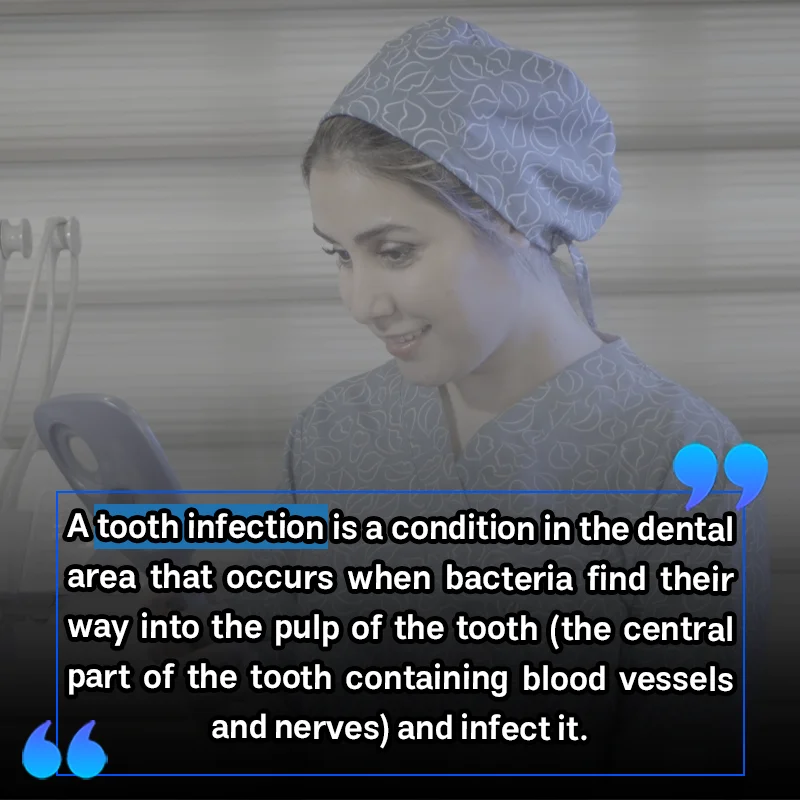
A tooth infection is a condition in the dental area that occurs when bacteria find their way into the pulp of the tooth (the central part of the tooth containing blood vessels and nerves) and infect it.
This problem can lead to the destruction and damage of the tooth, to the extent that you may have to undergo procedures such as root canal therapy or even tooth extraction.
A tooth infection, also known as a dental abscess, is a buildup of bacteria and pus caused by an infection in or around a tooth. It typically starts when bacteria enter the tooth through a cavity, crack, or gum pocket and begin to multiply.
Is a tooth infection dangerous?
A tooth infection can be dangerous if left untreated. The bacteria in the infection can spread to other parts of the body and lead to serious complications such as sepsis, Ludwig’s angina, necrotizing fasciitis, and other dangerous infectious problems.
In a section of an article titled “Dental Abscess,” it is written:
Left untreated, these infections can be extremely painful and pose a significant risk of descending into the deep neck space or ascending to intracranial sinuses. Identifying, treating, and educating patients about a dental abscess will grant symptomatic relief and prevent dangerous complications.
If left untreated, these infections can be very painful and pose a significant risk of descending into the deep neck space or ascending into the intracranial sinuses. Therefore, identifying, treating, and educating patients about dental abscesses will lead to symptomatic relief and prevent dangerous complications.
Causes of Tooth Infection
The factors that can cause a tooth infection are not far-fetched. Usually, any negligence related to oral and dental health can lead to tooth infections.
For example, the most important factors that cause a tooth infection include:
- Tooth decay
- Gum disease
- Poor oral and dental hygiene
- Trauma
- Unsuccessful root canal
- Wisdom tooth problems
- Weak immune system

Tooth Infection Due to Decay
The most common cause of a tooth infection is decay. Let’s examine this issue more simply.
We all have bacteria in our mouths. Living bacteria are looking for sources of food! These sources usually include sugar and carbohydrates (and other food substances) that get stuck between our teeth, under the gums, on the tongue, and in other accessible and inaccessible places in our mouths daily.
If we do not protect our oral and dental health well, or if we are negligent in this task by delaying brushing and flossing, bacteria will find access to these food sources.
They feed on the sugar and starch in these foods and create an acidic environment in our mouths by producing acid. This acid can gradually wear away tooth enamel and create small and large cavities in the teeth.
If the cavities are treated and our teeth’s health is restored to its original state, that’s great! But if these cavities are not treated, bacteria can find their way into the tooth’s pulp and infect it.
Gum Disease
When you do not practice proper oral and dental hygiene, bacteria accumulate on your teeth and gums. These bacteria, if not removed, turn into plaque, tartar, and eventually calculus. This means they become harder and gradually damage your gums. This damage can cause gum inflammation or gingivitis, and if left untreated, it can take on a more severe form, such as periodontitis or advanced gum disease.
This is where the journey to a tooth infection begins! In periodontitis, the supporting tissues of the teeth are destroyed, and infected pockets are formed around the tooth roots. These pockets contain bacteria that can penetrate the root and cause pulp infection.
Tooth Injury or Fracture
A fractured or cracked tooth also creates another path for bacteria and contaminants to enter the tooth’s pulp. As a result, the likelihood of problems like decay or infection increases significantly.
A tooth fracture is usually caused by a blow to the mouth, chewing hard foods, or engaging in bad habits like teeth grinding. A remaining tooth root in the gum after an extraction can also lead to infection.
Infection due to Gum Disease
Gum disease is a type of gum inflammation that can damage the tissues surrounding the teeth and allow bacteria to penetrate the tooth root. If gum disease is not treated, it can turn into a serious infection called periodontitis, which can even damage the bones that support the teeth.
Poor Oral and Dental Hygiene
Neglecting oral and dental hygiene is one of the main causes of dental infections. When we don’t brush our teeth regularly and don’t use floss, bacteria produce acid and gradually destroy tooth enamel. As a result, cavities form on the tooth surface, which, if left untreated, become deeper day by day.
Over time, as these cavities deepen, bacteria can easily reach the dentin after penetrating the cavity and cause inflammation, infection, and ultimately a dental abscess. However, poor oral and dental hygiene also indirectly affects the development of gum diseases.

Wisdom Tooth Problems
At first glance, problems related to wisdom teeth might seem unrelated to tooth infections! But we’re here to tell you that’s not the case at all. Wisdom teeth are the last teeth to erupt in the mouth and are often accompanied by problems that can lead to infection.
For example, one of the main reasons for these problems is the position of the wisdom tooth. In many people, the jaw is not large enough for the full eruption of wisdom teeth. As a result, the wisdom tooth may erupt partially or even remain fully embedded in the gum. This situation can create spaces in the mouth that become a place for bacteria to accumulate and cause infection.
As another example, the eruption of a wisdom tooth can put pressure on adjacent teeth, causing pain and gum inflammation. Wherever there is inflammation, the conditions for infection are more favorable!
Finally, partially erupted wisdom teeth are harder to clean and may even accumulate tartar. Therefore, the probability of infection in those areas will be much higher.
Other Factors Causing Tooth Infection:
- Previous dental treatments
- Weak immune system
- Having problems like dry mouth and mouth breathing
- Neglecting treatment for decayed teeth
- Having an improper diet and high consumption of sugary foods and carbonated drinks.
When does an infection turn into an abscess?
A tooth infection turns into an abscess when the body, in response to a bacterial infection, forms a pus-filled pocket. This pocket of pus is what we call an abscess.
For example, in the case of teeth, when a tooth becomes infected, the body creates various types of dental abscesses around the root of the infected tooth, between the infected tooth and the adjacent tooth, or even on the gum near that tooth in response to the infection.
Of course, this does not mean that an abscess only forms in response to an infection. Some people who have a weaker immune system or have diseases like diabetes may develop a dental abscess even without a tooth infection.
See a Dentist Before the Infection Turns into an Abscess
If you experience tooth pain, gum inflammation, or initial signs of infection, don’t wait for it to progress. Early consultation can prevent serious complications like an abscess, severe pain, or even tooth loss.
At Dr. Bonyanian’s specialized dental clinic, using advanced equipment and a professional team, we provide diagnosis and treatment services for dental infections with precision and speed. So, call us right now at 009821–88539720 or fill out the form below to book an appointment for a check-up.
Symptoms of a Tooth Infection
The symptoms of a tooth infection can range from mild to severe. However, all types of dental infections usually include the following:

Pain
The most common symptom of a tooth infection is pain. This pain, which can be throbbing, sharp, or constant, may radiate to your ear, jaw, or neck, and may not improve even after taking painkillers.
Sensitivity
In conditions where the tooth is very sensitive and has reached a high pain threshold, the person’s teeth become sensitive to cold, hot, sweet, and salty foods, and it may become completely impossible for that person to eat and drink!
Swelling
If you have ever faced a tooth infection or encountered someone with an infected tooth, you know that swelling is one of the main and most annoying signs of a tooth infection. A symptom that changes a person’s appearance and makes attending school, university, or work difficult for them.
A tooth infection initially causes a small part of the face (practically over the affected tooth) to swell. But if left unattended and the condition worsens, the entire cheek and even the throat may swell up!
Fever
Severe tooth infections can cause fever. This usually occurs more often in teenagers and children than in adults. However, fever resulting from a tooth infection is not unlikely in adults either.
Bad Breath
One of the common and prevalent side effects of a tooth infection is bad breath. This condition, which usually arises due to the accumulation of bacteria under the dental abscess or in the infected tooth, creates a very bad odor in the person’s mouth.
This odor will usually improve after the completion of treatment stages (and possibly within 10 to 12 hours after a root canal). But until then, those around you may be distressed by your bad breath!
Reading the article “Eliminate Bad Breath with 20 Effective Home Remedies” will provide you with useful information on this issue.
Other Complications of a Tooth Infection
- Unpleasant taste in the mouth
- Difficulty swallowing
- Difficulty breathing (rare)
- Tooth discoloration
- Worsening pain during sleep
A dental abscess (commonly referred to as a dental infection with severe swelling and pain) is one of the problems that arises after the progression of a tooth infection. This means that when you are dealing with a problem like an abscess, your tooth infection has been very severe and serious.
An abscess is caused by neglecting treatment. Therefore, it is better to take action to treat your tooth infection before it turns into a large, painful, and annoying abscess.
When should you be concerned about the infection spreading to other parts of the body?
When your tooth is so infected that other symptoms are added to your tooth pain and inflammation, you should be concerned about its progression and spread to adjacent teeth and even other parts of your body.
For example, headaches, dizziness, fever, chills, inability to swallow due to severe swelling, increased heart rate, diarrhea, and vomiting are signs that warn you to go to a hospital or a 24-hour dental clinic as soon as possible.
Do not forget that when a tooth infection spreads to other parts of the body, it can cause serious and even life-threatening complications. So, be sure to prevent the progression of this inflammation in your body in the early stages of the infection.
Types of Oral and Dental Infections
Dental infections have different types, the type of which will usually be determined by a specialist after an examination. With this in mind, a fixed and specific treatment path is usually not used for all types of infections.
The most prominent and common types of dental infections include the following:
- Pericoronitis: This type of infection is caused by the accumulation of food particles and bacteria on the wisdom tooth and their penetration into the gum.
- Pulpitis: This infection occurs when decay reaches the tooth nerve and causes inflammation of the tooth pulp. Tooth trauma or a blow to the teeth can also lead to pulpitis.
- Gingivitis: This type of infection is caused by the accumulation of tartar (plaque) and is accompanied by gum inflammation. If this disease is not treated, it can lead to a chronic condition and ultimately tooth loss.
Comparison of Oral and Dental Infections at a Glance
| Feature / Condition | Pericoronitis | Pulpitis | Gingivitis |
|---|---|---|---|
| Location of Onset | Around a partially erupted wisdom tooth | Inside the pulp (tooth’s core) | Gums |
| Primary Cause | Food and bacteria trapped under the gum flap over the tooth | Deep decay, trauma, crack | Poor oral hygiene, microbial plaque buildup |
| Common Symptoms | Pain, swelling, difficulty opening the mouth, bad breath | Severe pain (sometimes sharp and throbbing), sensitivity to heat/cold | Gum bleeding, redness, swelling, inflammation |
| Pain Severity | Moderate to severe | Severe (especially in irreversible pulpitis) | Mild to moderate |
| Is it Reversible? | Yes, in the early stages | Depends (reversible or irreversible) | Yes, in the early stages |
| Common Treatment | Antibiotics, cleaning the area, sometimes tooth extraction | Root canal therapy or tooth extraction in severe cases | Improving oral hygiene, professional cleaning, oral hygiene instruction |
| If Untreated | Abscess, spreading infection, severe pain | Pulp necrosis, dental abscess, tooth loss | Progression to periodontitis (advanced gum disease) |
Wisdom Tooth Infection
Wisdom teeth are the last teeth to erupt in the mouth and are often accompanied by pain, swelling, and infection. A wisdom tooth infection occurs when bacteria grow around the wisdom tooth and cause inflammation and swelling of the gum. This problem can be very painful and annoying, and if not treated in a timely manner, it will have more serious consequences.
Symptoms of a wisdom tooth infection include severe and persistent pain in the wisdom tooth area, gum swelling, redness and sensitivity, bad breath, difficulty chewing and swallowing, fever, and sometimes swelling of the lymph nodes in the neck.
The main cause is the partial or incomplete eruption of these teeth. Because when the wisdom tooth does not fully emerge from the gum, a space is created for bacteria to accumulate, which can lead to infection.

Complications of a Tooth Infection
A tooth infection can cause 3 categories of complications in your body.
1. Local Complications
- Severe pain
- Swelling and facial deformity
- Abscess
- Bad breath
- Bad taste in the mouth
2. Widespread Complications
- Spread of infection to other parts of the face such as sinuses, jawbone, and even the brain
- Cellulitis (infection of the soft tissues of the face)
- Sepsis (spread of tooth infection throughout the body)
- Heart problems
- Kidney problems
3. Dental Complications
- Tooth loss
- Damage to adjacent teeth
7 Effective Strategies to Prevent Tooth Infection
Maintaining oral and dental health is essential not only for aesthetic beauty but also for overall body health. Since tooth infection is one of the most common oral and dental problems, it is better to learn a few simple ways to prevent this problem.
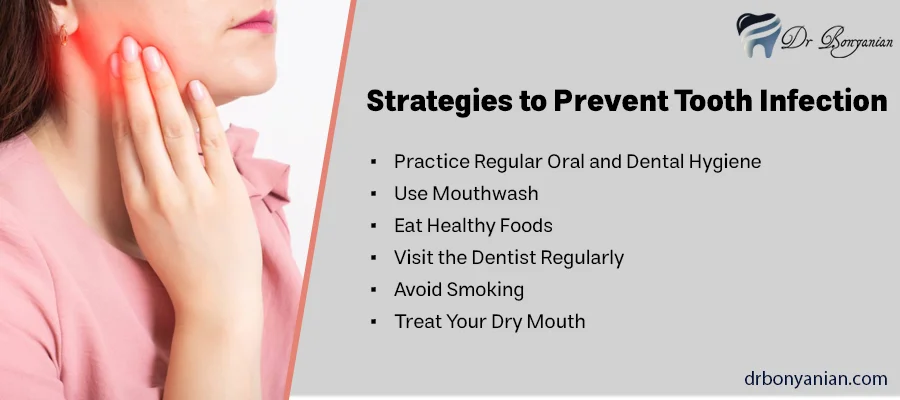
Practice Regular Oral and Dental Hygiene
Brush your teeth twice a day and floss between your teeth to remove plaque and bacteria. Use a soft-bristled toothbrush and fluoride toothpaste, and set your brushing time to at least two minutes.
Use Mouthwash
Mouthwash can help eliminate bacteria that brushing and flossing cannot reach. So, try to use a fluoride-containing mouthwash 2 to 3 times a week.
Eat Healthy Foods
Adopt a healthy diet for your oral and dental health. Avoid consuming sugary and acidic foods and drinks that can damage your tooth enamel, and instead consume fruits, vegetables, grains, and dairy products.
Visit the Dentist Regularly
Dr. Bonyanian, in an interview with Jam-e Jam Online newspaper on the topic “Tooth Decay; The Most Common Oral and Dental Disease,” stated that tooth decay is one of the most common reasons people visit the dentist.
In a part of this interview, it is mentioned: “If we want to point out one of the most common and widespread oral and dental diseases in our country, it is better to mention tooth decay; a type of disease that has no symptoms in its early stages, and this is what causes it to progress.”
Therefore, regular examination of your teeth by a dentist can help in the early detection and prevention of tooth decay. Visit your dentist every 6 months for these check-ups and regular cleanings.
Avoid Smoking
Smoking is one of the main factors contributing to your risk of tooth infection. This unhealthy habit can harm your oral and dental health and significantly increase the risk of developing a tooth infection.
Treat Your Dry Mouth
Having a dry mouth can increase the risk of developing a tooth infection. So, if you experience dry mouth, use sugar-free gum or talk to your doctor about other treatments for this problem.
Seek Treatment for Your Dental Problems
If you have a damaged, decayed, or injured tooth, seek treatment for it. Because decayed teeth become more vulnerable to various types of bacteria over time.
If you or your child feel the symptoms of a tooth infection, or if you have been informed of this condition after visiting a dentist, it is necessary to see a root canal specialist as soon as possible.
Do not forget that dental infections can be serious conditions and, if left untreated, can lead to side effects.
A root canal specialist or even a general dentist can, by carefully examining your tooth and dental images (OPG x-ray), devise the most suitable and fastest-acting treatment plan for you.
How Does a Dentist Treat a Tooth Infection?
The appropriate method for treating a tooth infection by a dentist depends on the severity of the infection and the patient’s overall health. For example, if the tooth infection does not cause the person much pain, the dentist may suggest that the person first take antibiotic drugs for a week.
Completing the course of antibiotic treatment, in addition to improving the infection, preventing the spread of infection to other parts of the body, and relieving the person’s pain, allows the dentist to perform a root canal in a non-infected condition.
However, in situations where the tooth pain is unbearable, the gum is abscessed, and the person cannot tolerate more pain, the dentist will either perform the root canal in the same session or will inevitably extract the tooth.
Treatment of Tooth Infection at Dr. Bonyanian’s Dental Clinic
At Dr. Bonyanian’s dental clinic, we offer a full range of services for the treatment of tooth infections and all types of abscesses. Our specialized and experienced team consists of some of the top dentists and oral surgeons in Tehran, who will resolve your tooth infection problem in the shortest possible time and in the best possible way.
Among the services provided by the specialists at Dr. Bonyanian’s dental clinic for the treatment of tooth infections, we can mention services such as root canal therapy, abscess treatment, and dental surgery.
To book an appointment and receive a free consultation with our specialists at Dr. Bonyanian’s dental clinic, contact us. We look forward to providing you with quality services and helping you get rid of tooth infections and the resulting pain.
Saving an Infected Tooth Before It’s Too Late!
About two weeks ago, a patient came to our clinic with severe molar pain and facial swelling. Based on clinical symptoms and radiological imaging, it was determined that the patient had an advanced infection in the tooth root, and the probability of abscess formation was very high.
After a thorough examination, we immediately began root canal therapy. Alongside the intracanal treatment, an appropriate antibiotic was prescribed to control inflammation and prevent the progression of the infection. Fortunately, the patient responded very well to the treatment, and the pain and swelling significantly decreased within two days.
What is very important in this type of treatment is timely action and early diagnosis. Otherwise, the infection can spread to the surrounding tissues and even lead to the drainage or extraction of the tooth.
At Dr. Bonyanian’s dental clinic, we strive to provide principled and low-pain treatments to patients with precision, calmness, and the use of modern technology.
If you also have symptoms such as severe pain, sensitivity, or swelling, a quick visit to the dentist can be the best decision to preserve the health of your teeth.
Home Treatment for a Tooth Infection
An infected tooth naturally requires advanced treatments prescribed and diagnosed by a dentist. However, you can use the methods we introduce below to relieve the pain of a tooth infection until you can see a dentist.
Although you should keep in mind that these solutions are temporary, and at any moment this pain could permanently disrupt a person’s life. Therefore, the wisest course of action to reduce and eliminate pain is to pursue treatment for the tooth infection.

1. Home Treatment for a Tooth Infection by Rinsing with Salt Water
Salt water has long been used as a home remedy for oral and dental infections. Its disinfecting properties have made it an attractive option for relieving pain and reducing inflammation.
Salt water helps relieve pain by reducing gum inflammation and swelling. This solution creates an unfavorable environment for the growth of bacteria in your mouth and thus directly helps to reduce your tooth infection. Salt water can help heal wounds from infections or dental surgeries, and another good thing is that it is easily prepared at home and costs very little.
To use this solution, you should mix half a teaspoon of regular salt with half a cup of warm water. Then, rinse your mouth with the salt water for at least 2 minutes, and then spit the water out.
Repeat this process three times a day until your tooth infection subsides.
2. Using Baking Soda to Treat Infected Tooth Pain at Home
Baking soda, or sodium bicarbonate, is a substance that has long been used as a home remedy for a wide range of dental problems, including infection and inflammation, due to its alkaline and antibacterial properties.
This substance makes the mouth’s environment alkaline, and by doing so, it helps reduce the number of bacteria that cause infection. Baking soda has anti-inflammatory properties; it helps reduce swelling and redness of the gums and even leads to the healing of wounds from infections or dental treatments.
If you want to treat your tooth infection with the help of baking soda at home, you should mix half a tablespoon of baking soda with half a cup of water and a pinch of salt; then gargle this solution in your mouth for five minutes and spit it out. You should repeat this process until the mixture is finished.
3. Oregano Essential Oil
Oregano oil is derived from the oregano plant, a fragrant herb with a bitter and pungent taste that has extraordinary therapeutic properties for the mouth and teeth.
The fragrant nature of this oil is due to the carvacrol present in it. Although the very strong antimicrobial property of carvacrol is more surprising than the good smell of this essential oil. So much so that many traditional medicine experts believe this oil is very suitable for eliminating bacteria and preventing microbial diseases.
This oil can help reduce the swelling and pain of an abscessed tooth. But to avoid further irritation, you must dilute the essential oil with a carrier oil. That is, mix a few drops of oregano essential oil with one ounce of a carrier oil. Then, apply a few drops of this mixture to a cotton ball or a cotton swab and hold it on the affected area for two to three minutes.
4. Cold Compress
Although a cold compress does not directly help treat your tooth infection, it can improve the situation from its previous severity by reducing pain and soothing inflammation. And we all know how to use it! Just put a few ice cubes in a towel or plastic bag and place it on the skin next to the infected tooth.
5. Fenugreek Tea for Treating Tooth Infection at Home
Fenugreek has numerous antibacterial properties and a long history as a home remedy for healing wounds and reducing inflammation. Using it is not difficult either. Just buy some fenugreek from a spice shop or supermarket, pour a spoonful of its powder into a glass of boiling water, and wait for the tea to brew.
Then, wait for the mixture to cool, and finally, using a cotton ball, apply a small amount of the mixture to the infected area.
6. Home Treatment for Gum and Tooth Infection with Clove Oil
Clove oil has been used as a natural remedy for toothache since ancient times. This is because this oil may have very good antibacterial and anti-inflammatory properties and is available in many grocery stores as well as online.
To use this remedy, you should put a few drops of the oil on a piece of cotton or a cotton pad and place it on your infected tooth. You can even make a clove oil mouthwash for yourself by pouring a few drops of the oil into a small glass of water and cleaning your mouth with this mouthwash up to three times a day.
7. Thyme Essential Oil for Treating Tooth Infection at Home
Thyme oil is another common choice for eliminating bacteria and combating the inflammation of a tooth infection. This unique essential oil has the ability to eliminate fungi and can easily reduce your tooth swelling.
You can apply diluted thyme oil to your infected tooth and after 3 to 4 minutes, rinse your mouth with plain water.
8. Eliminating Gum Infection with Garlic
Garlic, with its extraordinary and incredible antibacterial and anti-inflammatory properties, is recommended for many diseases. One of these diseases is a tooth infection.
Garlic miraculously controls the pain of an infected tooth and single-handedly battles the bacteria in your mouth. So, if you have a tooth infection, do not neglect garlic and its amazing properties under any circumstances.
9. Turmeric for Treating Gum Infection at Home
Turmeric, this golden and highly beneficial spice, has long been used in traditional medicine to treat a wide range of diseases. One of the interesting applications of turmeric is its use in treating dental infections.
Turmeric contains a substance called curcumin, which has strong anti-inflammatory, antibacterial, and antioxidant properties. This substance helps reduce gum inflammation, eliminate infection-causing bacteria, and strengthen the body’s immune system. In fact, curcumin, by inhibiting the enzymes that cause inflammation, helps reduce swelling and redness of the gums and consequently relieves the pain resulting from the infection.
You can mix a teaspoon of turmeric with a glass of warm water and a little salt to treat your tooth infection. Then gargle this solution in your mouth to help reduce inflammation and eliminate bacteria.
You can even add a little turmeric powder to your toothpaste and brush your teeth with it; or even use supplements containing turmeric.
Herbal Medicine for Toothache and Tooth Infection
The use of herbal medicines for treating infections like tooth infections has been common for years, especially in traditional Asian medicine and countries like India, China, and Iran.
Many medicinal plants have antibacterial, anti-inflammatory, and analgesic properties. Properties that can help relieve the symptoms of your tooth infection until you see a dentist.
Some medicinal herbs that may be useful for relieving the symptoms of a tooth infection include:
- Clove
- Garlic
- Ginger
- Thyme
- Chamomile

Pills for Toothache and Infection
Fortunately, there are various medications for relieving pain and treating a tooth infection, many of which do not require a prescription from a dentist or doctor. However, Dr. Bonyanian’s recommendation to you is to consult with your dentist before taking any medication.
Pain Relievers for Tooth Infection Relief at Home
These drugs are used to reduce pain and inflammation. Some common pain relievers for alleviating a tooth infection include Ibuprofen, Naproxen, and Acetaminophen.
Antibiotics for Treating Tooth Infection
If the tooth infection has spread to the surrounding tissues, your dentist will prescribe an antibiotic for you. These antibiotics, which eliminate the bacteria causing the infection, include: Amoxicillin, Clindamycin, and Metronidazole.
Amoxicillin 500: How Often for a Tooth Infection?
The usual dose of amoxicillin for adults with a tooth infection is one tablet (500 mg) every 8 hours. However, this amount may vary depending on your condition and the severity of your tooth infection.
Cefixime for Tooth Infection
Cefixime is an antibiotic from the cephalosporin family that is prescribed for treating a wide range of bacterial infections, including tooth infections. This drug interferes with the structure of the bacterial cell wall, stopping their growth and multiplication, and consequently helps the body fight the infection.
Of course, do not forget that cefixime, like any other drug, may be accompanied by side effects such as diarrhea, nausea, vomiting, itching, and skin rash. Therefore, before taking this drug, it is better to consult your dentist about its use and carefully follow all related instructions.
You should take a dose of 250mg of this drug every four hours and a dose of 500mg every eight hours to treat your tooth infection with the antibiotic cefixime.
Amoxiclav for Tooth Infection
Another widely used antibiotic in the treatment of bacterial infections, including tooth infections, is Amoxiclav. A combination of two active ingredients, amoxicillin and clavulanic acid. The way this drug works is that amoxicillin eliminates the bacteria of your tooth infection, and clavulanic acid prevents amoxicillin from being inactivated by some bacterial enzymes.
The effectiveness of Amoxiclav for treating a tooth infection is faster than other antibiotic drugs. However, you should note that this faster effectiveness also means this antibiotic is stronger. So it is natural that some of the gastrointestinal side effects of this drug are more severe than antibiotics like cefixime.
This drug is usually prescribed in a dose of 625 mg every 8 hours (three times a day) for the treatment of a tooth infection.
The Best Antibiotic for Children’s Tooth Infection
Given the age sensitivities and conditions of children, we recommend that you let a specialist dentist decide on the best antibiotic for your child’s tooth. Because the best antibiotic for treating a child’s tooth infection depends on the type and severity of the infection, the child’s age, and their medical history.
Remember that self-medication with antibiotics can lead to bacterial resistance and make treating subsequent infections more difficult. Especially in children, who usually have a weaker immune system than adults.
Treating a Root Infection at Home
Unfortunately, some people think they can solve their tooth infection problem at home using home remedies. But this idea is very dangerous and can have serious consequences for the individual’s health.
Do not forget that a tooth root infection occurs deep inside the tooth and cannot be easily treated with surface treatments like gargling or using special toothpaste. The main cause of a root infection is often deep decay or damage to the tooth nerve, which requires specialized treatment by a dentist.
The treatments and solutions we have introduced in this article are solely for preventing your tooth pain until you can see a dentist.

Dr. Nazi Bonyanian
Dental Surgeon (DDS) — Medical Council Number: 138662
Graduate of Isfahan University of Medical Sciences with over 15 years of experience in implants, laminates, and oral and dental surgery.
Address: No. 22, Unit 7, West Alley 6, Bokharest Street, Argentina Sq., Tehran, Iran
Phone: +98-21-88539720 | WhatsApp: +98-912-514-2202
Email: info@drbonyanian.com
Working Hours: Sat–Wed 09:00–20:00 | Thu 09:00–14:00 | Friday Closed
⚠️ اطلاعات این صفحه صرفاً برای آگاهی است و جایگزین معاینه و تشخیص تخصصی نمیباشد.
