



- Tooth sensitivity to cold and heat
- Irritation, redness, swelling, and pain in the gums
- Undesirable color change of fillings and crowns
- Damage to tooth enamel
- Allergic reactions
- Internal tooth discoloration
- Stomach upset
What are the Disadvantages of Teeth Whitening?
- Not covered by insurance
- Temporary results
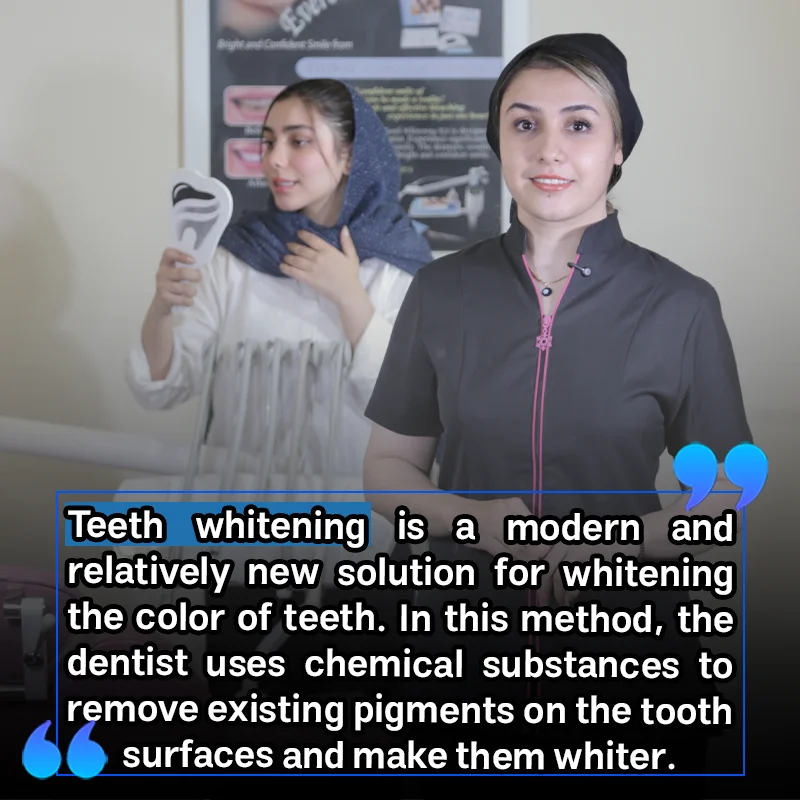
Teeth whitening is a modern and relatively new solution for whitening the color of teeth. In this method, the dentist uses chemical substances to remove existing pigments on the tooth surfaces and make them whiter. But does whitening cause harm? And considering the use of chemical substances in this process, does whitening damage the teeth?
We asked the specialists at Dr. Bonyanian’s dental clinic to familiarize us with all the side effects of teeth whitening and ways to prevent their occurrence, and to answer the question: What are the side effects of teeth whitening?
Reasons for Side Effects in Teeth Whitening
Teeth whitening, although an effective method for whitening teeth, can also have side effects. The reason for this is related to the chemical substances present in the whitening materials. There is a possibility that these materials, by penetrating inside the tooth, will destroy the existing pigments in it.
However, this happens if:
- The quality of the whitening materials used in the clinic or at home is not suitable.
- The dentist does not have sufficient skill in performing the whitening process.
- The individual’s tooth enamel is weak or they suffer from gum diseases.
Otherwise, the likelihood of teeth whitening side effects will not be high.
Does Teeth Whitening Harm Teeth?
You have probably wondered if teeth whitening is harmful. In response, we must say that according to an article titled “Tooth-bleaching procedures and their controversial effects,” some individuals after undergoing whitening will experience minor side effects such as tooth sensitivity and gum irritation.
However, these teeth whitening side effects are temporary in more than 99% of cases and will resolve after 2 to 3 days. But for pregnant women, specialists recommend refraining from whitening during pregnancy.
How Long Does Teeth Whitening Last?: Read More
Side Effects of Teeth Whitening During the Treatment Process
Some side effects of teeth whitening that may occur during the whitening process (while you are undergoing this procedure) include a burning sensation in the gums, tongue, and tooth pain.

Gum Irritation
Teeth whitening agents contain compounds designed to remove stains from teeth. These substances are strong and chemical, and if they come into contact with the gums or tongue, they can cause burning and irritation.
On the other hand, some individuals are naturally more sensitive to chemical substances or have a lower tolerance threshold. Therefore, it is natural that tolerating gum irritation during whitening is harder for these individuals.
Furthermore, the dentist may not have applied the whitening material correctly to your teeth. Meaning, some of the material may have been directly applied to other areas like the gums or tongue. In this case, you will experience a burning sensation in these areas during your teeth treatment.
Tooth Pain
The mechanism of teeth whitening is such that chemical and whitening substances penetrate the dentin of the tooth and eliminate stains (or pigments).
However, if the tooth dentin is slightly weak, the person will experience tooth pain during treatment. The pain can range from mild to severe, depending on their tolerance and the severity of their tooth weakness.
Post-Whitening Care: Read More
Side Effects of Teeth Whitening After Treatment Completion
The most common side effects of teeth whitening include:
Tooth Sensitivity
Sensitivity and a burning sensation in the teeth are among the most common side effects of teeth whitening. This complication occurs due to the penetration of whitening materials into the enamel and dentin. Enamel and dentin are the outer layers of the tooth that protect the nerve. Whitening materials, by penetrating these layers, can irritate the tooth nerve and cause dental sensitivity.
Sharp and sudden pain in the teeth, a burning sensation in the teeth, and also tooth sensitivity to cold and heat, acidic drinks, heat, and cold are among the signs of this sensitivity.
Tooth sensitivity is usually not a serious or dangerous complication and will resolve on its own after 2 to 3 days. However, if tolerating the pain is difficult for you, or if the pain lasts longer than three days, it is better to consult your dentist to prescribe a suitable treatment plan for your condition. In a separate article, we have discussed whether teeth whitening causes pain or not, and we recommend reading it.

Gum Irritation
Gum irritation is another side effect after teeth whitening or whitening. This complication is caused by prolonged contact of whitening materials with the gums and can lead to inflammation, redness, pain, and burning of the gums.
This complication is more common in individuals who naturally have weaker gums or have previously suffered from oral and dental diseases.
Gum Burns After Whitening
Gum burns after whitening, although not a common complication, can occur in some individuals. This complication usually occurs due to direct contact of whitening materials with gum tissue.
The most common symptoms of gum burns include gum irritation after eating or drinking hot foods/drinks, inflammation and redness of the gums, gum sores, and a burning sensation in the gums when talking.
Damage to Tooth Enamel
Does teeth whitening damage enamel? This is one of the common questions about the disadvantages of teeth whitening. The rarest and least likely complication after teeth whitening is damage to tooth enamel. This is because whitening materials are not strong enough to penetrate the tooth and cause damage to its enamel.
However, a dentist’s lack of skill, overuse of whitening materials, and these materials remaining on the teeth for a long time will increase the probability of this problem occurring.
Difference Between Scaling and Teeth Whitening: Recommended Read
Undesirable Color Change
If an individual’s teeth have previously undergone other treatments such as fillings (restorations), it is possible that the results of whitening on that tooth or specific teeth will not be as expected. Because a tooth that has previously undergone root canal treatment has lost its nerve and cannot become lighter than it is.
Therefore, a color difference occurs between natural teeth, treated teeth, and even dental crowns, which may disrupt the aesthetic appearance of your teeth.
Allergic Reactions
Another potential side effect of teeth whitening, according to Dr. Bonyanian, is the occurrence of allergic reactions. Although this complication is not very common, it may occur in some individuals with a sensitive immune system.
Dr. Nazanin Bonyanian explained regarding this potential complication:
The whitening substances used for bleaching contain chemical compounds. These chemical compounds can cause sensitivity and allergic reactions in some individuals. For example, itching, redness, swelling of the lips, tongue, and even difficulty breathing. In more severe cases, anaphylactic shock may occur in individuals.
Therefore, to prevent the side effects of teeth whitening, it is best to inform your dentist of any history of allergy or sensitivity to chemical substances before undergoing whitening. The dentist should also use high-quality and standard whitening materials and immediately stop the treatment process if any allergic symptoms are observed during treatment.
Tooth Roughening
Tooth roughening usually occurs due to excessive use of whitening materials or prolonged contact of these materials with the tooth surface. In these conditions, whitening materials that remain on the tooth excessively penetrate into the deeper layers of the tooth, causing the enamel to be lost and consequently making it rough.
Additionally, using abrasive toothpastes or brushing excessively after whitening (especially with a coarse toothbrush) can also exacerbate this problem.
Tooth roughening, in addition to creating an unpleasant sensation, can cause food particles to get stuck in the tiny pores of the teeth and also increase the risk of cavities.
Best Whitening Brand: Read More
Best Whitening Center in Tehran, Without Risk of Side Effects
If you are looking for a safe and reliable way to whiten your teeth and are concerned about side effects, we suggest you remember the name of Dr. Bonyanian’s dental clinic in Tehran.
This clinic, by providing specialized whitening services to you, dear clients, and with years of experience and hundreds of successful whitening cases, is considered the best dental clinic in Tehran to perform this procedure for you without any side effects.
At Dr. Bonyanian’s practice, payment can also be made in installments so that you, dear ones, are not burdened with the one-time cost of teeth whitening to beautify your teeth.
(To see samples of whitening work done at Dr. Bonyanian’s clinic, click to view before and after photos of teeth whitening.)
Experienced specialists at Dr. Bonyanian’s dental clinic, utilizing the highest quality and best teeth whitening materials, and considering your dental conditions, will perform teeth whitening for you in the best possible way.
At Dr. Bonyanian’s dental clinic, the side effects of teeth whitening are minimized with the delicacy and high precision of our specialists, and you can enjoy a white and attractive smile with peace of mind.
You can call 00982188539720 to get a free consultation appointment or visit us at our address: Tehran, Arjantin Square, Ahmad Qasir (Bokharest) Street, Sixth West Street, No. 22, Unit 7. You can also request a free consultation through the form below.
Disadvantages of Teeth Whitening
Although the advantages of teeth whitening outweigh its disadvantages, the question always arises whether whitening is harmful. This method also has disadvantages, and knowing them will help you make a decision about whether or not to undergo this procedure.
These disadvantages include the following:
- No effect on all teeth, especially restored and crowned teeth.
- Not covered by insurance.
- Temporary results.
- Mismatch with skin tone.
- Possibility of side effects (as mentioned above).

Tooth Sensitivity Due to Whitening Material
During the whitening process, chemical substances may come into contact with your tooth dentin, leading to sensitivity in your teeth. After this sensitivity occurs, the person experiences toothache when consuming hot and cold foods and drinks. Of course, everyone’s teeth react differently to these substances. Consequently, tooth sensitivity may also manifest differently.
However, if teeth whitening side effects and signs of sensitivity to whitening materials occur, it is necessary to consult with a dentist so that they can resolve this issue by prescribing special desensitizing agents.
Can At-Home Teeth Whitening Also Have Side Effects?
At-home teeth whitening can also have side effects, similar to in-office whitening. Especially since with at-home whitening, there is no direct supervision from a dentist, and the person may not use the product correctly or may not consult a dentist in time if a problem arises.
Some common side effects of at-home whitening include:
- Excessive tooth sensitivity
- Gum irritation
- Damage to tooth enamel
- Undesirable tooth discoloration
- Allergic reactions in specific cases
Note that improper use of at-home whitening products can cause gum burns or damage to soft oral tissues. Therefore, it is always better to perform these types of cosmetic and therapeutic procedures under the supervision of a specialized dentist, or if you intend to use the at-home whitening method, ask your dentist to explain how to do it step-by-step so that you can prevent the occurrence of teeth whitening side effects.
Comparison of Side Effects: In-Office Whitening vs. At-Home Whitening
Both in-office whitening and at-home whitening methods can have their own side effects. Therefore, awareness of the potential side effects of each is one of the most important factors in choosing the appropriate method.
The table below helps you become familiar with the side effects of each of these methods:
| At-Home Whitening | In-Office Whitening | |
|---|---|---|
| Severity of Side Effects | High | High |
| Gum Irritation | High (if used improperly) | Moderate (with dentist supervision) |
| Tooth Sensitivity | High | High |
| Predictability | Less predictable | More predictable |
Can I Get a Stomach Ache After Whitening?
One of the very rare but possible side effects of teeth whitening is stomach pain. This happens when some of the whitening material is accidentally swallowed. Since these whitening materials contain chemical compounds, if swallowed, they can cause irritation and burning of the digestive tract, leading to stomach pain.
Of course, this side effect of teeth whitening usually occurs if the person is using an at-home whitening method or intentionally or due to not following hygiene practices, swallows a large amount of whitening material. This means that swallowing a small amount of whitening material (which has likely mixed with your saliva) will not cause a problem.
If you feel you have swallowed some whitening material and now have stomach pain, immediately drink plenty of water to dilute the whitening material and help it pass out of your digestive system.
Strategies to Prevent Whitening Side Effects
If this is your first time deciding to undergo teeth whitening, prioritize choosing a specialized dentist or clinic. This will help prevent the occurrence of teeth whitening side effects for you.
In addition, there are other strategies to prevent side effects, some of which include:
- Use of Anti-Inflammatory Drugs: If your teeth and gums are sensitive, be sure to discuss this with your dentist during your visit so they can prescribe the necessary anti-inflammatory drugs. Using anti-inflammatory drugs not only prevents inflammation during whitening but also significantly reduces pain. Of course, do not forget that you must use these drugs according to their instructions and the doctor’s prescription.
- Use of Desensitizing Toothpaste: Most dentists recommend using desensitizing toothpaste for 2 weeks before and after starting treatment. Using these toothpastes significantly reduces the likelihood of sensitivity and pain.
Are Potential Side Effects of Teeth Whitening Long-Term?
No. The side effects of teeth whitening (if they occur) are not permanent. However, improper and excessive use of chemical whitening agents can damage tooth enamel and consequently prolong the time it takes for sensitivity to resolve.
These side effects are irreversible in some cases. Especially in situations where whitening is done at home and without dentist supervision. Whereas, by performing whitening in the clinic under the supervision of a dentist, the probability of tooth sensitivity can be significantly reduced.
How Long Do Teeth Whitening Side Effects Last?
Most teeth whitening side effects are temporary and, in most cases, gradually resolve within a few hours to a few days after the whitening process is completed.
However, the most common of these teeth whitening side effects (including tooth sensitivity to cold and heat or mild gum pain) usually subside within 24 to 72 hours and return to normal.
Using special toothpastes for sensitive teeth, avoiding hot or cold drinks, and following the dentist’s instructions can also be effective in reducing and controlling these side effects.

Do Special Whitening Toothpastes Have Side Effects?
Whitening toothpastes contain very fine abrasive particles that exfoliate the tooth surface, thereby removing yellowness and stains from the teeth.
The mechanism of action of these toothpastes is different from whitening materials. If you use these toothpastes for a long time, your tooth enamel will undoubtedly be damaged.
Strategies to Minimize and Prevent Teeth Whitening Side Effects
You can reduce the side effects of teeth whitening by following some simple tips. These strategies include the following:
- Use of Suitable Whitening Materials: Although there are different methods for teeth whitening (some of which have no limitations), whitening materials must be used correctly and cautiously. Because improper and excessive use of these materials not only does not whiten the teeth but also causes changes in the structure of tooth enamel, leading to sensitivity, pain, and even tooth discoloration.
- Quitting Bad Habits: When visiting the dentist for the first session, the dentist will ask the patient to quit some harmful and bad habits such as smoking, drinking alcoholic beverages, etc. If the person cannot quit habits that cause tooth discoloration, whitening will not be suitable for them. Because the color of the teeth will change quickly and turn yellow. We suggest you read the article related to post-whitening care.
- Use of Desensitizing Toothpaste: One of the effective strategies to prevent or reduce side effects resulting from teeth whitening, especially tooth sensitivity to cold and heat, is to use special toothpastes for sensitive teeth. These types of toothpastes contain compounds such as potassium nitrate or fluoride that help strengthen tooth enamel and reduce the irritability of dental nerves. Therefore, it is recommended to start using these toothpastes a few days before starting the whitening process and continue for a few days after its completion to have a desirable effect in reducing the likelihood of pain or discomfort after whitening.
- Taking Anti-Inflammatory Drugs if Prescribed by a Dentist: In some cases where tooth sensitivity or gum inflammation is more than usual after whitening, the dentist may prescribe non-steroidal anti-inflammatory drugs such as ibuprofen for you. These drugs, by reducing inflammation and pain, can help alleviate discomfort caused by whitening. Of course, their use should be according to the dentist’s instructions and for a limited time to prevent potential drug side effects.
Final Conclusion
Teeth whitening is a popular and effective method for whitening teeth that can be done both in a dental office and at home. Both methods have their own advantages and disadvantages, and choosing the appropriate method depends on various factors such as dental conditions, personal preferences, and an individual’s budget.
Although the probability of teeth whitening side effects is not high, knowing the side effects of teeth whitening and comparing the advantages and disadvantages of teeth whitening can help you make a better decision. Studying this article will familiarize you with other aspects and side effects of teeth whitening.

Dr. Nazi Bonyanian
Dental Surgeon (DDS) — Medical Council Number: 138662
Graduate of Isfahan University of Medical Sciences with over 15 years of experience in implants, laminates, and oral and dental surgery.
Address: No. 22, Unit 7, West Alley 6, Bokharest Street, Argentina Sq., Tehran, Iran
Phone: +98-21-88539720 | WhatsApp: +98-912-514-2202
Email: info@drbonyanian.com
Working Hours: Sat–Wed 09:00–20:00 | Thu 09:00–14:00 | Friday Closed
⚠️ اطلاعات این صفحه صرفاً برای آگاهی است و جایگزین معاینه و تشخیص تخصصی نمیباشد.
