



After a bone graft procedure, it takes about 6 months for the new bone to grow sufficiently and integrate with the jawbone. This strength is essential to withstand the pressure from the dental implant and normal chewing function, preventing the implant from loosening or failing. In simple terms, a 6-month period is necessary to build a solid foundation for the new implant.
Approved by the dental specialists at Dr. Bonyanian’s clinic.
The content of this article is for informational purposes only. Before taking any action for treatment, please consult with the dentists at Dr. Bonyanian’s clinic.
Losing a tooth, whether due to decay, gum disease, or injury, can significantly impact a person’s quality of life. Dental implants have gained immense popularity in recent years as a permanent and effective solution for replacing missing teeth. However, in some cases, the jawbone is not strong or dense enough to support an implant directly. In these situations, a bone graft surgery or the use of bone powder before implant placement is necessary.
In this article from Dr. Bonyanian’s dental clinic website, we will explore the process of getting a dental implant 6 months after a bone graft and provide comprehensive information for you, our dear readers.
Why is a Bone Graft or Powder Needed Before an Implant?
For success and stability, dental implants require a strong and healthy bone foundation. However, when a tooth is lost, the bone that previously supported it gradually deteriorates. This bone loss can occur for several reasons, including:
- Lack of Stimulation: Teeth stimulate the jawbone during chewing, which helps maintain its density. When a tooth is lost, this stimulation ceases, and the bone begins to resorb.
- Gum Disease: Gum disease (periodontitis) can damage the jawbone and lead to bone loss.
- Injury: Trauma to the jaw or teeth can also damage the bone and cause it to deteriorate.
If the jawbone is not dense enough, the implant cannot be securely placed, and the risk of implant failure increases. In these circumstances, depending on the severity of the bone loss, one of two methods must be used: bone powder or a bone graft.
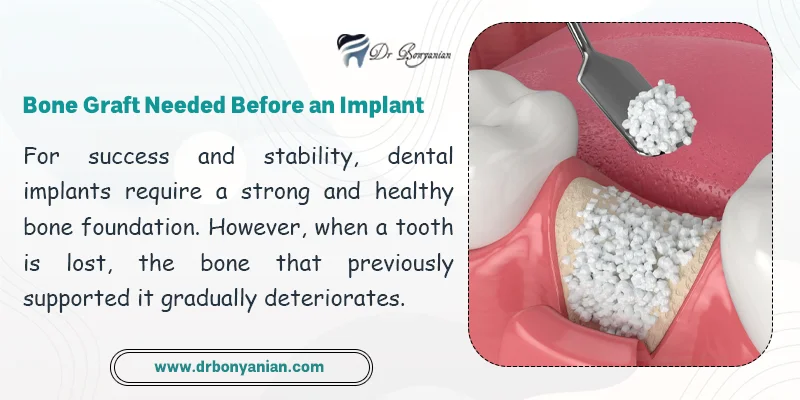
What is Bone Powder and How is it Done?
A bone graft is a surgical procedure where bone material is added to an area of the jaw that lacks sufficient bone. This bone material can be sourced from various places, including:
- Patient’s Own Bone (Autograft): This is the best type of bone graft, as there is no risk of rejection. The bone is usually taken from another part of the patient’s body, such as the chin or hip.
- Donor Bone (Allograft): This bone is sourced from a human donor. The donor bone is processed before use to minimize the risk of disease transmission.
- Animal Bone (Xenograft): This bone is sourced from an animal, such as a cow. The animal bone is also processed before use.
- Synthetic Materials (Alloplast): These materials are made from synthetic substances like hydroxyapatite.
The method of using bone powder depends on the location and amount of bone that needs to be grafted. However, generally, the surgeon makes an incision in the gum to expose the jawbone. Then, the bone material is placed in the target area and closed with sutures.
Is Bone Powder Better or a Bone Graft?
Both bone powder (Bone Grafting) and a dental bone graft are methods used to increase the volume and density of the jawbone to prepare it for a dental implant. However, there are differences between these two methods that determine which one is more suitable for your specific situation. Generally, “bone powder” is a term that often refers to a bone graft using powdered or granular bone material. In contrast, “bone graft” is a broader term that includes various types of materials and techniques, such as using larger blocks of bone.
Why Wait 6 Months for Results After Bone Graft Surgery?
After the procedure to treat jawbone loss with bone powder, the body needs time to absorb the bone material and form new bone. This process typically takes between 3 to 9 months. That is why, in most cases, dentists do not recommend methods like immediate dental implants and suggest that the implant be placed 6 months after the bone graft to ensure the jawbone has sufficient strength.
Read more: How long does a dental implant impression take?

The Healing and Regeneration Process After a Bone Graft Over 6 Months
After a bone graft surgery, your body undergoes a complex and amazing process of healing and bone regeneration over a 6-month period. In the initial days after surgery, the graft site becomes inflamed. This inflammation is a natural part of the healing process and helps the body remove waste materials and attract healing cells to the area. Then, the body begins to form new blood vessels in the graft site. These blood vessels supply nutrients and oxygen to the healing cells and aid in the growth of new bone. Subsequently, cells called osteoblasts begin to produce primary bone, or osteoid. The osteoid gradually combines with minerals like calcium and phosphorus and transforms into hard, mature bone. Over the 6-month period, the new bone gradually integrates with the existing jawbone, creating a strong and stable foundation for a dental implant.
Important Points to Know About Implants 6 Months After a Bone Graft:
The speed and quality of this process depend on various factors such as age, general health, nutrition, and adherence to the dentist’s instructions. During this period, maintaining oral hygiene and avoiding smoking and alcohol consumption are crucial.
Read more: Who should not get dental implants?
How Can You Speed Up the Healing Period After a Bone Graft?
Although the process of bone healing and regeneration is natural, you can help speed it up by taking the following steps:
- Consume foods rich in calcium, phosphorus, vitamin D, and protein.
- Take calcium and vitamin D supplements in consultation with your dentist.
- Do not use tobacco products.
- Avoid consuming alcohol.
- Maintain oral hygiene by brushing and flossing.
- Use a mouthwash.
- Get enough rest.
- Avoid strenuous activities.
Read more: Dental implants for diabetic patients

Signs of a Successful Bone Graft During the 6-Month Period
During the 6-month period after a bone graft, several signs indicate the success of the procedure. For example, a gradual reduction in pain and inflammation at the graft site, a noticeable firmness and strength in the surgical area, and the absence of any signs of infection such as redness, swelling, or discharge are all positive signs. Of course, periodic check-ups with your dentist, along with radiographic and CT scan results (if necessary), provide a more accurate assessment of the growth rate and density of the new bone and ensure the successful integration of the grafted bone with the existing jawbone.
What to Do if the Bone Graft Fails?
Unfortunately, in some cases, the bone graft may fail. However, there is still no need to worry. If the bone graft is unsuccessful, your dentist will suggest one of the following options:
- A repeat bone graft.
- Using alternative techniques such as shorter implants or angled implants.
- Using a dental prosthesis.

Special Care During the 6-Month Period After Bone Graft Surgery
Post-operative care always plays a crucial role in the success of the treatment. These care instructions include the following:
- Taking prescribed medications by the dentist, including antibiotics and painkillers, is essential to prevent infection and reduce pain.
- Brushing and flossing (gently and carefully) helps maintain oral hygiene and prevent infection.
- Using antiseptic mouthwashes helps reduce the risk of infection.
- Smoking slows down the healing process and increases the risk of implant failure.
- Eating soft foods and avoiding hard and sticky foods helps prevent damage to the surgical area.
- Regular visits to the dentist are necessary to monitor the healing progress and ensure the health of the implant.
What Risks Threaten Me During These Six Months?
A bone graft to the jaw, like any other surgical procedure, may come with risks and complications. These risks and complications are things like the possibility of infection, bleeding, pain, facial swelling, and graft failure.
However, if you have gone to a reputable dental clinic like Dr. Bonyanian’s clinic for this procedure, or if you have followed the post-operative care and recommendations of your dentist, no problems or complications will arise for you.

Implant Placement, 6 Months After Bone Graft
After the healing period is over and the strength of the jawbone is confirmed, the implant can be placed in the desired location. The implant placement process and the duration of the dental implant will not be any different from this stage onwards compared to other individuals (who did not have bone graft issues).
This means the surgeon makes an incision in the gum in the target area to expose the jawbone that has formed over the last 6 months, then creates a hole in the jawbone using special drills. Finally, they place the dental implant in the created hole and close the gum with sutures. After implant placement, you must wait a few more months for the implant to fully fuse with the jawbone.
Performing Bone Graft Surgery at Dr. Bonyanian’s Dental Clinic
If jawbone loss is preventing you from getting a dental implant, don’t worry. At Dr. Bonyanian’s dental clinic, we use the latest bone graft surgery techniques to create the right conditions for you to have a beautiful smile and healthy teeth. Dr. Bonyanian and his experienced team, with years of experience in oral and maxillofacial surgery, offer you the best and safest bone graft methods. Furthermore, at Dr. Bonyanian’s clinic, we only use high-quality, certified bone powders to ensure the best results for you. You can fill out the form below for a consultation and further guidance, or contact us at +982188539720.
Implant After Bone Graft After 6 Months: A Bone Graft Surgery Experience at Dr. Bonyanian’s Dental Clinic
Maryam, a 55-year-old woman, came to Dr. Bonyanian’s clinic with great concern about getting an implant. Initial examinations revealed that the jawbone in the intended area for the implant did not have sufficient density and volume. For this reason, Dr. Bonyanian, after a detailed review of the CBCT images, decided to perform bone graft surgery. In the operating room, all steps were carried out in full compliance with sterile principles.
The treatment team, led by Dr. Bonyanian, prepared the surgical site with great care. Mrs. Maryam, despite her initial anxiety, maintained her composure and cooperated very well thanks to the doctor’s detailed explanations and reassurance. The surgery was performed with high precision and in a timely manner. The high-quality bone powder was correctly placed in the target area, and then the surgical site was well repaired and dressed.
Mrs. Maryam left the clinic with complete satisfaction and a better state of mind than before. A few weeks later, she came to the clinic for a follow-up, and Dr. Bonyanian, with a detailed examination, confirmed a significant improvement in the bone area.
Summary of the Topic: Implant After Bone Graft After 6 Months
An implant after a bone graft after 6 months is an effective method for replacing lost teeth in individuals who do not have sufficient jawbone. By following post-operative care and attending regular dental check-ups, one can be confident in the success of this procedure.

Dr. Nazi Bonyanian
Dental Surgeon (DDS) — Medical Council Number: 138662
Graduate of Isfahan University of Medical Sciences with over 15 years of experience in implants, laminates, and oral and dental surgery.
Address: No. 22, Unit 7, West Alley 6, Bokharest Street, Argentina Sq., Tehran, Iran
Phone: +98-21-88539720 | WhatsApp: +98-912-514-2202
Email: info@drbonyanian.com
Working Hours: Sat–Wed 09:00–20:00 | Thu 09:00–14:00 | Friday Closed
⚠️ اطلاعات این صفحه صرفاً برای آگاهی است و جایگزین معاینه و تشخیص تخصصی نمیباشد.
